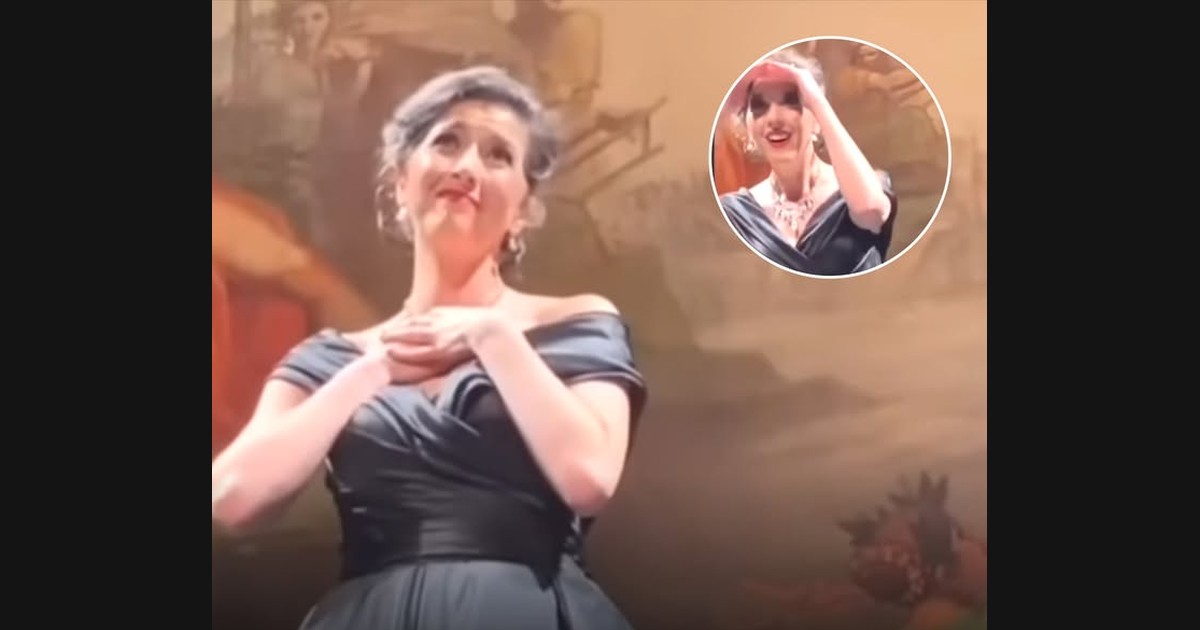
The audience-tenor recording of Lisette Oropesa’s Sempre libera is easier to follow when the second voice has a musical identity. The answering tenor is not an unrelated song added to a soprano display. Verdi’s La traviata already gives this passage a relationship between Violetta and Alfredo.
The circulating uploads present Oropesa’s selection with a tenor response from the audience, identifying the participant in companion titles as Liu Jianwei. The useful starting point is the composition’s design, rather than an invented account of backstage plans or permissions.
Watch on YouTube ↗
Violetta’s declaration has an answering perspective
In the opera, Violetta considers whether to accept love or preserve the freedom of her existing life. Sempre libera expresses the latter position, while Alfredo’s voice is heard from outside. The scene’s drama depends on those different perspectives occupying the same musical world.
Lyric Opera of Chicago explicitly presents the selection as a duet, while the Royal Opera’s account places it within Violetta’s changing attitude toward love. Knowing that relationship prevents the tenor line from appearing to be an arbitrary interruption invented by an online clip.
The distance is also meaningful. A voice can influence a character’s thought without its owner standing beside her. Opera can make physical separation part of a musical exchange.
A concert excerpt changes the surrounding frame
A recital does not necessarily reproduce the opera’s complete staging. A soprano can present a selection with piano accompaniment, bringing a dramatic passage into a programme of different works. The musical roles remain part of its history even when the whole scene is not staged.
Oropesa’s own career archive documents her 7 October 2021 recital at Teatro Regio di Parma with pianist Francesco Izzo. It gives a concrete reference for that period of her recital work, while the circulating tenor clips focus on a particular exchange rather than preserving the whole evening’s programme.
One should not confuse the number of views of a passage with the amount of context it contains. An excerpt can make the relationship audible without answering every question about how the occasion was organized.
Watch on YouTube ↗
The companion account names the audience role
The second upload describes the tenor contribution from an audience seat. Its account is best kept separate from the dramatic role: a real participant supplies Alfredo’s musical line, while Alfredo remains a character in Verdi’s work.
The participant’s nationality or the novelty of his location does not explain the notes by itself. Understanding the established part gives the moment a more precise musical meaning.
Watch on YouTube ↗
The same exchange should not become several events
The final upload presents another account of the Oropesa and audience-tenor moment. It adds a viewing route, rather than evidence of another collaboration or a standing arrangement to invite audience participation.
The scene’s enduring interest is the meeting between a familiar dramatic design and an unusual performance-space relationship. Violetta asserts one position, Alfredo’s line answers from elsewhere, and the music connects them. That structure makes the recording more informative than a surprise headline alone.


