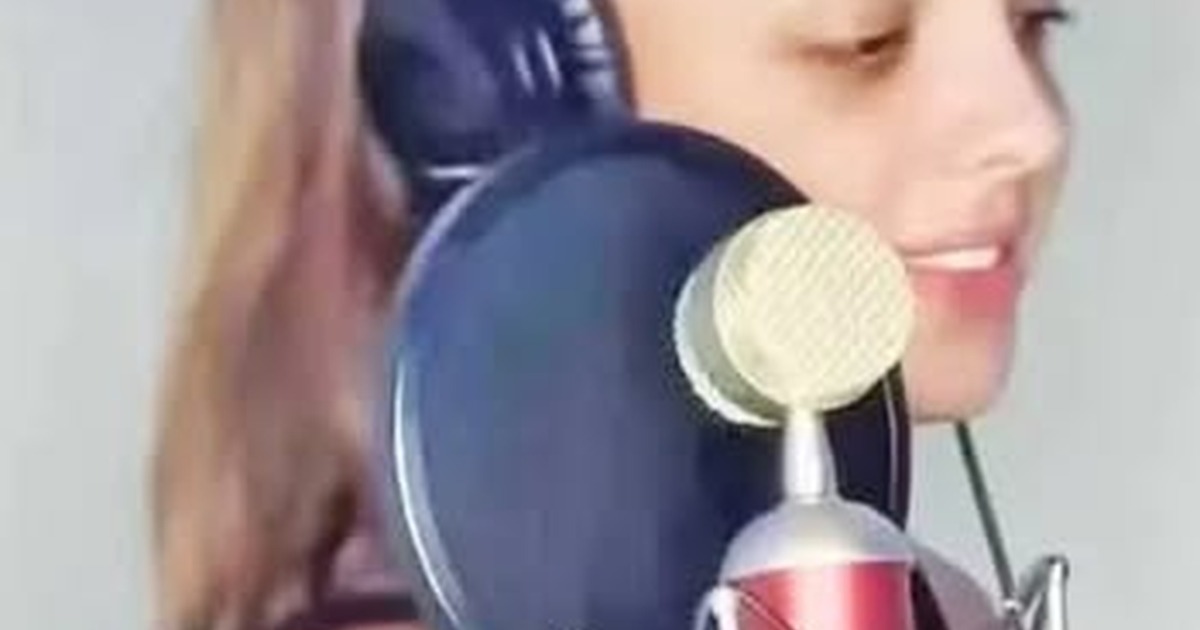
A singer can become the center of a recording without being the only person contributing to its sound. Lanie Gardner’s Dreams cover offers a useful example. Her official upload credits the music to Sing King Karaoke, a detail that helps explain the frame within which her vocal performance is presented.
The video was published on October 2,2020. Gardner’s accompanying text connected her choice with renewed attention to Fleetwood Mac. Her current official biography also identifies the cover as an important point of discovery. That establishes a career connection without requiring invented accounts of an algorithm, particular comments or a contract signed immediately afterward.
The artist’s own cover upload
Watch on YouTube ↗
A recording has more than one kind of authorship
There is the song being interpreted, the instrumental frame being used and the singer presenting a part within it. Recognizing those layers gives a fuller credit than calling the whole result an unexplained spontaneous recording.
The backing-track credit does not diminish the vocal work. It identifies another production responsibility. A singer still shapes phrases, sustains a direction and decides how to inhabit material within a frame that already exists. Those choices differ from creating a new instrumental arrangement, but they remain choices.
Likewise, a casual visual presentation does not establish an absence of production. A room and a camera cannot reveal every recording decision. It is more accurate to use the published credit than to claim a voice was entirely unprocessed or recorded in a single untouched take.
Similarity is a starting point
Listeners often approach a familiar cover through comparison with the recording they know. That provides an immediate reference, but resemblance alone is an incomplete account of an interpreter. A voice can remind someone of another singer without becoming an imitation in every musical respect.
A more specific comparison separates timbre from phrasing. Timbre concerns the character of the sound; phrasing concerns how a line is shaped through time. A listener may notice a resemblance in one while finding a difference in the other. Keeping both available avoids making a cover’s only purpose the reproduction of someone else’s identity.
The same song in a later concert label
The second upload identifies Gardner performing Dreams at CMAFest 2023. As a third-party label, it identifies the embedded selection without proving every event detail. It nevertheless changes the comparison from one vocalist against a known song to one vocalist undertaking that song in another presentation.
Watch on YouTube ↗
Listen for continuity in the interpretation while allowing the performance circumstances to differ. A later rendition need not reproduce a first upload exactly to remain connected with it. The song can become part of an ongoing repertoire rather than a fixed moment that can only be repeated.
Return to Fleetwood Mac’s performance
The final official catalogue upload identifies a Paris 1980 live recording. It supplies the band’s own concert context, rather than only a remembered studio reference.
Watch on YouTube ↗
The three selections create a clear chain: a credited cover recording, another presentation by its singer and the original band’s live repertoire. Following that chain keeps the focus on musical work. Gardner’s voice is the point of discovery, while the song and the recorded frame explain more fully what she is interpreting.


