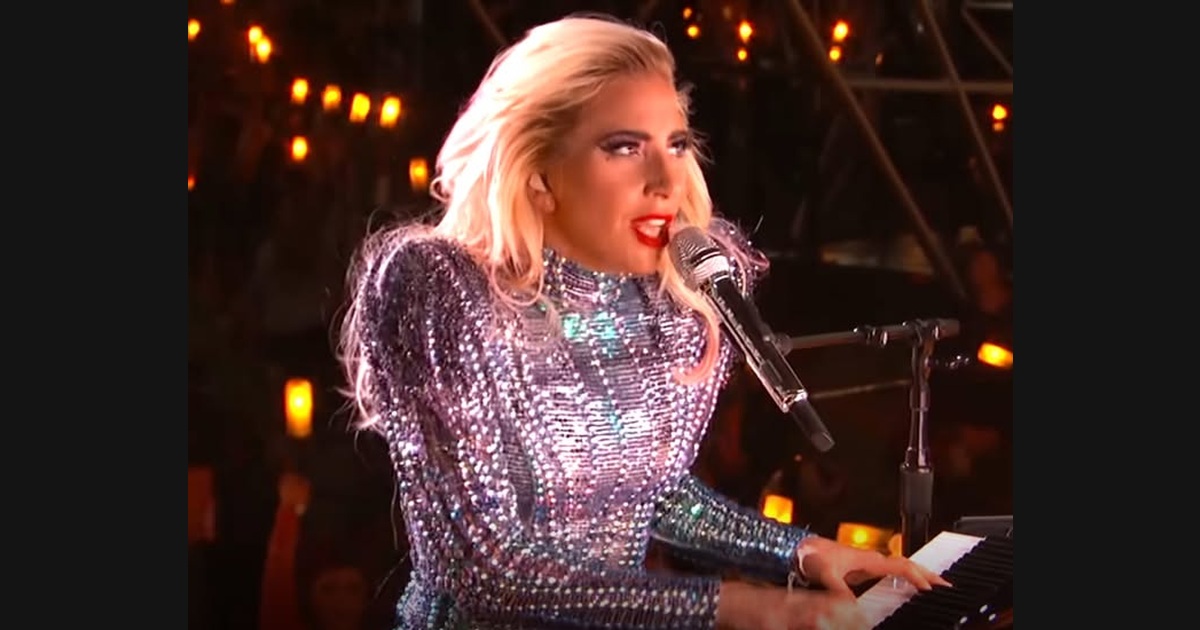
A halftime show has to work as one event even when it contains music from different parts of an artist’s catalog. Lady Gaga’s Super Bowl LI performance is a useful example of that programming problem: the viewer follows a continuous presentation rather than a normal sequence of full concert selections.
The NFL documents the occasion in Houston on February 5, 2017, and publishes the complete halftime performance on its own channel. That official frame identifies the recording without relying on a repost’s title or an invented account of what every spectator felt.
Watch on YouTube ↗
Recognition has a different timetable
In a standalone recording, a song can establish its own introduction and pace. Within a short multi-song show, recognition often has to happen quickly enough for the performance to keep moving. A familiar entrance or returning section can supply orientation while the larger program continues.
That does not make every excerpt an incomplete failure to play the whole song. The unit being shaped is the show. Each selection has a role within its sequence: establishing an identity, changing the intensity, creating a pause, or preparing the ending.
Try mapping the show with those functions instead of writing a list of favorite moments. A sequence marked “establish, expand, contrast, finish” explains relationships. It also leaves room for disagreement about where those functions occur without pretending that the performers supplied that exact plan.
Scale is more than the number of people visible
A television performance can feel larger or more concentrated through several resources: the amount of movement, the density of musical activity, the framing of the lead performer, and the space allowed around a vocal line.
A quieter musical passage can therefore remain part of a large event. It does not need to compete with an adjacent dance-oriented section on the same terms. Contrast can make each section more legible by changing what the audience is asked to follow.
For a concrete comparison, identify a passage where your attention narrows toward the singer and another where several activities compete for attention. Explain which musical or visual resource creates that difference, rather than using “intimate” and “spectacular” as unexplained labels.
“Poker Face” in a standalone video
Watch on YouTube ↗
The official “Poker Face” music video changes the organizing frame. Here one song has an entire visual presentation built around it. Compare the time available to establish its musical identity with the role of a selection inside a continuous halftime program.
A music video also supplies its own edited visual world. It should not be treated as evidence of how the Super Bowl stage was assembled or how every sound in the live-event release was captured.
“Million Reasons” offers a different reference
Watch on YouTube ↗
The official “Million Reasons” video gives another single-song presentation. Its relevance is not that it must look like the halftime appearance, but that a composition can be placed within different visual and program structures.
Return to the full show after those comparisons. Describe one transition that changes the viewer’s task and one selection whose function becomes clearer within the sequence. That produces an account of the halftime show as a designed program, rather than a collection of disconnected songs or an unsupported claim about universal audience reaction.