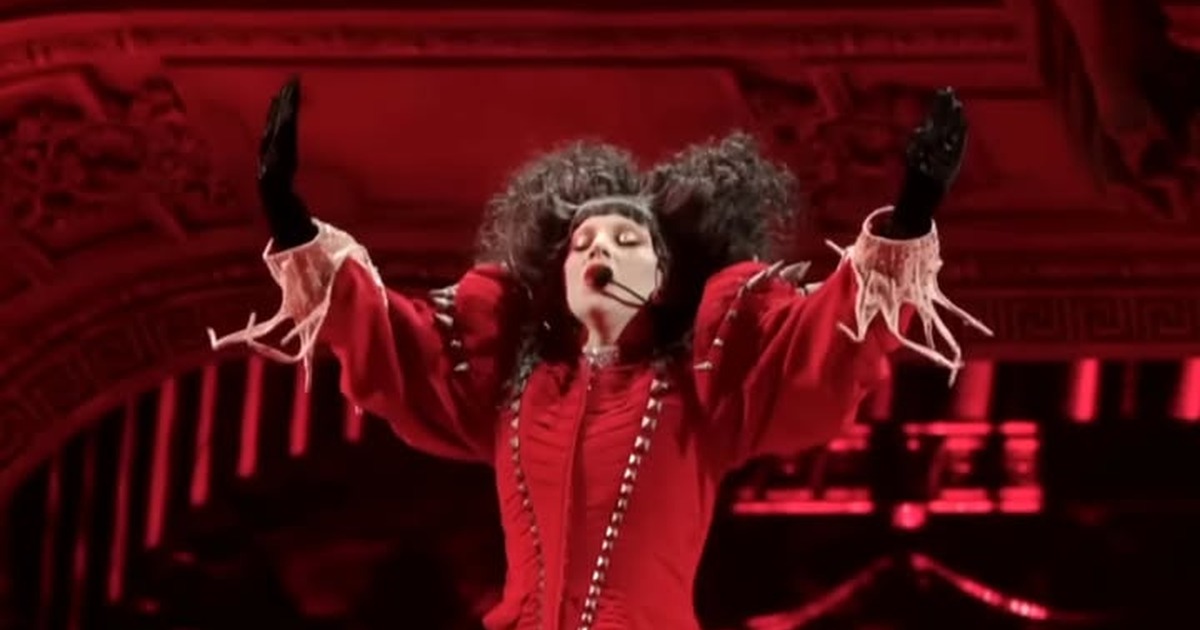
A medley has a problem that a single-song performance does not: it must make more than one composition feel like a deliberate program. Lady Gaga’s Abracadabra / Dead Dance selection, published by MTV for the 2025 Video Music Awards, offers a way to explore that problem. Recognition of each song matters, but so does the relationship built between them.
The slash in the title identifies two selections. It does not tell the viewer whether the transition will be abrupt, gradual or designed around a contrast. That is the work of the arrangement and presentation, and it gives the clip a structure beyond a collection of familiar moments.
Watch on YouTube ↗
Three jobs at the join
A transition must finish or suspend what came before, introduce something new and maintain enough continuity for the viewer to remain oriented. These jobs can be handled by different elements. A recurring pulse may continue while the melodic material changes; a visual shift may prepare a musical contrast; a pause may make the boundary unmistakable.
For a useful viewing pass, include both sides of the join. Watching only the new song’s entrance can make the transition seem simpler than it is. The ending of the first selection may be doing essential work by leaving space, gathering energy or setting up an expectation.
Recognition and development are different priorities
A television medley may not give every song the space it would receive in a full concert rendition. A short recognizable passage can establish identity before the program moves onward. That is a choice about presentation rather than evidence that the omitted material is unimportant.
Imagine two possible designs. One presents a complete-feeling section of the first song and then begins the second. Another uses fragments that lead toward a shared climax. Both can work, but they invite different kinds of attention: the first emphasizes contrast, while the second emphasizes momentum across the boundary.
The camera is part of this experience. An edit can redirect attention at the same time as a musical change. It should not be confused with proof of how the performance was recorded or what a person elsewhere in the venue could see.
A tribute cover gives the singer another assignment
Watch on YouTube ↗
Gaga’s I Wish selection from the Stevie Wonder GRAMMY salute changes the task. The performance is organized around another artist’s composition and an explicit tribute occasion. Compare the relationship between the singer’s identity and the material being presented.
In a medley of one’s own repertoire, the connection between selections can form part of a continuing artistic presentation. In a tribute cover, recognition also points outward to the songwriter or artist being honored. The formats can share performance energy while having different organizing purposes.
A television solo can develop one song
Watch on YouTube ↗
The official Happy Mistake selection from Jimmy Kimmel Live! provides another contrast. A single-song feature can concentrate attention on the development of one central idea. It does not need a second title to create a destination or a new starting point.
Returning to the medley after that comparison makes its joins easier to evaluate. The interesting question is not simply whether two songs sound good together. It is how the performance makes each song recognizable while building a route from one to the other, giving the combined selection a shape of its own.


