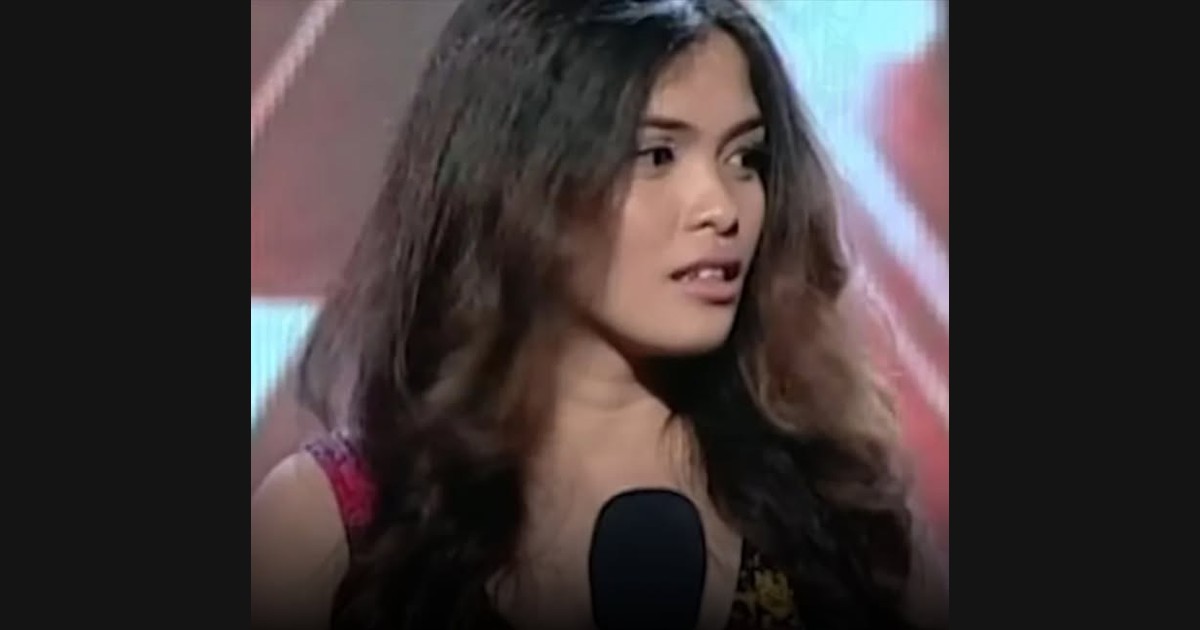
Comparing two performances by the same singer is most useful when the songs themselves remain visible. KZ Tandingan’s “Over the Rainbow” audition and her “Rolling in the Deep” performance ask different questions of an interpreter. A familiar voice connects them; their writing, dramatic premises, and television contexts do not become the same.
“Over the Rainbow” comes from Harold Arlen and E. Y. Harburg’s writing for The Wizard of Oz, associated with Judy Garland’s 1939 recording. “Rolling in the Deep” is credited to Adele and Paul Epworth. Those authorship differences supply a better starting point than a general claim that both performances are simply powerful.
Watch on YouTube ↗
A song that imagines another place
The premise of “Over the Rainbow” points beyond the speaker’s present situation. Its recognizable melody can therefore carry expectation as well as familiarity: a listener may already know where a phrase is heading, while the singer decides how to shape the journey toward it.
Pay attention to complete phrases rather than isolated high or sustained notes. Where does a musical thought begin to feel settled? How does the space between phrases affect the sense of forward movement? These observations connect interpretation to the composition instead of treating the audition as a collection of vocal demonstrations.
A recognizable song also supplies a listener with an internal reference. The interesting departure is not necessarily the most elaborate one. A change of emphasis can redirect a familiar line without making the melody difficult to recognize. Describe the particular effect you hear rather than assuming that difference from a remembered version automatically means improvement.
Another view of the audition
Watch on YouTube ↗
The second “Over the Rainbow” upload is a related audition recording, not evidence of another round merely because it appears as another video. Use it to clarify the source and presentation. Differences in framing, editing, or uploaded sound can change what attracts attention even when the underlying performance is shared.
This is also a reason to avoid treating every visible reaction as a musical verdict. The performance offers enough material in its phrasing and structure. A listener does not need to reconstruct the thoughts of judges or audience members to explain why a particular passage is effective.
A different dramatic engine
Watch on YouTube ↗
The official Mango TV presentation places “Rolling in the Deep” in Singer 2018, a separate program context. Here the comparison should begin again with the song. Its recurring verbal and musical ideas can create insistence, while the relationship between a lead line and its surrounding pattern offers a different source of momentum.
Instead of asking which selection allows more impressive notes, ask what each musical framework needs. A long melodic thought may depend on continuity across a phrase. A strongly recurring pattern may make timing, articulation, and the return of an idea especially noticeable. Those are useful listening possibilities, not a claim that either song has only one correct treatment.
Make two short notes after the comparison: one about the composition and one about Tandingan’s interpretation. For the first, describe the song’s organizing idea. For the second, name a delivery choice you can actually hear. Separating those contributions makes it easier to appreciate a singer’s adaptability without losing sight of the writers whose material makes the contrast possible.


