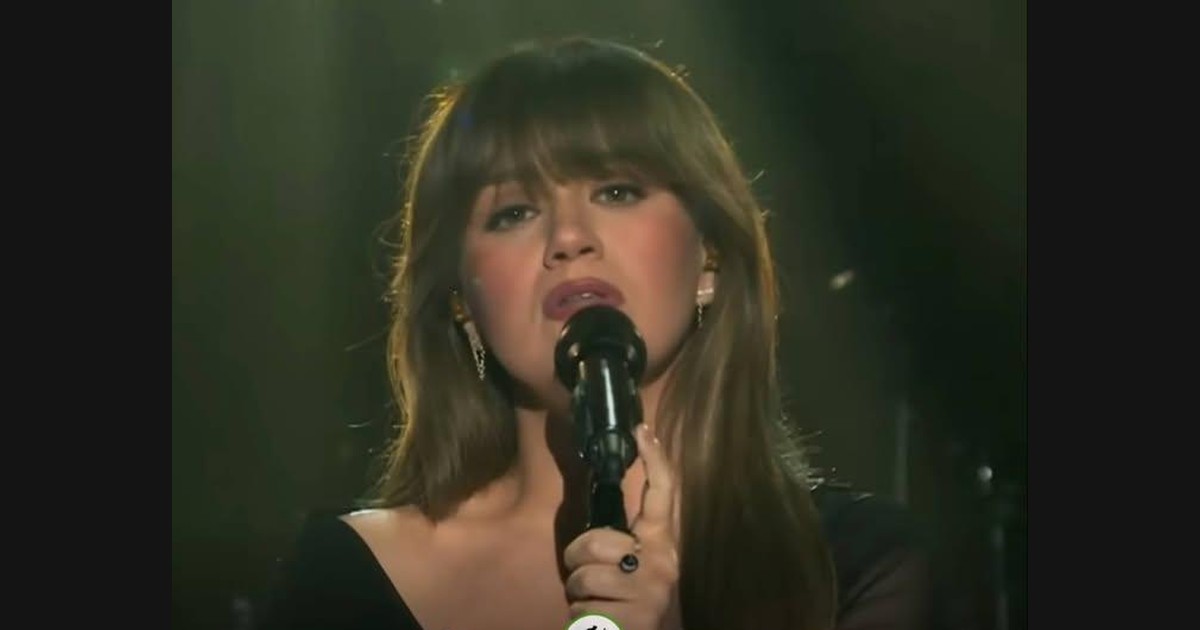
A familiar ballad can make a listener impatient for the moment they already remember. In “All by Myself,” that anticipation can draw attention toward an arrival and away from the phrases that make it matter. Kelly Clarkson’s Kellyoke performance offers a useful reason to listen in the opposite direction: start with the preparation.
The song is often associated with Celine Dion, but her own official album account describes it as her interpretation of Eric Carmen’s song. Recognizing that distinction leaves room to compare performances without turning a famous later version into the composition’s point of origin.
Watch on YouTube ↗
An arrival needs somewhere to arrive from
Musical contrast is relational. A phrase can feel expansive because an earlier passage gave it another scale, pace, or texture for comparison. Isolating the climactic sound may preserve an impressive moment while removing part of its explanation.
On a first pass, follow how the song establishes its starting point. Notice the length of a complete vocal thought and the space around it. Then consider what changes as the performance develops. More activity, a wider melodic movement, and greater apparent intensity are separate possibilities, not interchangeable measurements.
This approach avoids making the whole performance a high-note contest. A listener can admire a prominent arrival while also identifying the phrasing that prepares it. The relationship between those parts is what gives a ballad an arc rather than a series of disconnected peaks.
Expectation belongs to the listener too
If you know another version well, you may anticipate a musical event before Clarkson reaches it. That expectation becomes part of your experience, but it is not evidence that a singer intended to reproduce every choice in your remembered recording.
Try naming the source of your expectation. Is it the composition’s recurring material, the memory of Dion’s recording, or a previous Clarkson performance? Separating those references makes differences easier to describe precisely.
Watch on YouTube ↗
The second upload returns to the Kellyoke selection. A new uploader does not establish another occasion. Compare the available context and framing, but avoid attributing a change in captured loudness automatically to a change in vocal effort.
When the underlying performance is shared, the useful question may concern presentation: what does a title encourage the viewer to wait for, and what does the complete musical passage offer beyond that advertised moment?
Another ballad, another dramatic path
Watch on YouTube ↗
Clarkson’s official “I Will Always Love You” performance at the 57th ACM Awards supplies a different song and event. The comparison works best when it follows the same principle: hear the beginning and development before judging the arrival.
Do the two songs create anticipation in the same way, or does one make you attend more closely to a pause, a return, or the conclusion of a phrase? An answer grounded in the recordings is more informative than assuming every well-known ballad uses an identical formula.
For a final note, connect one preparatory choice with one later effect. Describe how a passage gives another passage meaning. That is a concrete way to appreciate Clarkson’s interpretation while keeping the song’s writing, the memory of earlier versions, and the particular performance in view together.


