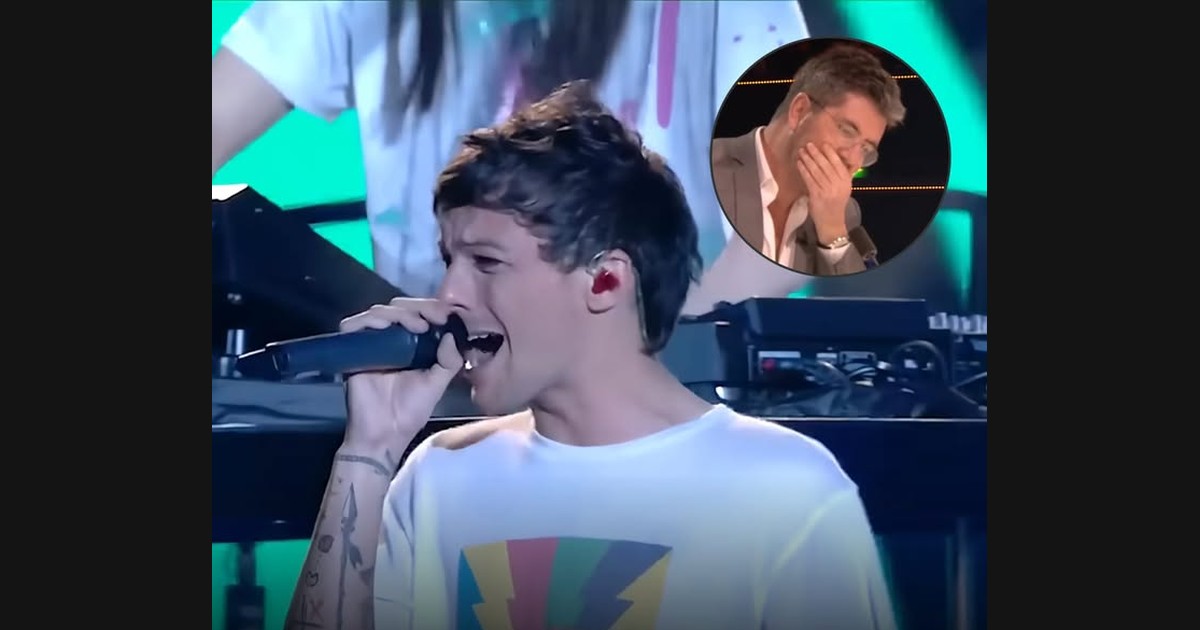
Louis Tomlinson and Steve Aoki’s “Just Hold On” is a co-billed collaboration, even though their contributions are not identical stage roles. Tomlinson provides the featured vocal identity, while Aoki is also credited with production. A joint artist credit does not require two people to sing the same number of lines.
Sony Music’s account identifies the performance as the song’s December 10, 2016, premiere on The X Factor UK stage at Wembley Arena. The recording’s label listing gives the same date for the single’s release. These facts establish a particular launch occasion without requiring a private emotional narrative around it.
Artist billing and musical function are different descriptions
The principal official X Factor upload names both collaborators. That naming is useful because a television camera naturally gives a singer conspicuous attention, while a collaborator’s work may extend beyond what a microphone shot reveals.
Watch on YouTube ↗
A producer can shape a recorded track through decisions about arrangement and sound. A vocalist realizes a principal sung line. Those functions can overlap with writing, but they should not automatically be collapsed into it.
The song has a collaborative writing credit
Sony’s announcement names Tomlinson, Aoki, Eric Rosse, Sasha Sloan, and Sir Nolan as writers and identifies Aoki as producer. That separates the composition’s credited team from the two names in the performance headline.
| Credit | What it identifies |
|---|---|
| Tomlinson and Aoki | The collaboration presented in the artist billing. |
| Five named writers | The credited composition team. |
| Aoki, producer | A documented production responsibility. |
| X Factor appearance | A particular television presentation of the release. |
These lists answer different questions. A performer’s visibility does not supply the entire writing credit, and a production credit is not a complete account of what happens live at every instant on a television stage.
Hear the vocal line against the electronic framework
For a musical focus, distinguish the principal melody from the repeating accompaniment around it. A continuing rhythmic framework can give a sung phrase momentum while leaving space for that phrase to extend or pause.
Follow one complete passage rather than isolating a brief vocal moment. Notice what remains recognizable when the singer is between phrases. This keeps the collaboration’s surrounding musical design in view without inventing details about which stage controls generated each sound.
The global upload is another program presentation
The second video comes from X Factor Global and again identifies Tomlinson and Aoki with the song. It provides another official program route to the collaboration, not proof of a second premiere.
Watch on YouTube ↗
A different title or selected excerpt can emphasize another part of the appearance. Keep the original event context attached unless a source specifically establishes a different performance.
The final upload retains the same television label
The third-party companion also labels the performance with The X Factor UK in 2016. Its extra publisher wording should not be used to invent another venue, film connection, or stage occasion.
Watch on YouTube ↗
The clearest account remains concise: a jointly billed single, a documented writing and production team, and a television launch performance. That framework lets the viewer hear complementary contributions without expecting every collaborator to perform the same visible task.


