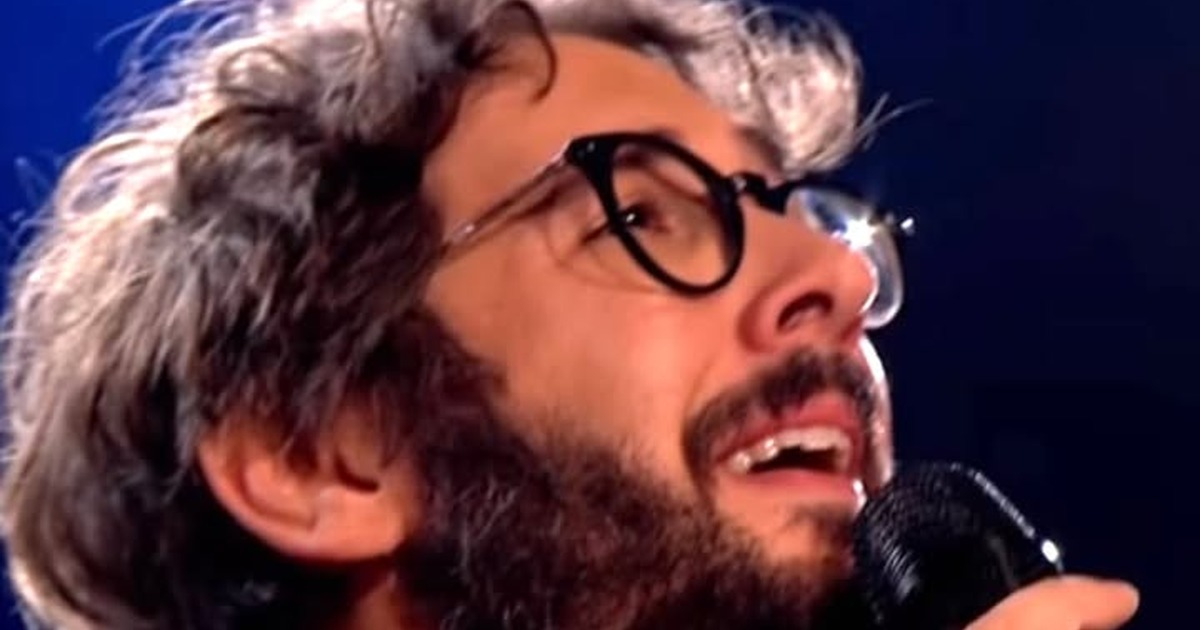
A familiar singer can make different songs seem immediately related, but their speakers do not necessarily want the same thing. Josh Groban’s You Raise Me Up, The Impossible Dream and All I Ask of You provide three distinct kinds of address: acknowledging support, articulating aspiration and sharing a request within a duet.
The BBC identifies the first selection as Proms in Hyde Park 2018 with the BBC Concert Orchestra and Rock Choir. The next is a Radio 2 presentation. The final official clip comes from Stages Live, placing the set within several performance frames as well as several compositions.
Acknowledging what another makes possible
Watch on YouTube ↗
You Raise Me Up directs attention toward a source of support. Its dramatic action is an acknowledgment: the speaker recognizes a relationship that enables something. That differs from simply declaring an independent intention.
The addressee can remain open to a listener’s associations. A public rendition does not tell us exactly whom every person imagines. The useful continuity is the act of recognizing support, rather than an assumed identical biography among performer and audience.
Aspiration points toward an undertaking
The Impossible Dream changes the direction of attention. Its title frames a goal that challenges ordinary expectation. In a playlist, this supplies another dramatic task rather than a second way of saying precisely the same thing.
Watch on YouTube ↗
Compare the speaker’s relationship with the future. An acknowledgment looks at what a source of support makes possible; an aspiration directs itself toward an undertaking. The two can be connected in a listener’s life while remaining distinct situations in the writing.
That distinction helps avoid describing every sustained or expansive song as generically inspirational. Inspiration is an effect a listener may experience. It does not explain how a composition establishes its particular point of view.
A duet makes an addressee another performer
The final selection, All I Ask of You, brings the relationship into a shared vocal format. Groban’s official Stages announcement connects the song with The Phantom of the Opera and a Kelly Clarkson collaboration. The live clip supplies its own presentation within that repertoire.
Watch on YouTube ↗
A duet can make the addressed person musically present. Instead of leaving a listener to imagine the other side of an appeal, two voices can carry a relationship through alternation or shared material. The second participant is not merely another sound; that performer can change the dramatic structure of the address.
Follow the verb behind the feeling
A practical way to compare these songs is to identify an action before choosing an emotional adjective. Is the speaker acknowledging, aspiring or asking? That action gives a phrase a purpose, while a word such as moving describes a listener’s response.
The method is useful without turning a concert performance into a full theatrical scene. A singer can carry dramatic direction through repertoire outside its original staging. The presentation changes, but a song still offers someone a reason to speak or sing.
Groban’s voice connects the set; the writing differentiates it. Hearing those distinct actions gives each selection room to do its own work. Encouragement, aspiration and a shared request can belong beside one another without being flattened into a single emotional category.