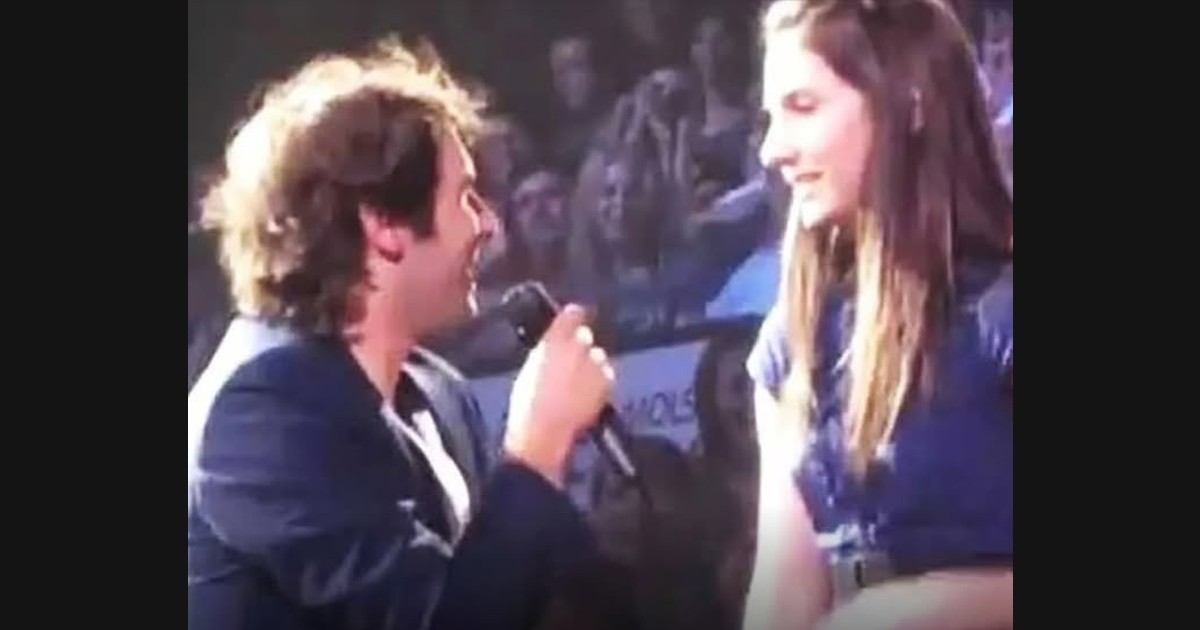
The main Josh Groban–Maude Daigneault upload calls itself a multi-angle “To Where You Are” compilation. Its description provides more useful information than its superlative headline: the editor identifies six source clips and credits the audio track to one of them.
Those details establish a constructed presentation of a concert encounter, rather than six separate duets. The editor’s 2013 publication date is also later than the Montreal appearance it preserves.
Watch on YouTube ↗
The occasion has independent context
Groban’s official site published a road reporter’s account of the Montreal Straight to You show in July 2011. That account identifies a request from Maude for “To Where You Are.” Daigneault’s own later anniversary note separately dates the encounter to July 23, 2011.
The two primary connections help keep the event distinct from the compilation’s release. A video uploaded years afterward can still document an earlier performance; its publication date should not silently move the concert.
One audio source can connect several views
The editor names prismadea as the audio source and identifies other contributors to the pictures. A continuous musical track can therefore accompany changes of viewpoint. The image may move around the venue while the underlying performance continues.
For example, a cut from an over-the-shoulder view to a wide stadium image changes what is visible. It does not, by itself, show another entrance or a second run through the song. Listen to the musical continuity before turning a visual cut into a new event.
This also limits what can be concluded about reactions. A selected shot can show a public response, but the edit does not supply a complete timeline of what every person saw or felt.
The participant’s own upload is another source
Watch on YouTube ↗
The second selection is published under Daigneault’s name and identifies “To Where You Are.” That gives her a public musical identity beyond an anonymous audience-guest label.
Use its own presentation to determine its relationship with the concert material. A participant-published song selection is not automatically identical footage to a later fan compilation merely because it shares names and title. Source ownership and performance occasion are different fields.
A simple catalog note should identify the uploader, the performers named, and the event where established. Leave an uncertain field open rather than borrowing every detail from another release.
Another Montreal view
Watch on YouTube ↗
The prismadea upload identifies Groban with Maude during the Montreal tour appearance. It is especially relevant because the compilation’s description credits that source for its audio.
Compare how the selected viewpoint changes your attention while retaining the event’s identity. The closer view, wider picture, and continuous soundtrack do different jobs in making the encounter available to a remote audience.
The duet remains a shared musical appearance, not a formal announcement of a professional contract. Concert banter or an enthusiastic headline should not be converted into a guaranteed career outcome.
Keeping the source credits visible gives the recording a clearer value: a documented guest encounter is preserved through multiple views, then assembled into another public presentation. The musical partnership and the editor’s work can both be recognized without confusing the number of clips with the number of performances.