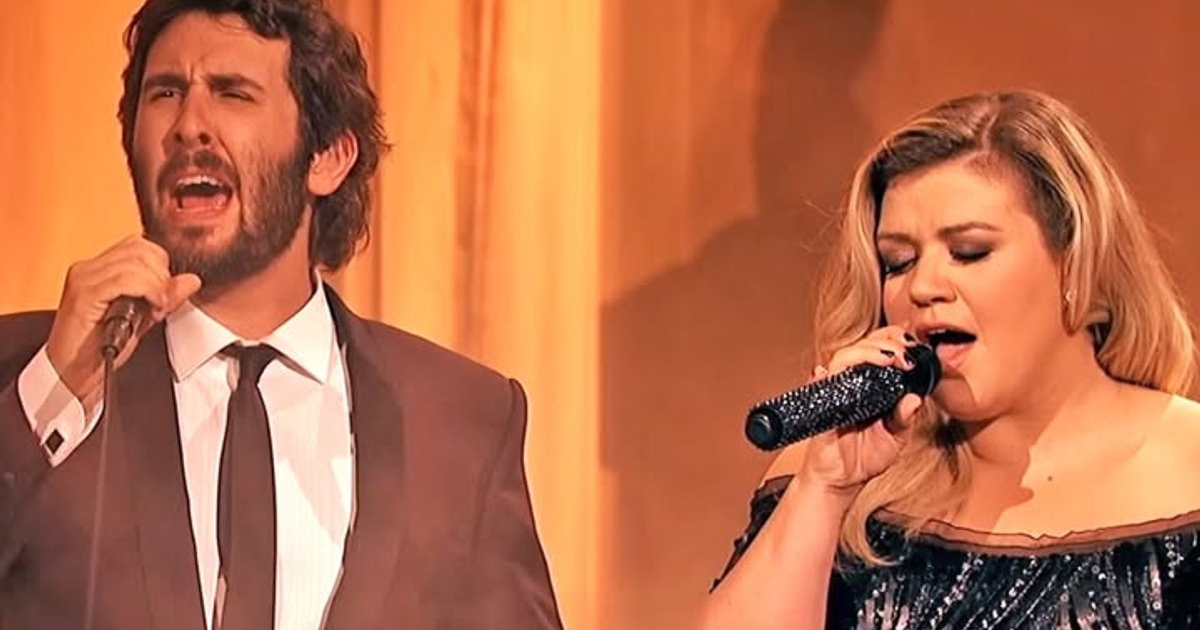
“All I Ask of You” has a life inside The Phantom of the Opera and a life as a concert duet. Josh Groban and Kelly Clarkson’s Stages Live performance belongs to the second. It presents a song from a larger dramatic work without asking the audience to watch an entire production around it.
The broadcaster’s program information places Stages Live at the Los Angeles Theater and identifies Clarkson as Groban’s partner for this selection. The television special draws on musical-theater repertoire, so the duet is part of a larger exploration rather than an isolated attempt to turn a pop concert into an opera.
Watch on YouTube ↗
What survives when a song leaves its scene?
A theater song normally arrives with characters, circumstances, and earlier events already established. A concert selection cannot assume that every listener knows those details. It has to communicate enough of its relationship through the musical exchange itself.
A duet offers a practical way to do that. Separate voices can establish two perspectives, while shared passages allow those perspectives to meet. The audience can follow an offer, a response, and a developing connection without needing a complete plot summary before the first note.
This does not turn the featured singers into their characters outside the performance. A convincing musical relationship belongs to the interpretation. It is neither evidence of a private romance nor a reason to confuse the singers with the people represented in the original show.
Shared time is as important as shared sound
It is easy to describe a duet only through vocal power. Coordination offers a more specific focus. A singer needs room to finish a phrase; a partner needs a clear opportunity to answer. When two lines meet, their timing helps the listener understand the connection even before considering tone or volume.
For a close viewing, follow one phrase from each singer and then a moment of joint singing. Consider how the change from separate to shared address alters the scene. There is no need to decide which performer wins the song: the duet’s musical purpose depends on their relationship.
A concert has its own dramatic frame
Stages Live places songs from different musicals inside one program. A selection has to establish a small world and then leave room for the next piece. Introductions, accompaniment, and the sequence of songs can help a concert achieve that change of scene without full theatrical scenery.
The dates attached to the special also need care. Broadcast schedules varied by location, as Groban’s official announcement explains. A local screening or later video upload should not automatically become the date of the original concert.
From a duet to a solo address
The BBC Music clip of “You Raise Me Up,” labelled Proms in Hyde Park 2018, changes the task. Groban is no longer one half of this particular theater duet. Compare how a solo song establishes its listener or addressee without an answering featured partner.
Watch on YouTube ↗
“The Prayer” with Celine Dion then returns to a duet, using different material. It provides another example of voices sharing a musical statement outside a full dramatic production.
Watch on YouTube ↗
The comparisons clarify what Groban and Clarkson are doing in “All I Ask of You”: carrying a relationship through a self-contained concert performance. Its theatrical origin remains important, while the live program gives the song another setting in which to communicate.