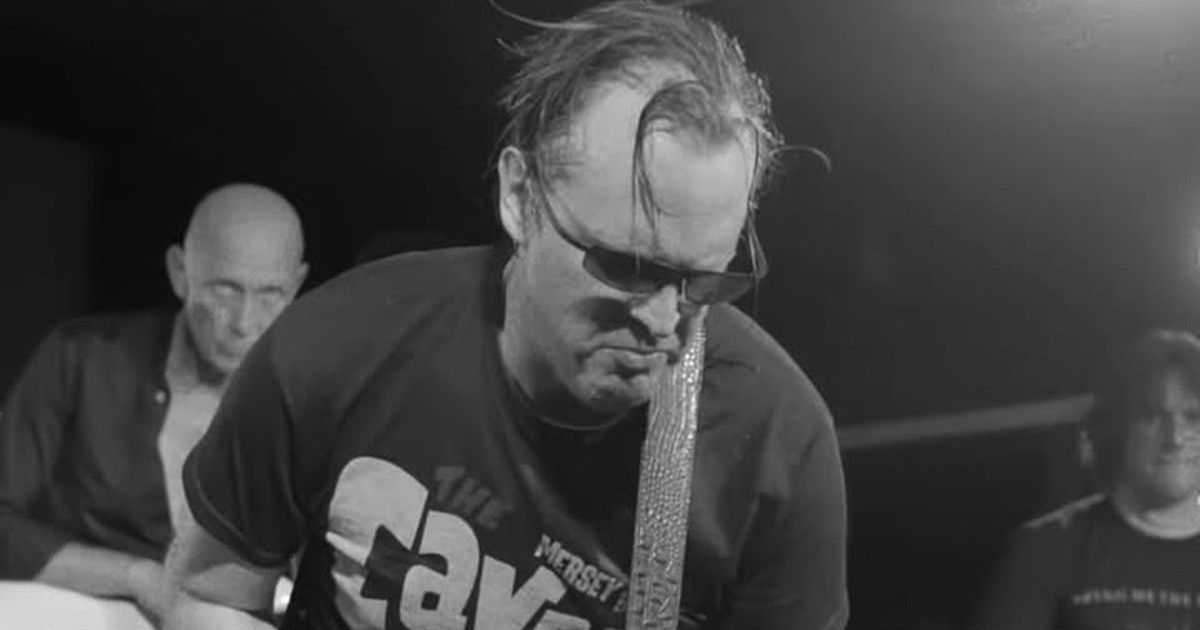
Joe Bonamassa’s “Taxman” at the Cavern Club was made for a particular project: Howard Stern’s 2016 tribute to the fiftieth anniversary of the Beatles’ Revolver. Bonamassa’s own announcement connects the exact video to that project and identifies the Liverpool setting. This gives the cover a clearer purpose than describing it as an unexplained jam found in his live catalog.
The song is George Harrison’s composition. The tribute asked different artists to interpret material from the album, so Bonamassa’s contribution belongs to a larger program of covers rather than a complete performance of Revolver by his own band.
Watch on YouTube ↗
The band deserves a full credit
Bonamassa’s announcement names Anton Fig on drums, Russ Irwin on guitar, Reese Wynans on keyboards, and Michael Rhodes on bass, with Kevin Shirley producing. Those details make it possible to discuss an ensemble recording rather than allowing the lead guitarist’s name to stand for every part of the sound.
A recognizable guitar figure still depends on musical relationships. Bass and drums can establish movement, keyboards can add another layer of support, and a second guitar can occupy a different part of the arrangement. The interesting question is how these functions leave room for the song’s featured line.
A venue can be a deliberate reference
The Cavern setting connects the tribute with Liverpool’s Beatles history. It supplies a cultural frame, but it should not be used to make unsupported claims about exactly recreating an earlier room, sound, or audience experience.
Likewise, this project’s identity should remain attached to the recording. Bonamassa has other live releases and projects concerned with British music. A shared guitarist or broad stylistic connection does not make the Cavern clip part of every similarly themed release.
Keep the composition in view
The official Beatles recording is the most direct comparison. It provides a reference for the underlying song rather than a test that the cover has to pass by sounding identical. Follow the recurring material and the way each recording allocates space around it.
Watch on YouTube ↗
A cover can retain a song’s identity while changing its scale and emphasis. It is useful to distinguish that process from improvisation. Unless the musicians or production information establish which passages were improvised, the presence of extended instrumental playing alone does not tell us how the arrangement was prepared.
For a close comparison, choose one return of the main musical idea. Consider the relationship between that return and the preceding passage: does it provide continuity, contrast, or a point of arrival? This gives the instrumental work a place within the composition rather than treating it as a separate display.
A third interpreter
Stevie Ray Vaughan’s “Taxman” album version supplies the final selection. It changes the performer again while keeping the composition steady. The comparison is therefore about different approaches to the same piece, not three recordings from one occasion.
Watch on YouTube ↗
The sequence moves from a commissioned anniversary contribution to the Beatles recording and then another guitarist’s interpretation. That route keeps the song, the ensemble, and the project’s actual purpose visible together. Bonamassa’s Cavern performance becomes a specific contribution to a Revolver tribute, with its own musical decisions and a clearly identified place in his recording history.


