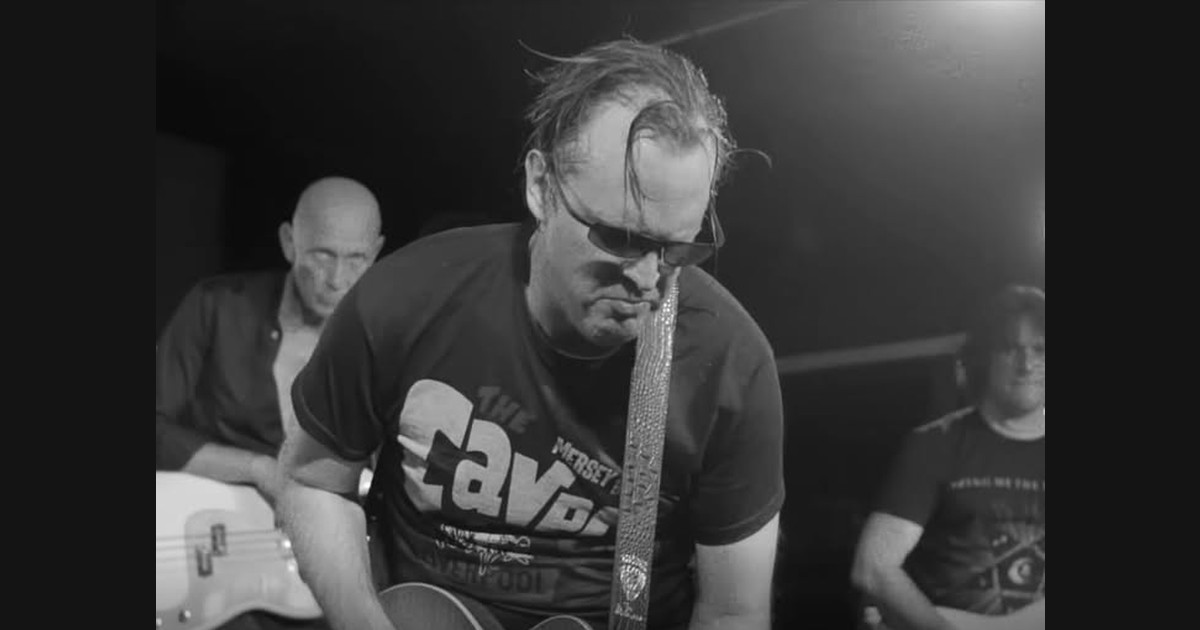
A prominent instrumental interpretation can become strongly associated with its performer without changing who wrote the underlying song. Joe Bonamassa’s Taxman selection from the Cavern Club is a useful starting point for that distinction. The Beatles’ official catalogue credits George Harrison as the writer and places the composition at the opening of Revolver in 1966.
The related Beatles recording and Stevie Ray Vaughan selection keep the composition in view through different performing identities. They offer three versions of a named work, rather than three unrelated pieces that happen to share a title.
The Cavern interpretation
Watch on YouTube ↗
A cover creates new musical work at the level of performance and arrangement. Phrasing, balance, the prominence of an instrument and the proportions of a section can all become specific to a version. Those contributions deserve attention alongside the original authorship.
The distinction prevents two opposite simplifications. A cover is not creatively empty merely because another person wrote the song. Equally, a highly recognizable instrumental contribution does not make the performer the writer of the composition.
Three kinds of creative responsibility
- Writing: creating the underlying song.
- Arranging: organizing the available parts for a particular version.
- Performing: delivering those parts through specific musical choices.
The same person can occupy more than one role, but the roles are not identical. A new version can preserve a melody and recurring material while changing the relationship between the featured voice and the instruments around it.
For example, an instrumental passage can take more foreground attention in one version than another. The change affects the listener’s route through the performance. It does not, by itself, create a new composition or establish that the song has become a different historical genre.
The Beatles reference identifies the source work
Watch on YouTube ↗
The official Beatles selection supplies the song in its original band-catalogue frame. Its placement at the start of Revolver also gives it a programming role: it introduces an album rather than functioning only as a standalone showcase.
Compare one complete section with the Cavern performance. Notice which recognizable ideas remain available and which parts receive different amounts of attention. Keeping the section whole is more informative than comparing only the fastest or most exposed instrumental moment.
This approach does not require a claim that the later performance was improvised without preparation. The released recording can be discussed through its musical relationships without inventing the process behind it.
Another interpreter keeps the distinction useful
Watch on YouTube ↗
The Stevie Ray Vaughan album selection offers a third performing identity. The same questions about foreground, support and proportion remain available, while the composition’s authorship stays with Harrison.
A useful preference can identify a specific relationship: the clarity of the central material, the amount of room around an instrumental idea or the way a section moves toward an arrival. Those observations make a comparison more precise than a general claim that one performer owns the song.
The sequence shows how repertoire gains further life through interpreters. Bonamassa’s contribution can be recognized as new performance work, Vaughan’s as another version and the Beatles recording as a distinct catalogue reference. Preserving those responsibilities gives every contributor a clearer place in the song’s continuing history.


