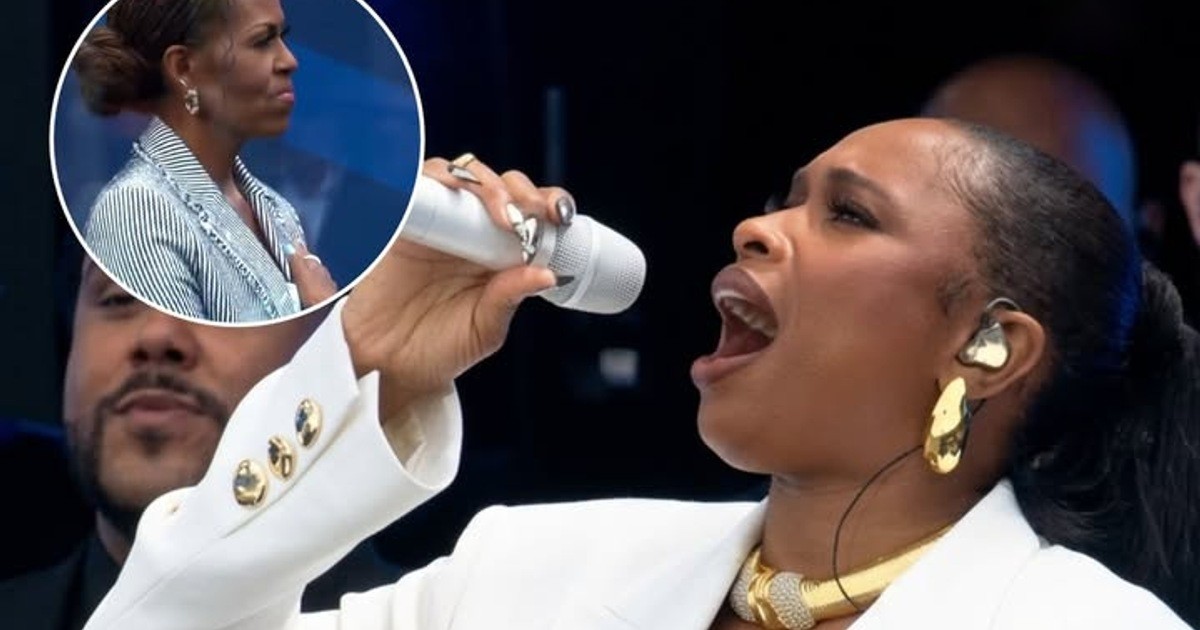
A ceremonial opening can include more than one kind of musical address. Jennifer Hudson’s appearance at the Obama Presidential Center offers a clear example: the selection includes the national anthem and The Impossible Dream. The two pieces share a performer and occasion while doing different work within the program.
The Obama Foundation identifies the grand opening ceremony as June 18, 2026, in Chicago. Its published record names Hudson among the participating musicians. That is the specific event frame for the embedded full-performance video, rather than a general clip from an undated presidential occasion.
The opening appearance
Watch on YouTube ↗
A ceremonial item establishes a shared frame
An anthem arrives with public associations that exist before one singer undertakes it. The composition is familiar to many listeners, and its place within a ceremony supplies a function beyond presenting an artist’s current repertoire.
The performer nevertheless has a musical task. A recognizable form must be made into a complete statement in the present. Familiarity supplies expectations; it does not sing the phrases or organize their direction on the performer’s behalf.
That distinction makes room for individual interpretation without treating the ceremony as only a vocal competition. A technical highlight can be noticed, but the work also belongs to an opening program with a beginning, an audience and a purpose.
A second piece changes the address
The second selection introduces a title associated with an ambitious undertaking. That is another kind of statement from an anthem’s public ceremonial role. The order can therefore create a movement from recognizing a shared occasion toward articulating possibility.
This is an interpretation of the program’s shape, not proof of the private intentions behind every phrase. A public performance can support different responses without establishing an identical emotional experience for all those present.
The distinction also protects the recording from an incomplete label. Describing a full set only through its first item can make later material disappear. Identifying both compositions allows the entire selection to retain its shape.
A soloist with a named chorus
The LeAnn Rimes companion presents The Rose with the Gay Men’s Chorus of Los Angeles. It changes the event and composition while making another musical relationship explicit: an individual performer shares a piece with a collective vocal partner.
Watch on YouTube ↗
The comparison concerns kinds of public address, rather than an assumption that every ceremonial or communal performance has the same subject. The named people and writing remain particular to each record.
Another outdoor public concert
The final BBC selection identifies Josh Groban’s You Raise Me Up at Proms in Hyde Park 2018, joined by the BBC Concert Orchestra and Rock Choir. Another named ensemble and another composition supply a different kind of concert frame.
Watch on YouTube ↗
These companions widen the idea of a public musical statement without replacing Hudson’s event history. Her opening set belongs to a June 2026 ceremony in Chicago and contains distinct kinds of address. A familiar anthem establishes one relationship with the gathering; a second selection gives the appearance somewhere else to go before it ends.