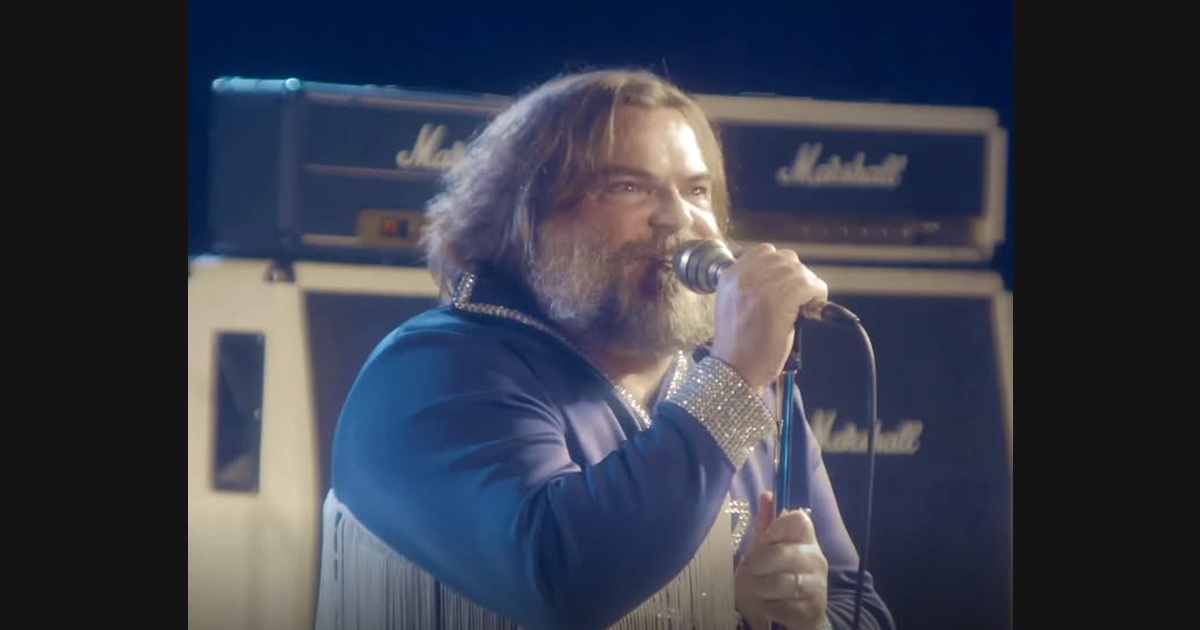
Jack Black is the immediately recognizable figure in the “Mr. Crowley” tribute, but the official credits describe a complete band. Roman Morello plays guitar, Hugo Weiss keys, Revel Young Ian bass and Yoyoka Soma drums. Their named responsibilities give the performance a more useful frame than a story about a celebrity appearing with anonymous young musicians.
Osbourne’s official channel presents the recording as part of Back to the Beginning, connecting it with the final show. The description also names Tom Morello as music director. This is a deliberately produced tribute with a credited musical and filmmaking team.
Watch on YouTube ↗
Follow the ensemble from the foundation upward
A practical way into a rock arrangement is to separate pulse, harmonic foundation and foreground. Drums help define the rhythmic framework; bass connects rhythmic motion with pitch; keys and guitar can establish harmony or take a more prominent melodic role. These are flexible functions, not rules that prevent an instrument from doing something else.
Following the credited players makes those jobs easier to locate. Instead of listening only for the lead voice, choose one supporting role for a complete section. Notice how its continuing activity helps a different part become prominent without the music losing its direction.
Why bass and guitar are not interchangeable
Two stringed instruments can operate at different levels of the arrangement. A low foundation can make a harmony feel grounded while a guitar line moves through a more conspicuous figure. Their relationship matters even when a listener cannot name the notes.
Keys add another resource: an introduction, a sustained background or a contrasting melodic color can give the arrangement another dimension. The useful question is what a part is contributing at a particular moment. Its visual prominence does not determine its musical importance.
A reference from Osbourne’s own performance history
The official 1981 “Mr. Crowley” live video supplies a reference from the artist whose repertoire is being honored. Compare the broad responsibilities in the band rather than expecting every detail of a later tribute to duplicate the earlier performance.
Watch on YouTube ↗
An introduction, a vocal section and an instrumental passage make different demands. One performer can occupy the foreground while the others preserve continuity; the balance can then shift. A song with a strong instrumental identity needs those exchanges as well as a recognizable singer.
Black’s theatrical presentation adds another layer of reference to Osbourne. That characterization can help establish the tribute’s premise, but it does not replace the band work. A visual imitation and a complete musical arrangement have related, distinct jobs.
Another live version, another ensemble balance
The Live & Loud recording offers a further Osbourne reference. It gives listeners another setting in which to examine how the same composition accommodates changing performance conditions.
Watch on YouTube ↗
Returning to the tribute afterward makes the credits more than a list. They identify the people responsible for the musical framework surrounding Black. The recording is interesting not only because a familiar entertainer takes on a familiar song, but because a named ensemble gives that performance its foundation, movement and instrumental character.