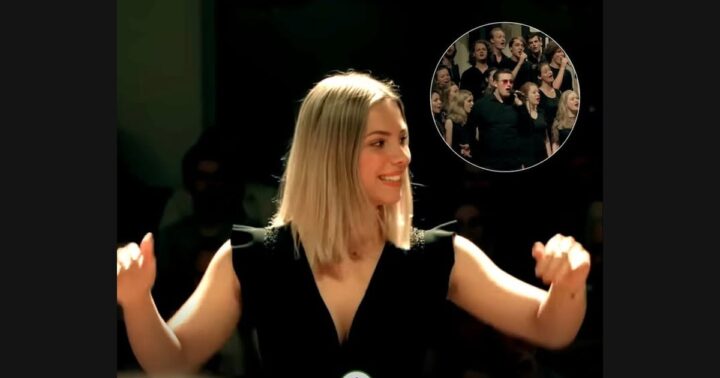
The Jack and Dad channel’s “The Boxer” cover places a familiar narrative song in a small-scale performance setting. The upload identifies Jack as the featured singer. Its most useful subject is the work of carrying a story through a musical line, rather than an exaggerated claim that a new version has surpassed every earlier recording.
Paul Simon’s composition has an identity beyond the people performing it here. That matters with a first-person song: a singer can communicate a narrator’s perspective without the audience assuming that every event described has happened in the performer’s own life.
Watch on YouTube ↗
A narrative song gives the singer a route
A story unfolds through successive details. The listener needs enough continuity to understand that those details belong together, while each new passage has to contribute something to the developing perspective. Melody can help keep that route recognizable even when the words carry most of the narrative information.
For a first listen, follow the sequence of thoughts rather than judging individual notes. Where does one idea give way to another? What remains steady as the narrative develops? This approach makes phrasing part of storytelling instead of treating expression as an effect added after the words.
The narrator and the performer
Young performers often sing material written long before they were born. That is a normal feature of inherited repertoire, not a reason to demand that their life experience exactly match a song’s narrator. Interpretation involves imagining a musical perspective and making its sequence understandable.
The same principle applies to older and established singers. A believable performance need not function as autobiography. Keeping that distinction open allows a story-song to travel between generations without being rewritten as a private account of each new performer.
The channel’s family presentation adds another public frame, but it does not tell viewers everything about the people outside the recording. The performance can be appreciated without assigning a diagnosis, claiming a therapeutic effect, or inventing what someone felt while the camera was running.
Return to the associated recording
The official Simon and Garfunkel audio supplies the next point of reference. It keeps the composition steady while changing the performers and recording setting. That makes it possible to follow what the cover preserves and which relationships belong to its particular presentation.
Watch on YouTube ↗
Choose a recurring musical section for the comparison. Consider how it connects the surrounding narrative passages and how its return affects the sense of scale. A smaller setting does not have to reproduce every layer of a familiar record in order to preserve a composition’s direction.
A different song in the same channel setting
The final selection is the channel’s “Hallelujah” performance. This changes the material while retaining the family performance frame. Its purpose here is to compare how a different composition asks a featured singer to organize a phrase and a return.
Watch on YouTube ↗
A song with a strong narrative sequence and another with a particularly recognizable recurring title do not create identical tasks. The listener can follow those differences without treating every quieter cover as belonging to one undifferentiated emotional category.
Across the three recordings, “The Boxer” becomes a bridge between a songwriter’s established work, an associated recording, and a new channel’s interpretation. The close setting gives the listener space to attend to that process: a story carried through phrasing, accompaniment, and the recognizable structure of the song.