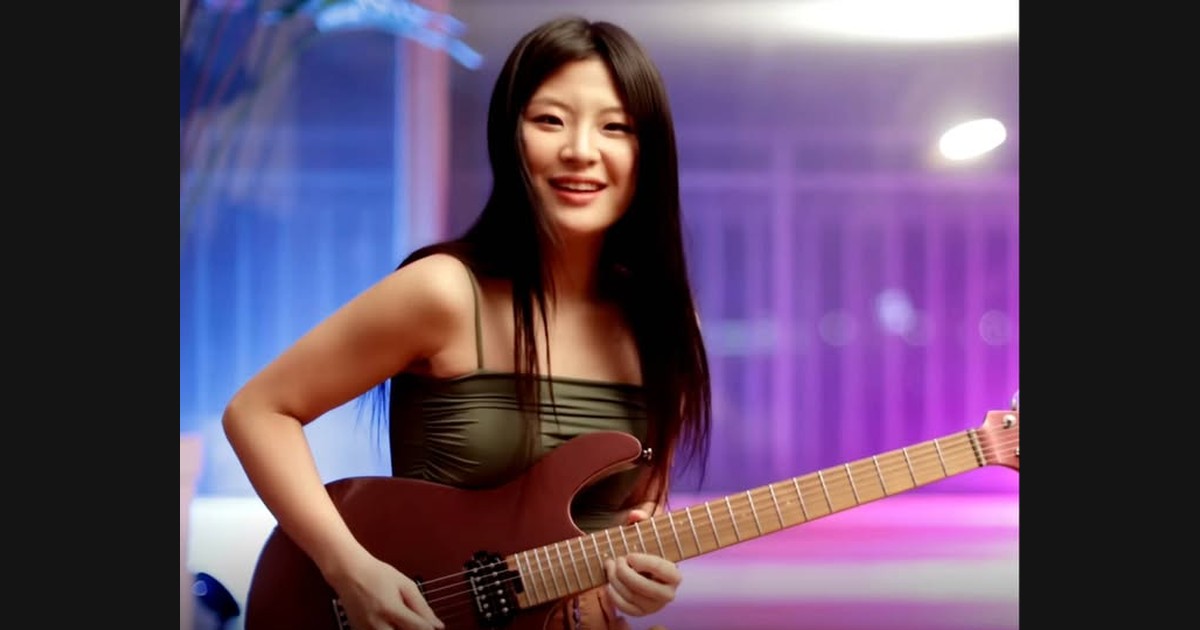
Izzyful’s “Canon Rock” performance is easier to follow when the changing lead line is heard against its repeating foundation. The most conspicuous guitar passage is one layer of the arrangement, not the whole structure. A recurring harmonic route can keep the music connected while the foreground becomes more active.
The performer’s own upload identifies “Canon Rock” and a Cort G300 Pro guitar. The companion upload identifies JerryC as the guitarist and arranger associated with its “original” presentation. Behind the rock adaptation sits Johann Pachelbel’s Canon in D, a different work with an earlier instrumental setting.
The source and the adaptation need separate names
Henle’s score identifies Pachelbel’s Canon and Gigue in D major for three violins and basso continuo. That establishes an ensemble source rather than an electric-guitar composition by Pachelbel. “Canon Rock” names a later guitar-oriented treatment.
Watch on YouTube ↗
Distinguishing the layers gives credit accurately. Pachelbel’s work supplies a source, the rock arrangement organizes that material for another setting, and Izzyful performs an individual version. A shared recognizable foundation does not make all three activities identical.
Follow what repeats before what accelerates
On a first pass, listen beneath the lead guitar for the returning harmonic movement. Retain its direction as the foreground changes. Once that route becomes familiar, a new lead figure can be heard as variation within a larger framework rather than an unrelated burst of notes.
| Layer | What to retain |
|---|---|
| Foundation | The recurring harmonic route. |
| Lead figure | A particular melodic or rhythmic statement above it. |
| Larger section | The sequence connecting several statements. |
A passage can become more active without the foundation changing at the same rate. That difference between layers is part of what allows a repeating framework to support continued development.
The JerryC upload is a reference with a named uploader
The second video’s description explicitly distinguishes guitarist JerryC from publisher Maes67. That is a useful reminder that the channel uploading a performance is not always the person playing in it.
Watch on YouTube ↗
Use the upload’s arrangement identification as a reference while keeping its publishing identity clear. It does not justify assigning Izzyful’s own performance details to JerryC, or treating every later version as the same recording.
The instrument label is not the complete sound
The Cort model named in Izzyful’s title identifies an instrument. It does not establish every amplifier, effect, edit, or setting used in the finished presentation. A useful musical comparison can proceed without inventing that signal chain.
Focus instead on phrase connection: where a lead idea begins, where it comes to rest, and how another takes over. Those boundaries reveal structure that can be obscured when attention stays only on speed.
A third guitar version widens the comparison
The final “Canon Rock” upload supplies another guitar presentation. Keep its particular performer and source label attached to it rather than assuming identical production or preparation.
Watch on YouTube ↗
Compare one corresponding section across the versions, retaining the recurring foundation while following the lead line’s changing detail. That approach gives the piece a clear listening shape: source material adapted into a rock framework, then realized through distinct individual performances.


