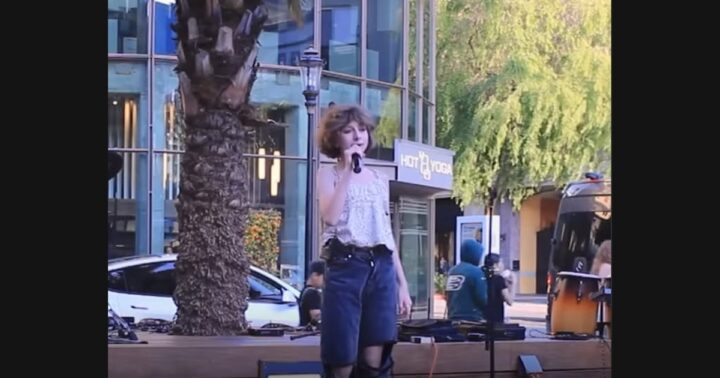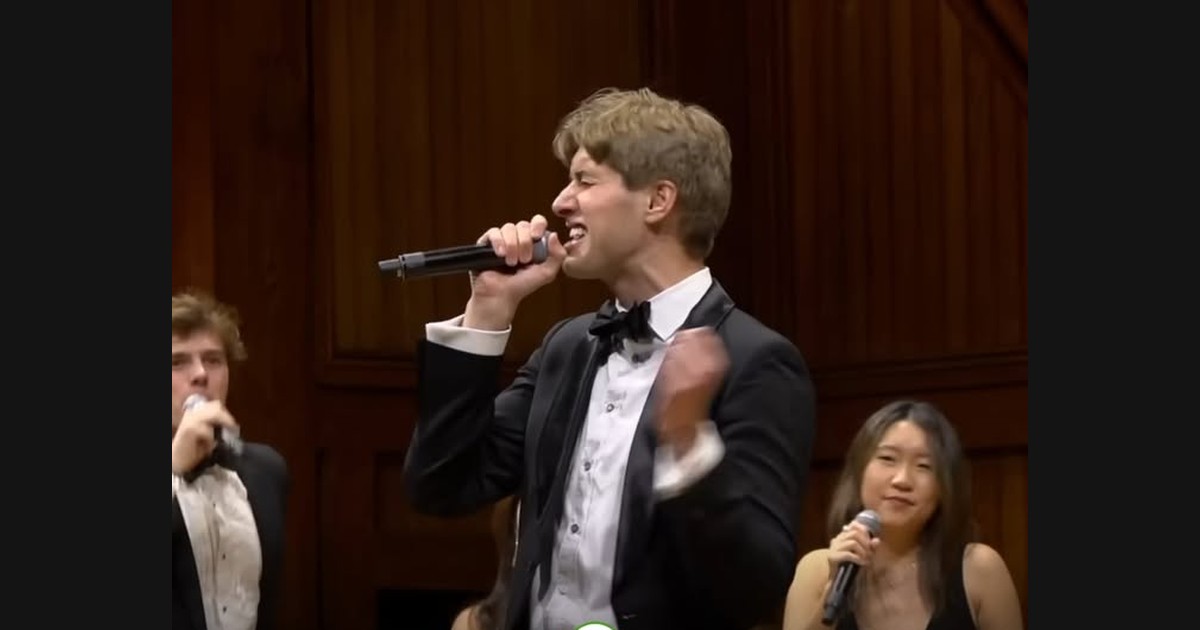
A cover title can point toward a familiar recorded reference without telling the whole history of a song. The Harvard-Radcliffe Veritones’ “House of the Rising Sun” upload names the Animals in its parenthesis. That is useful information about an association, but it should not be treated as proof that the work began with that band.
The Library of Congress preserves a 1937 catalog record for Georgia Turner singing “The Rising Sun Blues,” with Alan Lomax and Elizabeth Lyttleton identified as recordists. The item is a catalog card, not an audio stream; its documentary value lies in establishing an earlier recorded reference.
Watch on YouTube ↗
A recording association and an origin differ
A performer can make a song particularly recognizable to later listeners. A cover may then name that performer as the most practical reference for its audience. The reference explains a route into the piece, rather than automatically supplying its complete authorship or recording history.
The Turner catalog record is enough to make that distinction concrete. It should not be enlarged into a claim that hers was the earliest possible version. A documented earlier example and a definitive origin are different conclusions.
Those boundaries leave room to hear the Veritones’ arrangement as its own contribution. The group enters an established work through a particular public association while making decisions for a different set of performing resources.
Voices take on several musical jobs
Harvard’s music department lists the Veritones among its a cappella groups. In an unaccompanied vocal arrangement, voices can carry the principal melody and supply the support around it.
Begin with the tune you recognize, then replay a short passage while following another recurring function. It may establish harmonic direction, maintain a reference in time, or connect two featured statements.
The change of resources does not require every voice to imitate a particular instrument literally. An arrangement can preserve a musical relationship through another means, leaving a work recognizable without reproducing every sound from an associated recording.
Another song has another version reference
The Veritones’ “Tennessee Whiskey” upload names Chris Stapleton in its title reference. It changes the composition while retaining the ensemble and the same broad issue of recording association.
Watch on YouTube ↗
Keep the distinction between a named interpretive reference and a complete writing credit. The parenthesis can help a listener find a familiar version without settling every historical question about the piece.
For listening, follow what makes the new work’s principal idea clear. A continuing ensemble can assign its musical jobs differently from song to song.
Return to the work in a named venue
The final selection identifies “House of the Rising Sun” from Sanders Theatre. It returns to the first composition while changing the presentation reference.
Watch on YouTube ↗
Compare a recurring passage and its preparation rather than assume the same title guarantees the same arrangement at every point. A live context can offer another public realization of the work.
The set is most informative when history and performance remain connected but distinct. An earlier catalog record gives the song depth beyond one famous band, while the Veritones’ vocal arrangement gives it another contemporary setting. The cover reference opens the door; the composition’s wider life and the ensemble’s specific choices provide reasons to listen further.