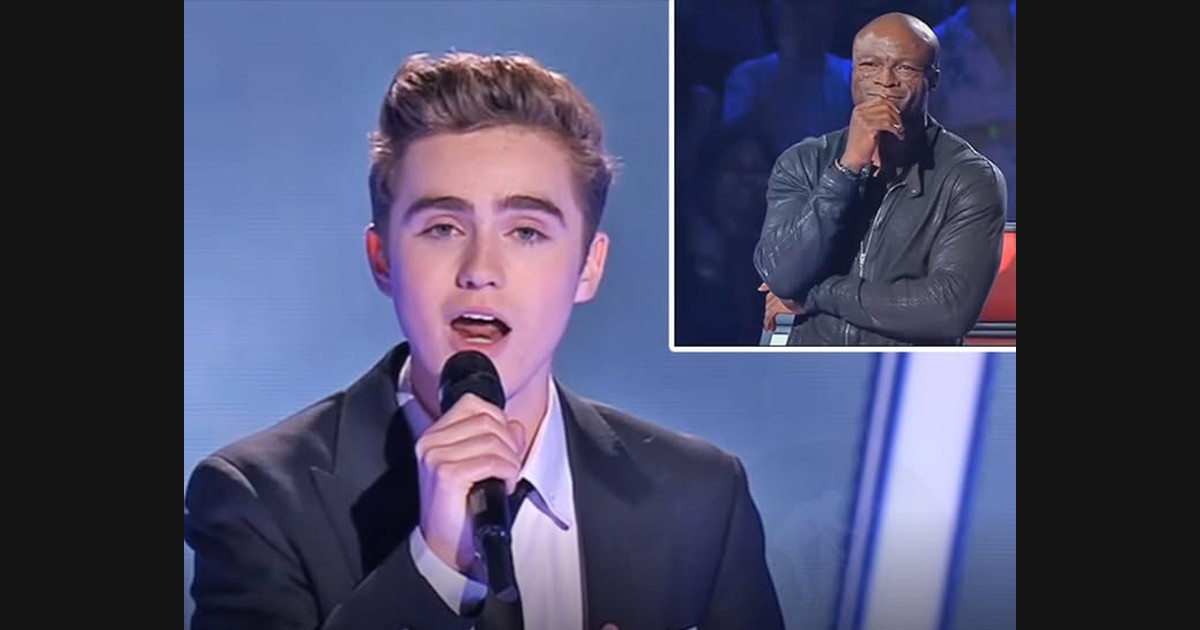
A widely circulated audition can become a singer’s permanent introduction, even after recordings offer a broader reference. Harrison Craig’s “Broken Vow” is useful to hear in both contexts: a television performance and a selection within his recorded catalog. The song’s presence on More Than a Dream gives a listener somewhere concrete to go beyond the familiar clip.
The licensed Universal album listing identifies More Than a Dream with 2013. Its track sequence begins with “Broken Vow,” followed by “You Raise Me Up” and “Home.” Those catalog details establish a musical context without requiring an explanation based on a personal condition or a television headline.
Watch on YouTube ↗
An audition is a concentrated introduction
A competition performance has a specific setting. The song appears alongside introductions, coach decisions, and the program’s presentation of a contestant. That surrounding material can become inseparable from a viewer’s memory of the singing.
Listen first for the performance’s complete musical thought. Then identify which associations come from the television format rather than the composition itself. A reaction shot, a spoken introduction, and a sung phrase provide different kinds of information.
This gives the audition a proportionate place: an important public presentation, but not the only document through which the voice can be understood.
An album supplies neighbors and another scale
Placing “Broken Vow” at the beginning of a collection gives it a relationship with the tracks that follow. A listener can move from one interpretation into another rather than repeatedly returning to the same program excerpt.
The published sequence does not prove a hidden narrative connecting every song. It does provide a practical comparison: how does the singer move between familiar pieces, and what remains recognizable across different material?
Choose two consecutive tracks if the album is available to you. Describe a change in the kind of musical address or phrasing the material invites. Keep the focus on repertoire rather than assuming that an album title explains the singer’s private experiences.
Watch on YouTube ↗
A journey feature is another editorial selection
The Voice Global compilation provides a broader competition account. It remains a selected program narrative, not an unedited record of every rehearsal or performance. Its promotional description should not become a medical explanation of how singing works.
Notice which songs and transitions the feature uses to create progression. Then distinguish the chronology established by the program from a judgment about artistic development that would need its own musical evidence.
Watch on YouTube ↗
The official audio restores the recording reference
The “Broken Vow” audio upload gives the song another presentation outside the audition’s screen context. Compare a recognizable phrase while leaving the exact recording-session relationship open unless the release documents it.
The wider licensed catalog also lists L.O.V.E. in 2014 and Kings of Vegas in 2016. Those references make the broader point concrete: a singer’s work can extend across collections even when one audition remains the most familiar introduction.
A useful final description names the song, the format, and its place in the catalog. That keeps the audition meaningful while allowing the recordings to contribute their own musical evidence.


