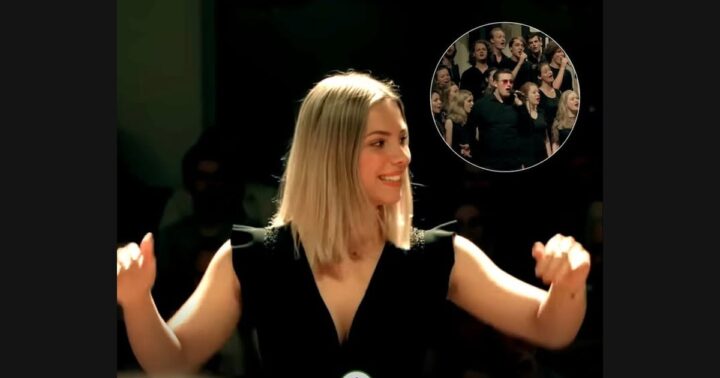
Music videos can make different promises even when each presents a live performance. A filmed choir, a television talent-show selection and a live visualizer do not supply the same kind of visual information. The Singing Sergeants’ Hallelujah and the two related selections here provide a practical way to distinguish those formats.
The distinction is useful because images can suggest more than they establish. A close-up directs attention toward a person; an edit can make a musical event seem to belong to one face. The recorded sound may depend on people who are outside the frame.
The official choir performance video
Watch on YouTube ↗
The United States Air Force Band identifies the performers as the Singing Sergeants. Within a vocal ensemble, the part that attracts attention is not necessarily the only active contribution. A camera can show a featured singer while supporting voices remain essential to the musical setting.
Try following the audio independently of a change in shot. Does the musical texture change when the picture changes, or does the same relationship continue? Separating those events helps prevent a visual edit from being mistaken for the entrance of a new musical part.
What each kind of information can establish
| Information | A sound interpretation |
|---|---|
| Uploader’s performer credit | Identifies the presented ensemble or artist. |
| Camera framing | Shows where the video directs attention. |
| Release date | Dates that publication, unless a recording date is separately supplied. |
| Recorded sound | Presents the musical relationships available in that release. |
None of these needs to do every job. An official ensemble credit does not automatically identify the exact venue of a clip. A close-up does not provide a complete account of the sound production. A later upload can present an earlier performance.
The television selection has its own frame
Watch on YouTube ↗
Alexandra Burke’s official Hallelujah selection comes through The X Factor. The song remains the same, but the presentation centers a featured participant within a television program. Introductions, framing and any included reactions belong to that public format.
Compare the musical sentence separately from the images around it. A reaction shot can communicate part of the program’s presentation, but it cannot replace an account of how the voice and accompaniment relate. The musical comparison remains stronger when it identifies a specific phrase or change of texture.
A live visualizer can accompany an earlier recording
Watch on YouTube ↗
Norah Jones’s Black Hole Sun selection is labeled a live visualizer. Blue Note documents the audio as a performance recorded at the Fox Theatre in Detroit on May 23, 2017, later included on the 2021 live album ‘Til We Meet Again. The visualizer should not be mistaken for evidence of a newly filmed concert on its publication date.
The composition changes here, but the media-literacy question stays useful. The picture provides a presentation for the sound; the label’s recording information establishes the performance context. Keeping those contributions separate gives a viewer a clearer account of what is being encountered.
Returning to the choir video after these comparisons makes the distinction practical: hear the music’s relationships, notice the image’s choices and use documented context for dates and identities. Each layer adds something, and none has to stand in for all the others.