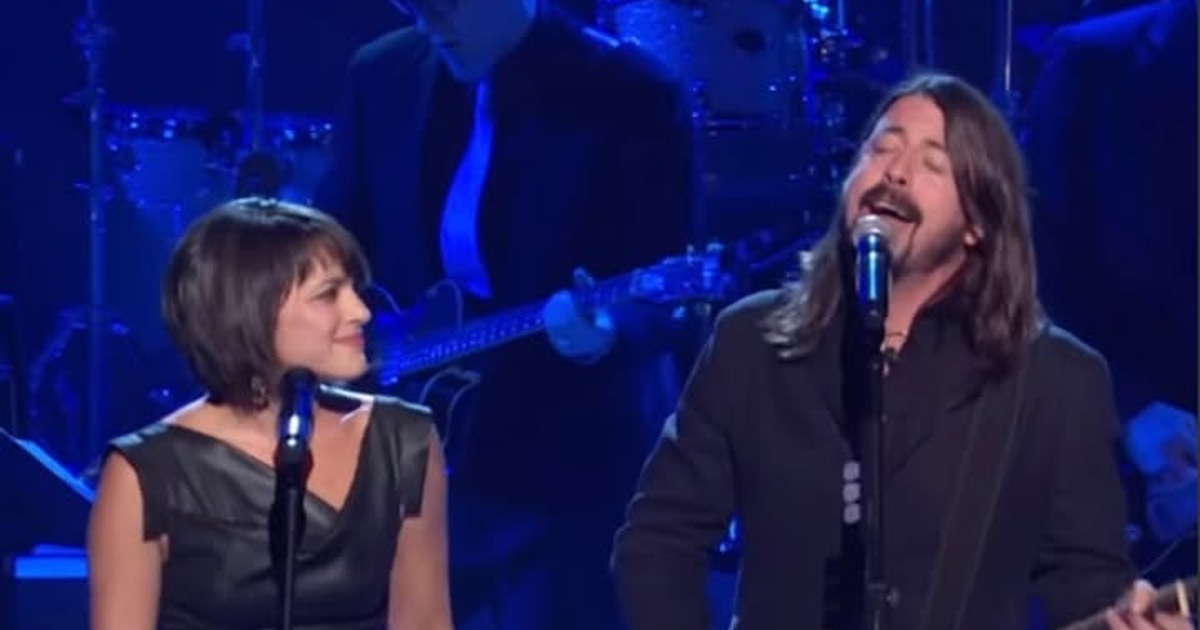
A tribute to Paul McCartney does not have to begin and end with the Beatles. Dave Grohl and Norah Jones’ Maybe I’m Amazed selection at the 2010 Kennedy Center Honors draws on a composition from his solo debut. McCartney’s official catalogue identifies the song’s original home as McCartney, released in April 1970.
That context gives the performance a more precise identity than calling it simply a Beatles tribute. McCartney’s career contains solo, band and collaborative repertoire, and a particular song belongs to a particular part of that history.
The Kennedy Center selection
Watch on YouTube ↗
A tribute arrangement introduces another relationship: different performers present a composition associated with the person being honored. They can acknowledge the song’s history while giving it a delivery that belongs to the present occasion.
The original album’s credits make the contrast especially useful. McCartney’s catalogue describes him performing its instruments, with Linda McCartney contributing harmonies. A later shared performance distributes musical responsibility among other people. The composition remains the connecting material, while the organization of the performance changes.
McCartney’s own account also describes working with a four-track recorder in his London living room. That production setting differs markedly from a public honors-stage collaboration.
Keep the release identities clear
| Identity | What it establishes |
|---|---|
| McCartney’s solo album | The song’s original catalogue setting. |
| Kennedy Center tribute | A later occasion featuring Grohl and Jones. |
| Related Beatles selection | Another composition from the wider musical history, not the source of Maybe I’m Amazed. |
The distinction is useful because a familiar artist’s name can cause several histories to blur together. A performer associated with a band can write and release material outside that band. A later tribute can choose either part of the repertoire, depending on what its program wants to acknowledge.
Musically, compare the relationship between a featured statement and the support around it. A shared rendition has to make attention move intelligibly between its contributors. The job is not simply to recreate the circumstances of an earlier recording.
Jones in another catalogue setting
Watch on YouTube ↗
The official Don’t Know Why video gives a different composition associated with Jones’ own recorded identity. It supplies a performer reference rather than another version of the McCartney song.
Follow one responsibility across the two selections, such as shaping the beginning and ending of a phrase. A recognizable voice can approach different repertoire without using a single fixed pattern of delivery. The material and arrangement influence what that voice needs to do.
The Beatles comparison has another songwriter
Watch on YouTube ↗
Here Comes the Sun belongs to George Harrison’s writing within the Beatles catalogue. Its presence here broadens the musical context; it should not be reassigned to McCartney simply because it appears beside a tribute to him.
This is another practical reason to preserve song credits alongside performer names. A catalogue is made from specific works and contributions, not one undifferentiated set of familiar associations.
Returning to Grohl and Jones’ selection makes the tribute’s choice clear. The song points toward McCartney’s solo writing, the later performers create another shared interpretation and the honors ceremony supplies its public occasion. Each layer adds context without erasing the others.