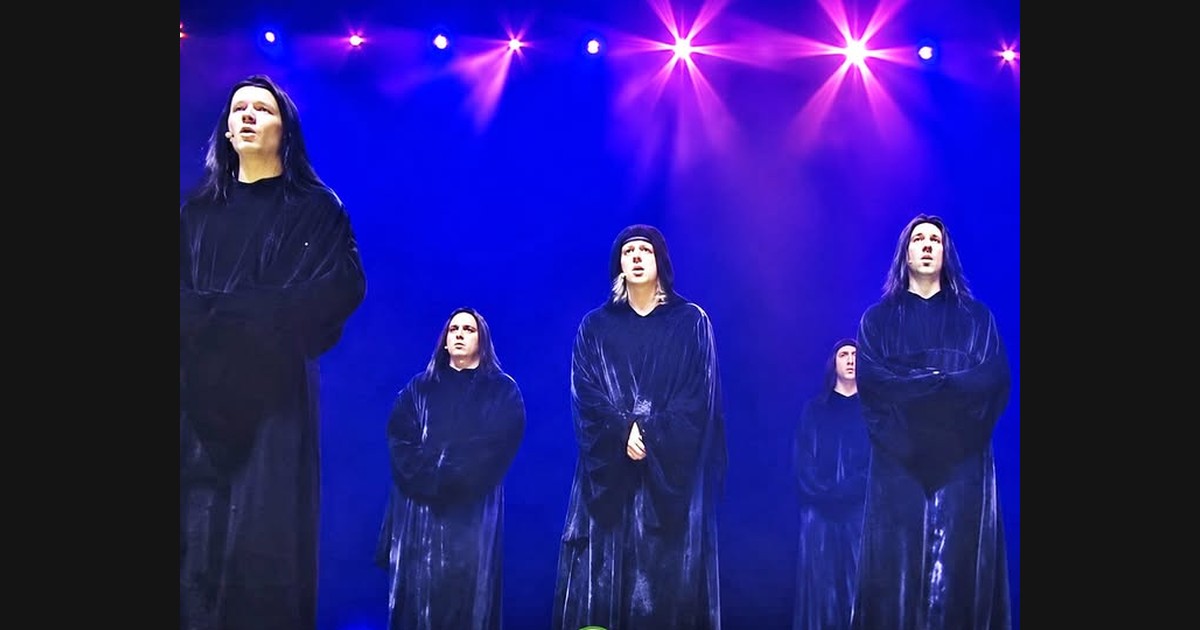
A returning title does not always mean a returning recording. Gregorian’s The Sound of Silence appears here in a 2013 tour performance, a Pure Chants version and a Santiago de Compostela presentation. The connections are clearer when the versions are treated as separate musical decisions.
The opening official upload identifies the Epic Chants Tour of 2013. The second, released by earMUSIC, explicitly introduces a new arrangement for the 2021 album Pure Chants. The difference is part of the release’s stated purpose, rather than an interpretation invented from the title alone.
Watch on YouTube ↗
Established repertoire can be arranged again
The label describes The Sound of Silence as a long-standing live favorite for Gregorian and presents the Pure Version as a fresh choral treatment. That places it within continuing repertoire: the group is returning to material it already knows, with another idea about how to frame it.
A reworking can preserve a melody while changing the relationship between voice and accompaniment. The most important difference need not be a new tune. It may concern what carries the musical movement or how much surrounding activity is allowed.
This is why comparing only a few familiar notes can be misleading. Recognition establishes the shared work; a longer passage reveals what an arrangement does with that work.
The album’s brief concerns performing forces
earMUSIC explains that half the songs on Pure Chants were recorded without instrumental accompaniment, with the remainder largely without it. That is an album-wide description, not a guarantee that every individual track uses the same forces.
The useful idea is a deliberate shift of emphasis toward voices. Reducing instrumental support can expose the relationships between vocal lines and make the duration of a phrase carry more responsibility. Fewer surrounding parts do not necessarily mean less arranging work.
For a comparison, keep the song and the listening conditions as consistent as practical. Follow how a phrase begins, what sustains it and how the music connects it to the next one. Those observations are more reliable than assuming the word pure describes an unprocessed recording.
Watch on YouTube ↗
A production label is not a technical guarantee
Pure Version identifies an artistic and release context. It does not establish how many takes were recorded, what microphones were used or whether the sound was edited. Musical spareness and absence of studio work are different claims.
The distinction makes room for the actual achievement: choosing a sound and sustaining it coherently. A recording can be carefully produced while placing a relatively exposed vocal arrangement at its center.
Watch on YouTube ↗
Santiago supplies another documented presentation
Gregorian’s official final upload identifies Santiago de Compostela as its setting. Its location is part of that recording’s presentation; it does not make the 2013 tour clip and the 2021 studio version the same event.
Together, the recordings show repertoire remaining active. A familiar song can be brought back for another place, another programme or another production brief. Keeping those versions distinct allows the listener to hear continuity without overlooking the work of reconsidering an arrangement.


