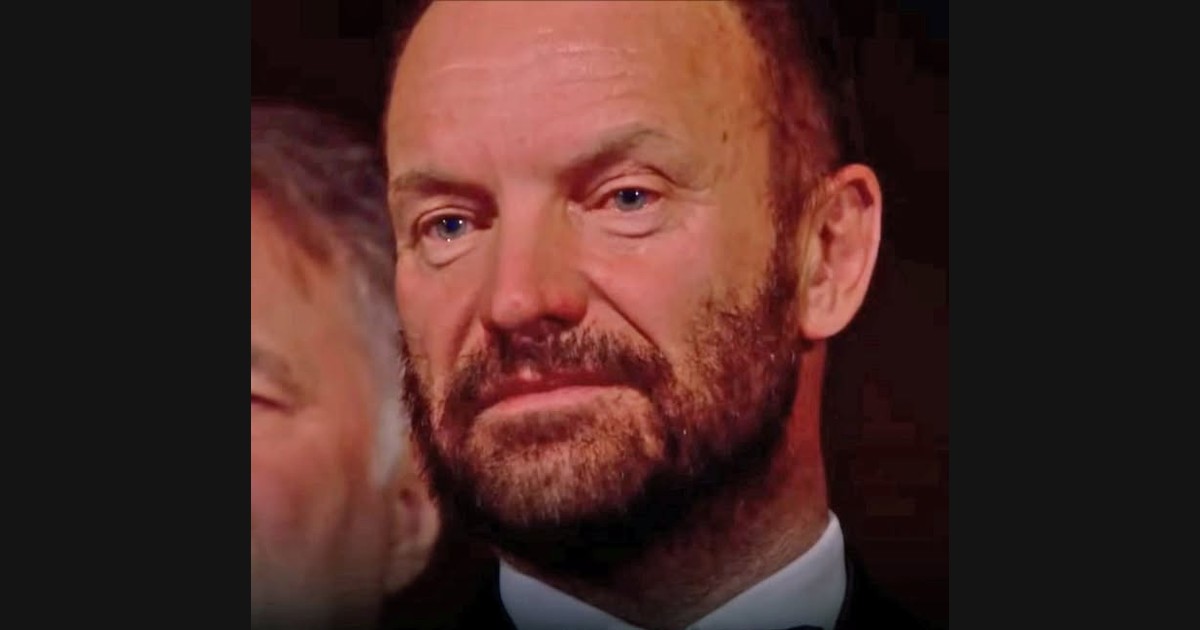
A tribute and a duet ask different things of a guest performer. In one, the guest represents another artist’s work before an audience honoring that artist. In the other, the guest shares the musical space with the person being celebrated. Lady Gaga’s performances of Sting’s music offer a useful comparison because the same recognizable artists appear in both relationships.
The Kennedy Center Honors performance belongs to Sting’s 2014 tribute. The accompanying “King of Pain” collaboration comes from the separate celebration of his 60th birthday in 2011. Neither date should be confused with the release of “If I Ever Lose My Faith in You,” which Sting’s catalog places on his 1993 album Ten Summoner’s Tales.
Watch on YouTube ↗
Representing a songwriter’s catalog
At a tribute, a guest’s song selection helps represent the honoree’s work. A listener may know the guest better than the songwriter, so the performance can also introduce a composition to another audience. The task is not simply to reproduce a familiar recording: it is to make the song communicate within the occasion.
Consider the relationship between recognition and interpretation. What identifies the song quickly? What gives the guest room to sound like herself? Those questions can be answered through phrasing, pacing, and the handling of recurring sections. They do not require guessing what Sting felt while hearing it or treating an edited reaction shot as a complete emotional account.
Another useful distinction is between the honoree and the song’s speaker. The words belong to a composition that can be performed by different people. Singing them at a tribute does not automatically make every sentence a personal message from the guest to the honoree.
The songwriter’s recording supplies a musical reference
Watch on YouTube ↗
Sting’s own version lets the composition remain constant while the performer changes. Instead of deciding immediately which voice you prefer, identify what survives the transfer: the melodic outline, the return of the title, and the placement of contrasting sections. Then note one difference in how a phrase is presented.
This separates two sources of impact. Some of what you recognize belongs to the writing; some belongs to the particular delivery. Calling every effect an artist’s unique invention can overlook the composition, while treating a cover as mere imitation can overlook interpretation.
Sharing a stage changes the exchange
Watch on YouTube ↗
The “King of Pain” birthday collaboration adds the songwriter as an active musical partner. Now the comparison is not only between separate versions. It concerns how two voices occupy the same performance, including who carries an idea, how a handover is prepared, and whether shared passages create contrast or continuity.
A duet can suggest conversation without becoming a literal dialogue between the performers’ private lives. The useful evidence is the organization of the singing. A viewer can describe an exchange or a shared phrase without inventing an improvised decision, a rehearsal story, or an unspoken personal meaning.
Place the three recordings on a small mental timeline: the 1993 song, the 2011 birthday collaboration, and the 2014 tribute. Then compare their roles rather than their upload dates. The result is a clearer account of why returning to one songwriter’s catalog can produce different musical relationships instead of three versions of the same occasion.


