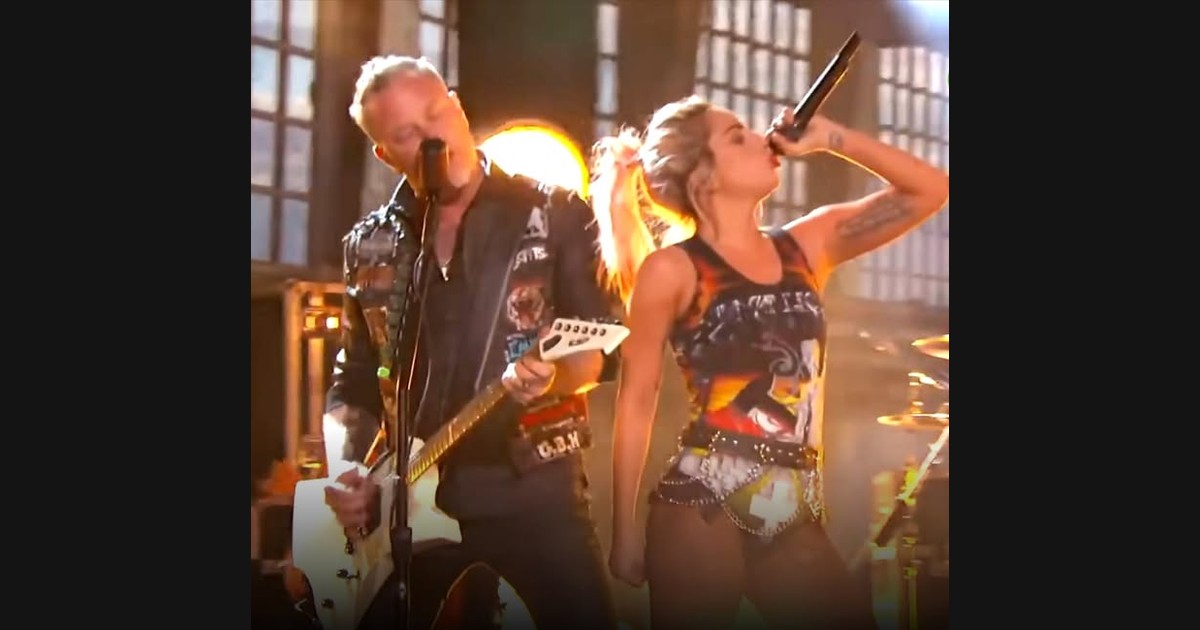
“Moth Into Flame” places attraction and danger inside one image. A moth approaches light even as that light becomes a threat. When Lady Gaga joins Metallica for the song, the composition’s concern with fame sits inside an unusually visible music-industry occasion: preparations for the 59 th GRAMMY Awards.
The official Gaga video is explicitly the dress rehearsal. It is a separate record of the planned collaboration, not the televised ceremony mislabeled as a flawless broadcast. That identification makes it possible to concentrate on the song and partnership without confusing two different performances.
Watch on YouTube ↗
The title supplies a dramatic relationship
A metaphor works by connecting two things without making them identical. Here a bright destination can suggest both opportunity and risk. The song’s account of publicity, status and destructive attraction develops that relationship. This is a reading of its stated subject, not a diagnosis of either performer or an assertion that it secretly describes a particular person.
Metallica’s official catalog credits the writing to James Hetfield and Lars Ulrich. The band’s September 2016 announcement introduced the track as the second selection unveiled from Hardwired…To Self-Destruct. It therefore existed as a Metallica composition before the later awards collaboration.
Why the setting adds a useful tension
An awards show gathers attention around musicians and their public identities. A song questioning the attraction of fame can still be performed there, but the surroundings make its dramatic situation especially noticeable. The performance is taking place within the culture the composition asks listeners to examine.
That does not make the collaboration a literal reenactment of the song. Gaga and Metallica are performers presenting a work. Keeping artist and narrator separate allows the theme to remain a question for the listener rather than becoming an unsupported story about the people onstage.
The band version as a reference
Metallica’s official music video returns the song to the band’s own presentation. Compare what a guest singer changes about the relationship between the voices, rather than assuming that an added celebrity necessarily changes the composition’s message.
Watch on YouTube ↗
A useful focus is the title image’s return. Consider how repetition makes the metaphor function as a structural landmark. A familiar phrase can connect different passages even when the surrounding energy changes. The listener can follow that compositional job without needing to identify a precise studio effect or a supposed spontaneous exchange.
The contrast also helps distinguish collaboration from replacement. A guest can introduce another vocal identity within an established work while the band and its repertoire remain the musical frame. The interesting task is finding a relationship inside that frame.
Gaga in another awards-show setting
Gaga’s official “Hold My Hand” recording from the 2023 Oscars offers a different performance context. Its central image is a gesture of support, rather than the dangerous attraction suggested by “Moth Into Flame.”
Watch on YouTube ↗
These contrasting dramatic ideas make the comparison specific. The same performer can serve a warning about attraction in one work and an offer of solidarity in another. In the Metallica collaboration, the awards setting adds visibility to the song’s question while leaving its metaphor available for listeners to interpret.