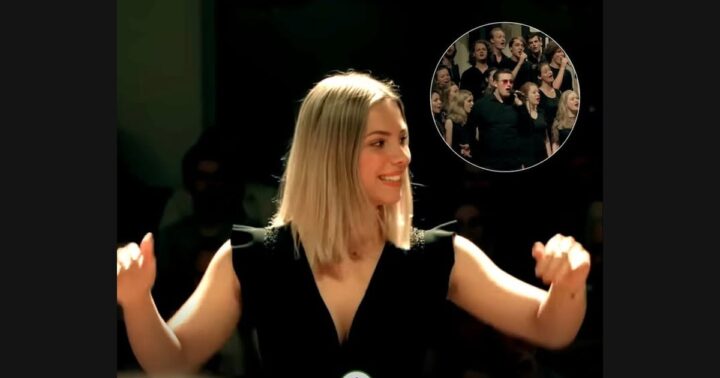
A familiar melody can serve a specific occasion when its address is directed toward the people taking part. Father Ray Kelly’s wedding Hallelujah is best approached through that change of function. The main upload identifies Chris and Leah’s wedding on April 5, 2014; the song is situated within their ceremony, rather than introduced as an independent concert number.
ITV’s official account of Kelly’s later talent-show appearance identifies him as a priest in Oldcastle, County Meath, and describes the earlier wedding recording as the event that brought his singing wider attention. That context establishes the performer and the setting without requiring an account of what each guest expected or felt.
The wedding selection
Watch on YouTube ↗
An occasion gives the words a destination
A concert song usually addresses an audience gathered to hear a performance. At a wedding, people also occupy roles within a ceremony. A musical address can therefore feel directed toward a couple while remaining audible to a larger gathering. The difference concerns the purpose of the selection, not a claim that one setting contains more sincere feeling.
Consider what makes the song part of the occasion. Is it the way the selection is introduced, its placement within the event or a particular form of address? Keep those observable features separate from assumptions about surprise. A participant’s reaction is not needed to explain the musical choice.
Adaptation has several layers
Personalizing a familiar piece can involve the text, the delivery and the setting. These are related but distinct choices. A recognizable tune may give listeners continuity while a new address makes the selection specific to the people present. A performance can also change its function even when much of the material remains familiar.
The useful comparison is therefore between what stays recognizable and what makes this version occasion-specific. You do not need to quote the personalized words to identify that relationship. Nor does describing an adaptation require deciding that it replaces the composition’s earlier interpretations.
Listen through one complete phrase and the transition after it. A ceremony provides an event framework, but the music still needs to establish a direction and connect its ideas. Following that continuity moves attention beyond the introductory story about a singing priest.
A professional ensemble changes the address
The Singing Sergeants’ official Hallelujah supplies a choral interpretation from the United States Air Force Band. The composition remains a point of continuity while the ensemble and presentation change. Compare how an individual line relates to the surrounding voices, rather than assuming that the institutional setting tells you its emotional meaning.
Watch on YouTube ↗
A television selection changes the purpose again
Alexandra Burke’s official X Factor clip puts the song within a live-show presentation. A featured performer now becomes the program’s point of focus. Compare how the video introduces that focus with the ceremony-specific address of the wedding selection.
The contrast is between purposes, not a competition between professions. A priest singing within a ceremony, a professional chorus and a television performer can all interpret familiar material while working under different conditions.
Watch on YouTube ↗
Return to the wedding with one distinction in mind: recognizing a song and understanding why it is being sung here are different forms of understanding. The melody connects the selection with a wider repertoire; the occasion gives it a particular destination. Keeping both in view makes the recording more informative than the surprise premise alone.