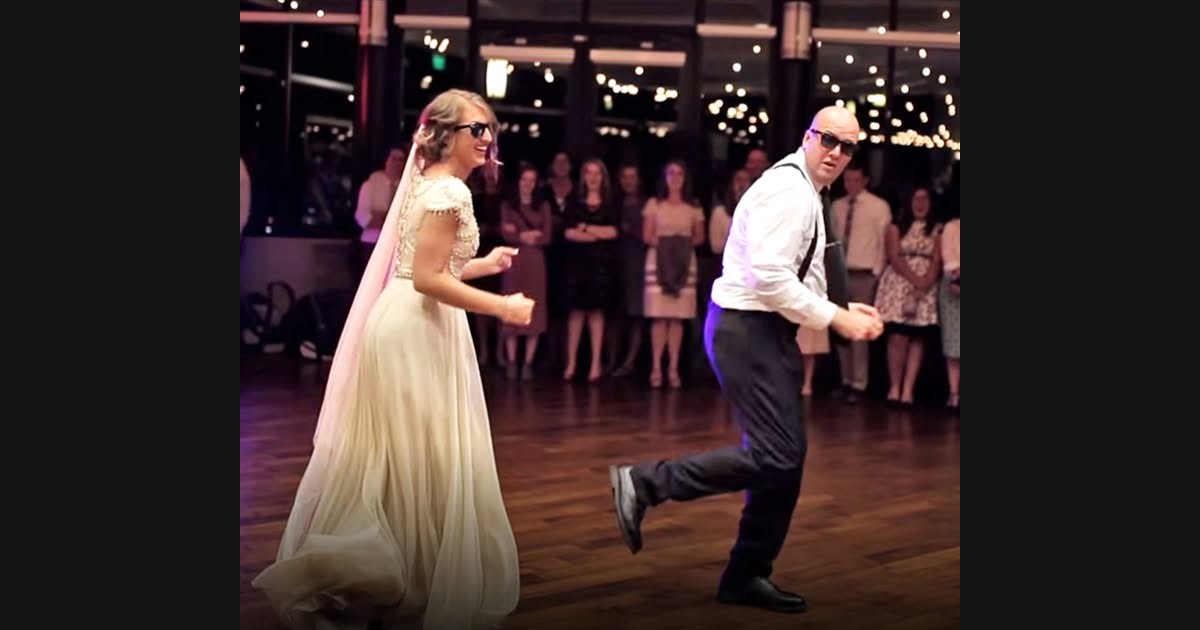
A wedding dance can begin inside a familiar tradition and then change its rules. Mikayla and her father’s reception routine does exactly that: “Butterfly Kisses” introduces the father-daughter setting before a mashup moves through a sequence of contrasting recorded tracks.
BP Film & Photo’s original upload identifies the participants and describes the dance as choreographed. The videographer also supplies the song order, making the soundtrack a documented part of the routine rather than an unnamed collection of popular excerpts.
Watch on YouTube ↗
The traditional opening supplies a reference
An audience needs an expectation before a change can feel surprising. A familiar father-daughter opening establishes the occasion and the relationship being celebrated. The later shift into another musical character then becomes a clear event rather than an unexplained start.
The contrast also gives the performers a simple dramatic structure. They do not need to introduce fictional characters or a spoken plot; the move from one kind of wedding dance to another supplies the story’s first turn.
A song list becomes a sequence of cues
The original description lists selections including “U Can’t Touch This,” “Apache,” “Party Rock Anthem,” “Shake Your Groove Thing,” “It’s Not Unusual” and “Bye Bye Bye.” Each provides a different musical reference within the same continuous routine.
A transition can perform two jobs. It tells the dancers when the next action belongs and tells the audience that the scene has changed. Recognition helps: a familiar rhythmic idea can orient people before they have seen the complete movement associated with it.
The videographer notes that the DJ made remixes for the sequence. That is another credited part of the design. The music is not merely a playlist left running while the dancers improvise unrelated actions; it is part of the choreographed framework described by the source.
The partnership remains the stable element
Changing songs can create variety, but too many unrelated ideas can lose a clear center. Here the father-daughter pair remains the continuing subject. Their shared occasion connects the excerpts even as the immediate musical references change.
For a focused viewing, follow one transition rather than trying to memorize the whole routine. Ask what stays recognizable when the soundtrack changes: the partnership, the space or the way a new action is introduced. That reveals how the act remains one performance.
Another wedding, another arrangement
The second video is another father-daughter mashup published by Kaila Cissell. It is a separate celebration, not another camera angle on Mikayla’s dance.
Watch on YouTube ↗
A similar format does not establish identical music, choreography or preparation. The comparison is useful when it stays with structure: how does each routine create an expectation and then move beyond it?
A third version of the broad idea
Chloe Adams’s father-daughter mashup supplies another separate recording. The repeated premise shows how a familiar ceremonial dance can become a framework for a personalized short act.
Watch on YouTube ↗
Mikayla’s source video is particularly approachable because the filmmakers identify its musical sequence. The dance has an opening, changes of scene and a continuing partnership. The soundtrack coordinates those parts, allowing the surprise to develop into a complete routine rather than remaining only one unexpected switch of song.


