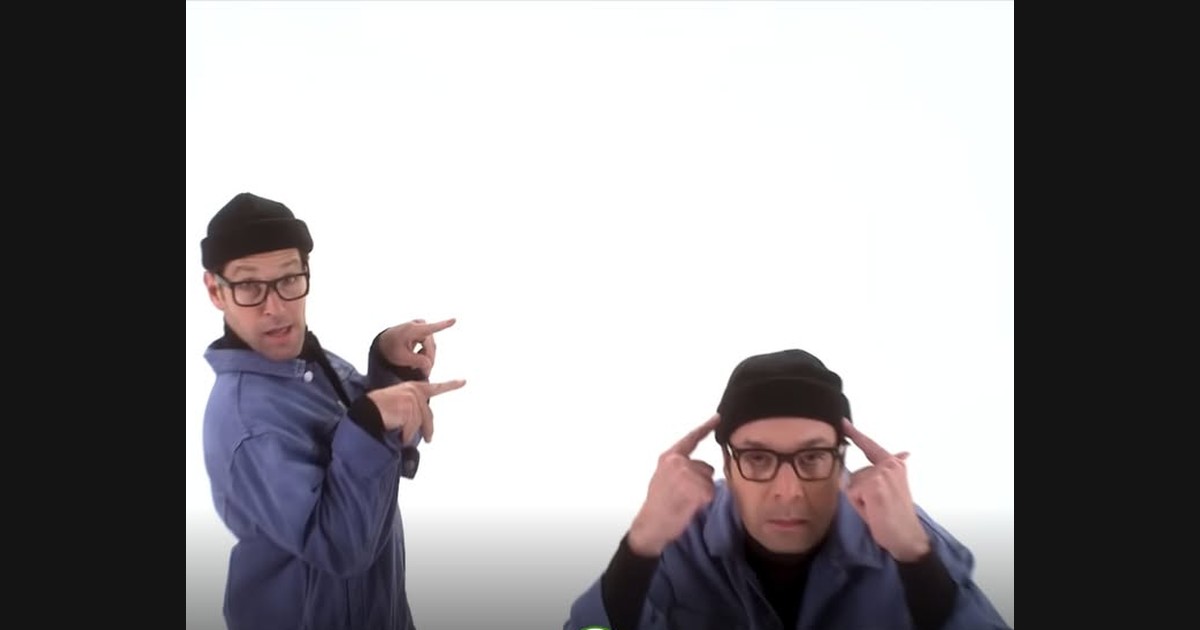
A tiny hat is a small subject for a full musical presentation. That imbalance is the premise of Jimmy Fallon and Paul Rudd’s “Teenie Weenie Beanies” song. The performers give a minor fashion detail enough commitment to become the center of an act.
The Tonight Show’s official description identifies the number as a song they wrote about a fashion trend. The audience therefore meets an original comic premise rather than a newly discovered serious anthem whose meaning must be reconstructed from outside context.
Watch on YouTube ↗
The subject and the presentation have different scales
A comedy song can make a narrow idea feel unexpectedly large. Repetition keeps the subject recognizable, while musical form gives it the attention normally reserved for a broader statement. The joke does not require the item itself to become more important in ordinary life.
That contrast is useful because the audience understands it quickly. Once the central object is clear, the act can spend time on how intensely and repeatedly the performers return to it. Commitment becomes part of the humor.
A stable premise leaves room for variation
Repeating an idea is not the same as presenting every moment identically. A partner can continue a line, change the immediate emphasis or give another response to the same subject. The musical framework lets those variations remain connected.
For a focused viewing, attend to what stays constant when the focus passes between the performers. Is it the subject, the pace or the kind of presentation? Then consider what each change adds. The audience needs enough continuity to recognize that a new moment belongs to the same joke.
This is one reason a simple concept can sustain a short musical sketch. The performers do not need to introduce a new story world with every phrase. The stable premise makes smaller changes legible.
A visual remake uses a different comic engine
Fallon and Rudd’s “You Spin Me Round” segment, also published by The Tonight Show, is explicitly a shot-for-shot recreation of the Dead or Alive video. Here the source image is the reference rather than a new song about an everyday object.
Watch on YouTube ↗
Compare what a viewer needs to recognize. The beanie number establishes its own subject; the remake asks the audience to connect a new performance with an existing visual work. Both can use exaggerated commitment, but they get their initial framework in different ways.
Another partnership, another mismatch
Rudd and James Corden’s children’s-music-duo sketch introduces another comic contrast. The program’s title makes the mismatch explicit: a format associated with children is presented through inappropriate material.
Watch on YouTube ↗
The comparison is about premise rather than approval of the characters’ behavior. A sketch can use an unsuitable relationship between form and content as its joke. The audience recognizes what the format normally promises, then follows the departure from that expectation.
“Teenie Weenie Beanies” works through a gentler version of the same broad resource: disproportion. A small object receives a large performance. Following the relationship between stable subject, repeated musical frame and changing partner contributions makes the number more understandable than describing it only as two famous people behaving absurdly.


