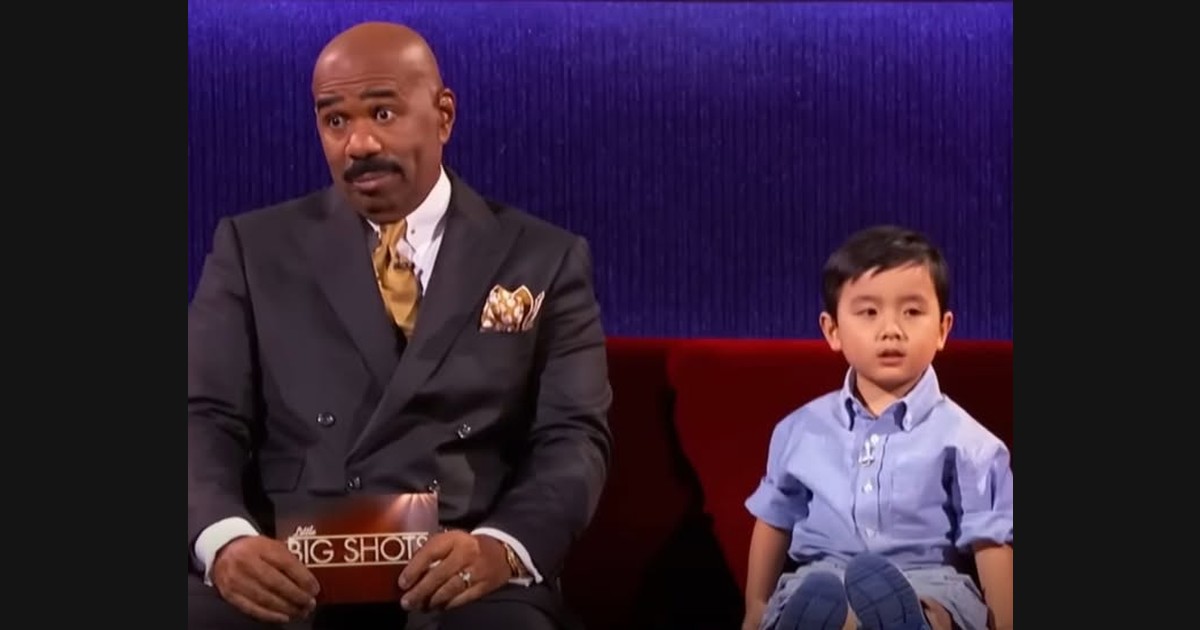
Evan Le’s Little Big Shots appearance combines two activities: conversation with Steve Harvey and a piano performance. The conversation introduces a young participant to the television audience; the playing gives that participant a musical contribution of his own. Keeping those functions separate helps the music remain more than an illustration of a headline about age.
The official clips identify Le and the program. The full-episode upload labels the material as season one, episode two. These are different presentations of television material, rather than evidence that each upload documents a new appearance at a different age.
An introduction directs attention
A host provides a frame: who the guest is, what they are there to do, and how the audience can enter the segment. Humor and conversation can make the transition to performance accessible. They do not supply a complete musical biography or an explanation of how every skill developed.
Watch on YouTube ↗
Words such as “prodigy” in a program title are part of that presentation. They should not replace a description of the actual activity: a young musician playing a piano piece within a television showcase. Nor does an archived title establish the performer’s current age years after the original material was recorded.
The performance has its own organization
Once the playing begins, shift attention from the introduction to the musical sequence. A piano can carry a principal line and supporting material simultaneously. The relationship between them is a better listening focus than expecting every visible hand movement to be equally prominent in the sound.
Try following the line that seems to form the main statement. Notice where it returns or reaches a resting point. Then attend to the support beneath it. That change of attention makes the instrument’s several responsibilities easier to distinguish without needing to identify a score or count every note.
The full episode restores proportion
The next upload provides a broader episode presentation. It can show how the introduction and performance fit within the program’s overall pacing. A short extract can make a single exchange feel like the whole occasion, while a larger context shows its place among other segments.
Watch on YouTube ↗
| Presentation | What it can help a viewer follow |
|---|---|
| Short feature | The selected introduction and musical moment. |
| Full episode | The segment’s place within a larger entertainment program. |
| Another edited clip | A different emphasis within the recorded material. |
A later upload date belongs to that presentation, not automatically to the original performance. This matters particularly with childhood television footage, where the same archived material can circulate for many years under newly published titles.
Another clip is not a career forecast
The final official selection offers another presentation of Le’s piano appearance. Its descriptive language need not be converted into a prediction about future professional success or a ranking against adult musicians.
Watch on YouTube ↗
The evidence is specific and sufficient: a named participant, a documented program, an interaction with the host, and a musical performance. Training history, private family circumstances, and future achievements are separate subjects that the clip does not establish by itself.
Allowing the musical segment to stand at that scale makes the viewing more rewarding. The introduction can remain engaging, but the piano performance deserves attention to its continuity and shape rather than only to the surprise created by the host’s framing.


