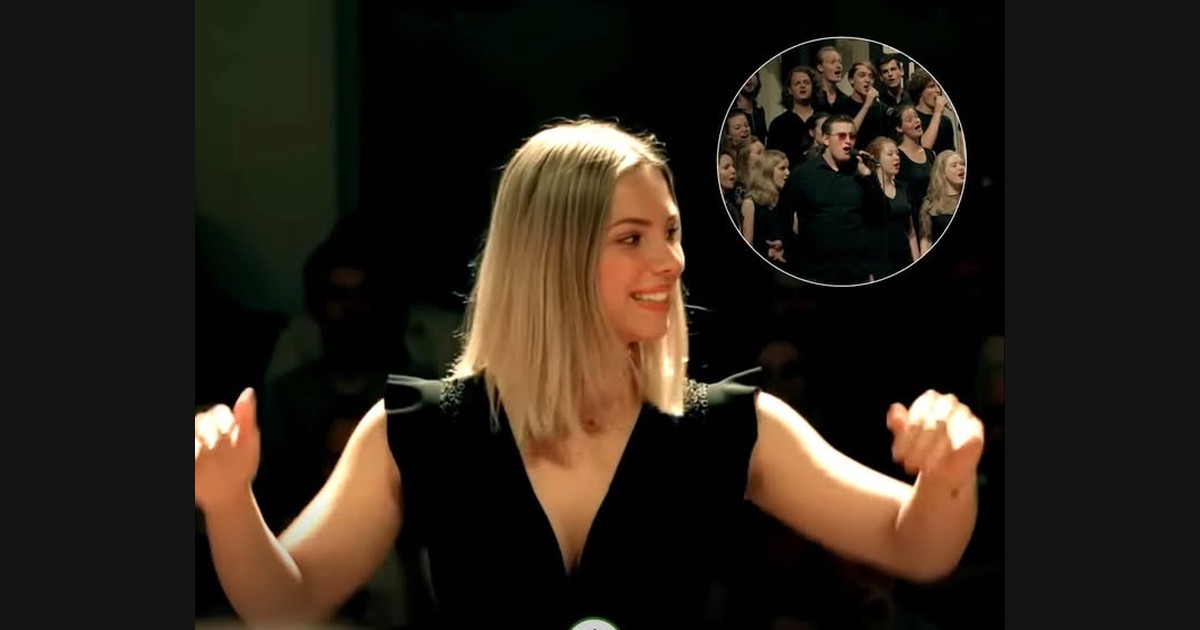
A large ensemble can add color and scale to a familiar song, but a narrative performance still needs a clear route through its sung account. Emma Wieriks’s orchestral “Copacabana” is a useful place to consider those two responsibilities together.
Wieriks identifies the arrangement and conducting as part of her Music Education graduation project at the Utrechts Conservatory. She names Job Uitgeest as lead vocalist and credits an ensemble of fellow students. Those specific credits let us discuss the sung lead and the instrumental setting as related contributions.
Watch on YouTube ↗
The lead has information to deliver
In a story-based song, a vocal line does more than supply a memorable melody. It introduces people, situations, and changes. If a listener loses an important transition, later musical intensity may remain exciting while the narrative connection becomes unclear.
That does not mean the instruments must stay unobtrusive throughout. It means their prominence has a relationship with the vocal information. An arrangement can support a sung statement, answer it, prepare what follows, or occupy a space where no new words need attention.
For example, imagine a short instrumental response after a sentence ends. It can reinforce the sentence’s character while leaving the next entrance clear. Place the same response across the middle of a crucial line and it creates another balance. The difference is distribution, not simply whether an ensemble is loud or quiet.
Follow a musical handover
Choose one complete vocal passage and its continuation. Identify the part that carries the statement, then what moves the performance onward. A held accompaniment, a rhythmic continuation, or a new instrumental figure can each connect sections in a different way.
Use the recording to decide which description fits. The project’s orchestral label does not establish that every family of instruments has the same task, and the person most visible in a camera shot is not automatically carrying the most important musical information.
This also explains why adding performers is not the same as adding constant activity. Space can be a deliberate part of an arrangement. A supporting part may matter because of where it enters, not because it is continuously present.
Compare with Manilow’s recorded presentation
Watch on YouTube ↗
The Barry Manilow Topic selection provides a reference for the song under its established recording artist’s name. Compare a passage with the student ensemble’s treatment by asking how the voice and accompaniment divide attention.
Keep the size of the ensemble separate from the amount of sound at a particular moment. A large group can play a concentrated texture; a smaller group can produce busy musical activity. Describing the actual relationship is more informative than assuming “orchestral” always means grander.
The remix adds a production question
Watch on YouTube ↗
Manilow’s official video is labeled as a remix. That is another release identity, rather than the name of Wieriks’s arrangement. Compare how its presentation foregrounds musical elements, but do not infer the exact production process from the label alone.
Across the three selections, a useful thread remains the delivery of a story through song. Identify where the lead gives information, where the accompaniment supports it, and where instrumental activity takes over. That provides a concrete way to hear the ensemble’s contribution without reducing the project to its size or its academic occasion.