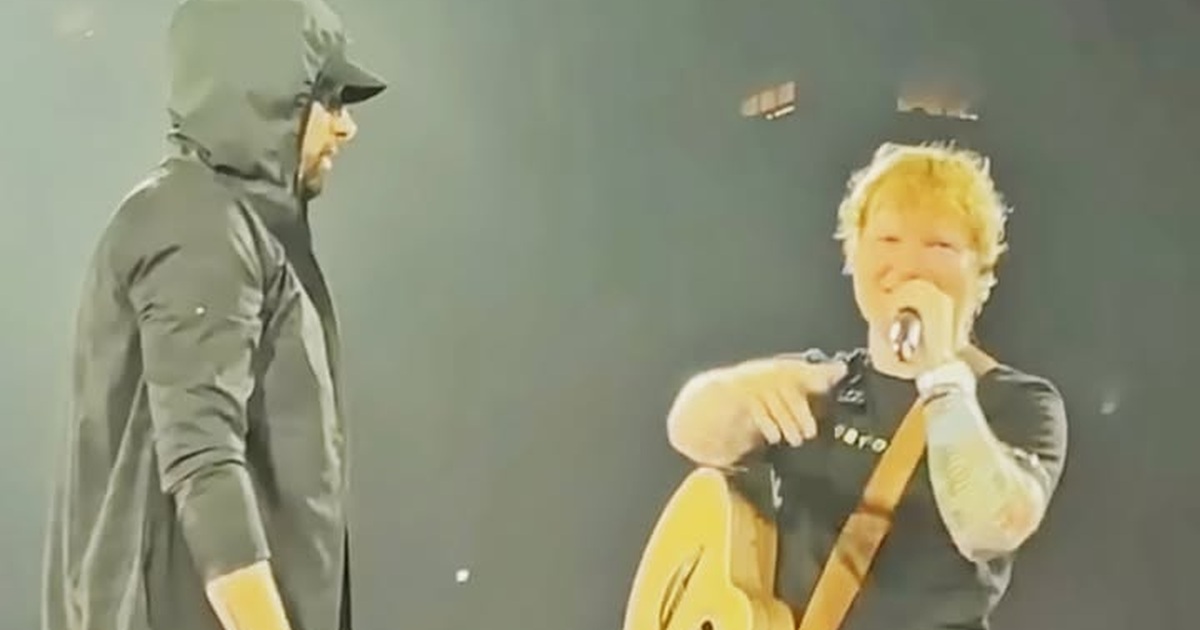
A guest appearance can create more than one musical relationship within the same concert. Eminem’s appearance with Ed Sheeran in Detroit joins Lose Yourself and Stan, two compositions with different dramatic situations.
The original audience-recording publisher identifies Ford Field on July 15, 2023, and presents the video as an original recording. That gives the appearance a particular event label. The song pairing provides another kind of structure: a change in what the words and performers are being asked to carry.
The Detroit guest appearance
Watch on YouTube ↗
Urgency gives one piece a forward direction
Lose Yourself is associated with an opportunity that must be faced in the present. That creates a forward-driving situation: attention gathers around whether someone can act when the occasion arrives.
The point is more specific than a general description of intensity. A composition can generate urgency through the relationship between a person, a chance and the possibility of failing to use it. The performer carries that situation without needing the story to be a literal record of the current concert.
A familiar piece also gives a guest entrance a continuing musical frame. Surprise supplies an event, but the song gives the participants somewhere to proceed once another person is present. The performance has work to do beyond the initial reveal.
‘Stan’ changes the relationship
The next composition turns toward messages and imagined correspondence. The narrative requires attention to speakers and recipients, rather than treating every first-person line as an unmediated statement by the artist.
This distinction is essential to hearing a narrative song accurately. A performer can portray someone whose situation and assumptions differ from his own. The writing organizes a dramatic relationship; it is not automatically a factual account of a real fan or the performer’s private conduct.
The two-song sequence therefore changes the kind of attention needed. Urgency around an opportunity differs from following a developing exchange. Both can be compelling without being the same emotional task.
A shared stage changes company, not authorship
Sheeran’s participation supplies another performer within repertoire associated with Eminem. That does not rewrite the composition’s origin or make every studio participant part of this live appearance.
A concert collaboration is clearest when the roles remain particular. People undertake existing material together, and the current partnership gives it another frame. A guest appearance need not be described as an entirely new group or an unplanned event to be interesting.
A separate ‘Lose Yourself’ reference
The next video presents Lose Yourself outside the Detroit concert frame. Its third-party publication should remain distinct from the original audience record.
Watch on YouTube ↗
The official ‘Stan’ video
The final official artist selection is the long version of Stan featuring Dido. It supplies the established recorded collaboration rather than another document of Sheeran’s stage role.
Watch on YouTube ↗
Together, these items distinguish live company, a composition’s narrative and an official recording identity. The Detroit appearance connects two artists through familiar repertoire. The shift from opportunity to correspondence gives the two-song sequence a concrete dramatic shape after the surprise itself has passed.


