The title Afterglow names light that remains after its source has begun to pass. That idea gives Ed Sheeran’s song a useful tension: something fleeting is being held onto. The three performances here offer different settings for that same attempt to preserve a moment.
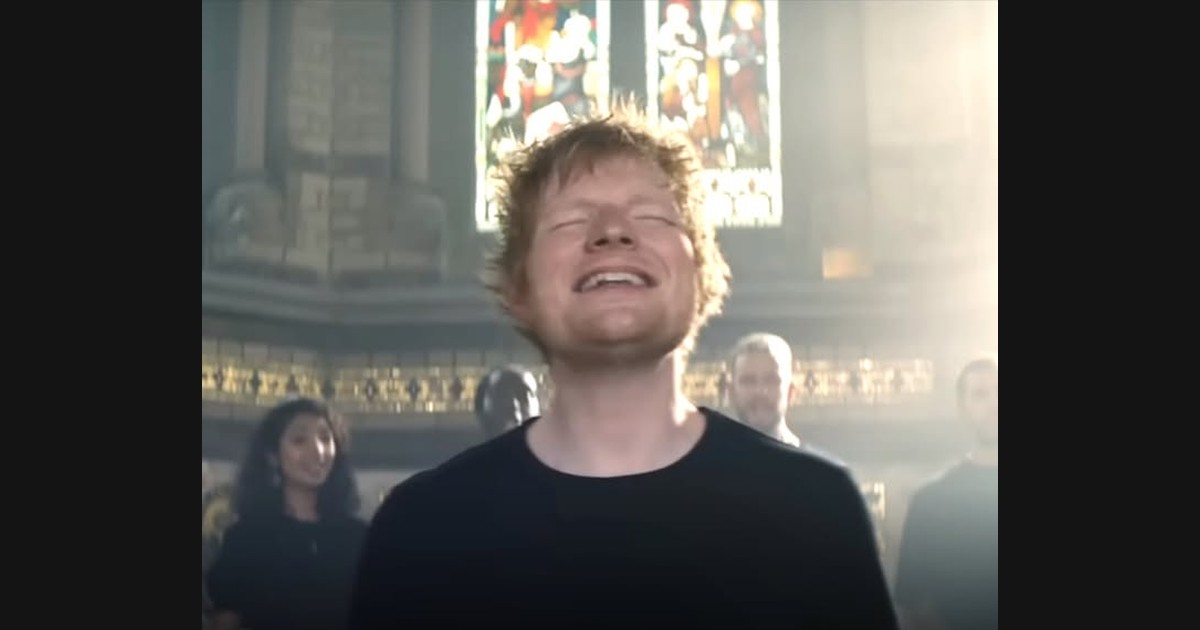
The opening recording is Sheeran’s officially titled a cappella version, directed by Dan Massie. Its vocal setting brings the composition into a shared sound while leaving the song’s images and recurring declaration as the thread through the arrangement.
Watch on YouTube ↗
Light provides more than a decorative image
A song can use a physical detail to establish a way of experiencing time. Light changes, weather changes and an ordinary moment moves onward. A narrator’s wish to remain with it becomes meaningful because the world does not stop.
That is different from a story built around a sequence of major events. The attention is concentrated on the value of a present experience and the prospect of its fading. A familiar scene can therefore carry a large feeling without an elaborate plot.
The returning title gives that feeling a musical destination. Repetition does not need to mean that nothing has changed; a phrase returns after the intervening material has added another perspective. Holding onto something is itself an action the song can renew.
A shared voice changes the scale of an intimate thought
An intimate subject does not require a solo sound. Several voices can carry one point of view, allowing a private-seeming declaration to gain a communal scale. The narrator and the number of people singing remain separate questions.
For this version, it is useful to follow a complete thought rather than isolate the largest vocal moment. The words establish what is being held onto; the arrangement supplies the space in which that thought develops. Neither can be understood only through a single sustained note.
Watch on YouTube ↗
The official performance video is another presentation
Sheeran’s other official performance video credits directors Nic Minns and Zak Walters. Keeping that credit distinct from Massie’s prevents two productions of the same song from being treated as one continuous shoot.
The comparison is not a search for the one true visual setting. It asks how a song’s imagery remains available when its presentation changes. A composition about an impermanent moment can be interpreted through different recorded occasions without losing its central idea.
Watch on YouTube ↗
Drakensberg gives the image a local setting
The Drakensberg Boys Choir introduces its version through changing seasons and the Drakensberg sunset. Its own credits name Brett Fernihoug on lead vocals, three harmony singers and players on guitar, cajon and violin, with Tristan Trent responsible for arrangement and production.
The choir’s description connects the song’s image with its own surroundings rather than claiming to recreate the circumstances behind Sheeran’s writing. That is a useful form of interpretation: finding a new setting for an existing thought. Across the recordings, the passing light remains the common reference, while the performers give the act of holding onto it different musical proportions.


