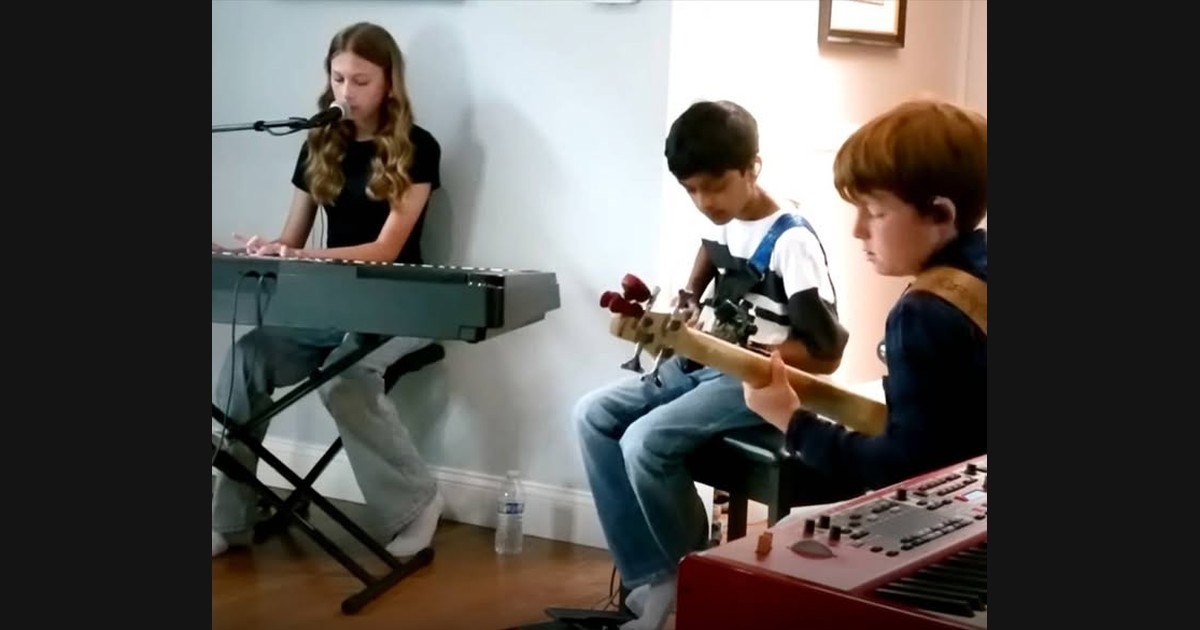
The opening “I Can’t Tell You Why” video is published by Eagles, not by the Graystones. Its official description identifies the song with The Long Run, the band’s 1979 album. That correction is essential before using the two later Graystones covers as comparisons.
The song’s label-embedded recording credits also offer a specific route into ensemble listening. They name Timothy B. Schmit on bass, Joe Walsh on several keyboard instruments, Glenn Frey on solo guitar, and Don Felder among the guitar contributors. A band recording can divide instrumental responsibilities more finely than a thumbnail reveals.
A general instrument name can conceal several jobs
“Guitar” may identify accompaniment, a recurring figure, or a featured solo contribution. “Keyboards” can similarly cover several sounds and functions. Read a specific credit at its actual level rather than assuming that one visible player supplies every sound in that category.
Watch on YouTube ↗
| Documented credit | What it helps a listener distinguish |
|---|---|
| Schmit, bass | The lower instrumental foundation. |
| Walsh, keyboard instruments | Several supporting instrumental colors rather than one generic sound. |
| Frey, solo guitar | A specific featured guitar responsibility in the recording credits. |
| Felder, guitar | Another named contribution within the guitar category. |
This table concerns the documented recording, not a claim that every shot of the official video shows the precise moment its soundtrack was captured. A music video can present musicians without functioning as a complete session record.
The writing credits are another list
The label credits name Schmit, Frey, and Don Henley as writers. That is separate information from who plays a particular instrument. A musician can contribute both writing and performance, while another important player may appear only in the performing credits.
This makes a useful two-column note: composition on one side, instrumental realization on the other. Keeping the columns separate avoids turning a memorable solo into an automatic claim of sole authorship.
The first Graystones cover changes the repertoire
The second video is the Graystones’ own “Hold the Line” upload, featuring J8KE. It is a Toto cover, not a Graystones version of “I Can’t Tell You Why.” The performing group and composition both change at this point in the set.
Watch on YouTube ↗
Compare the distribution of responsibilities rather than expecting a note-for-note relationship. Which part supplies the recognizable tune or figure, and which parts provide the continuing harmonic and rhythmic frame? Those questions remain useful even when the compositions differ.
“The Door” adds another cover source
The final Graystones upload identifies a Teddy Swims “The Door” cover. It extends the group’s separately documented repertoire without supplying missing footage of an Eagles-song rehearsal.
Watch on YouTube ↗
The available clips should therefore be named individually. An image or an earlier description suggesting one group’s session cannot override the identity of the actual official video.
Use credits to guide, not replace, listening
The Eagles recording credits provide concrete names and functions. The two cover videos provide other ensemble examples with different songs. Neither needs to be forced into a false same-song comparison.
That clear map gives the set a practical purpose: hear how band recordings distribute musical jobs, distinguish specific instrumental credits from songwriting, and retain the actual artist and composition when moving between related videos.


