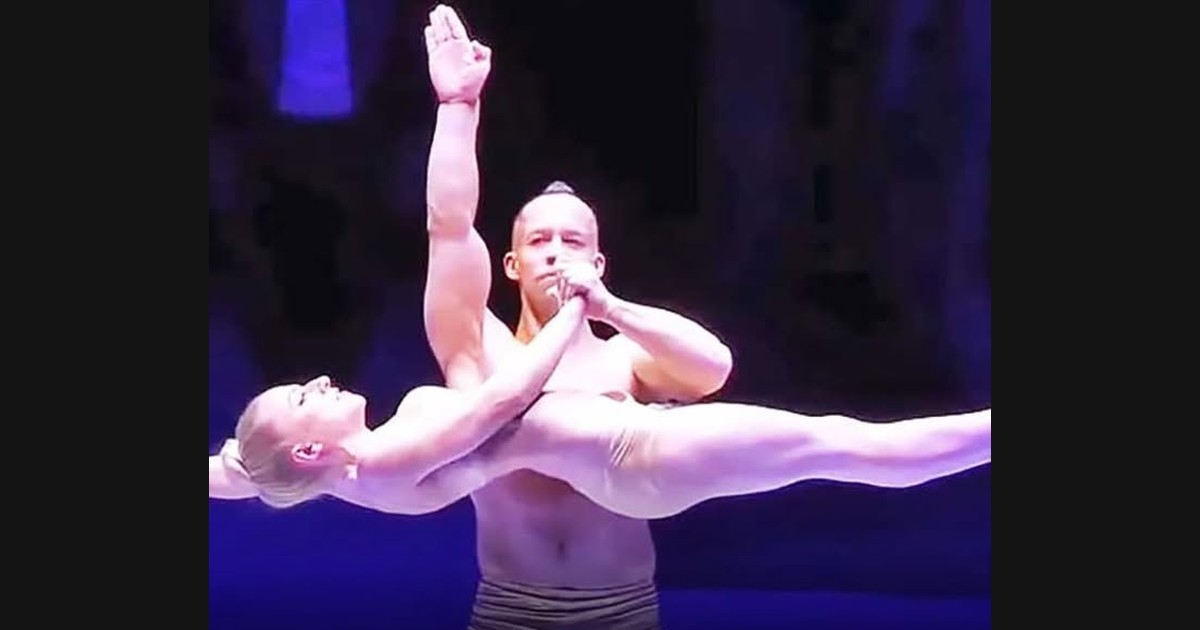
Stillness can be an event in a performance. When a moving sequence arrives at a clearly held shape, the audience has time to read the relationship between bodies, lines, and space. Duo Alansia’s “Statues” act makes that idea a useful starting point: instead of looking only for the next feat, consider what a pause contributes to the composition.
The performers’ own upload identifies the act with March 2020. Their accompanying aerial-pole solo and straps-duo videos provide contrasting formats, allowing the discussion to move beyond a single label such as “acrobatics” toward the different ways an act organizes attention.
Watch on YouTube ↗
A held image has a before and an after
A shape does not acquire its whole meaning from an isolated screenshot. The approach establishes direction; the hold gives the image time to register; the departure changes it into part of a sequence. Watching those three phases can reveal a dramatic structure that a compilation of still photographs would omit.
For one passage, follow the transition rather than trying to name a specialist technique. Does the new shape feel like a continuation, a reversal, or a fresh beginning? The answer concerns the visible composition. It does not require an explanation of forces or a guess about how the performers trained it.
Music can provide another reference. A movement may appear to arrive with a musical event or extend across it. Notice the relationship where it is clear, while leaving exact timing claims open if editing or the recording makes them uncertain. The interest lies in the partnership between a physical phrase and a musical phrase.
Two performers create relationships
In a duet, attention can move between individual figures and the overall arrangement they make together. Symmetry, contrast, distance, and changes of orientation are useful visual categories. They describe what an audience can read without inventing a private relationship between the people on screen.
A compact viewing note might record one shared outline and one transition that changes it. This is more specific than calling every moment impossible. It also leaves room for stillness to be considered an artistic decision, rather than merely a delay before the next movement.
Watch on YouTube ↗
A solo changes the visual conversation
The “Anastacia” aerial-pole solo removes the second performer from the immediate composition. The viewer can instead consider the relationship between one figure, the apparatus, and the surrounding space. That is a different visual problem, not a smaller version of exactly the same duet.
The recording is a performance reference rather than a practical tutorial. Apparatus, supports, preparation, and supervision are not fully explained by a finished act, so the useful comparison stays with presentation instead of suggesting that a viewer reproduce a position.
Watch on YouTube ↗
The straps duo restores the partner relationship within another format. Compare how the apparent pathways through space change and how the camera frames the pair. A close view may make an individual action easier to see while a wider frame clarifies the shared image.
Across all three, choose one moment when the movement seems to settle. Ask what makes that arrival legible: the outline, the music, the time given to it, or the transition that prepared it. The answer offers a concrete way to appreciate the construction of an act beyond a sequence of spectacular poses.


