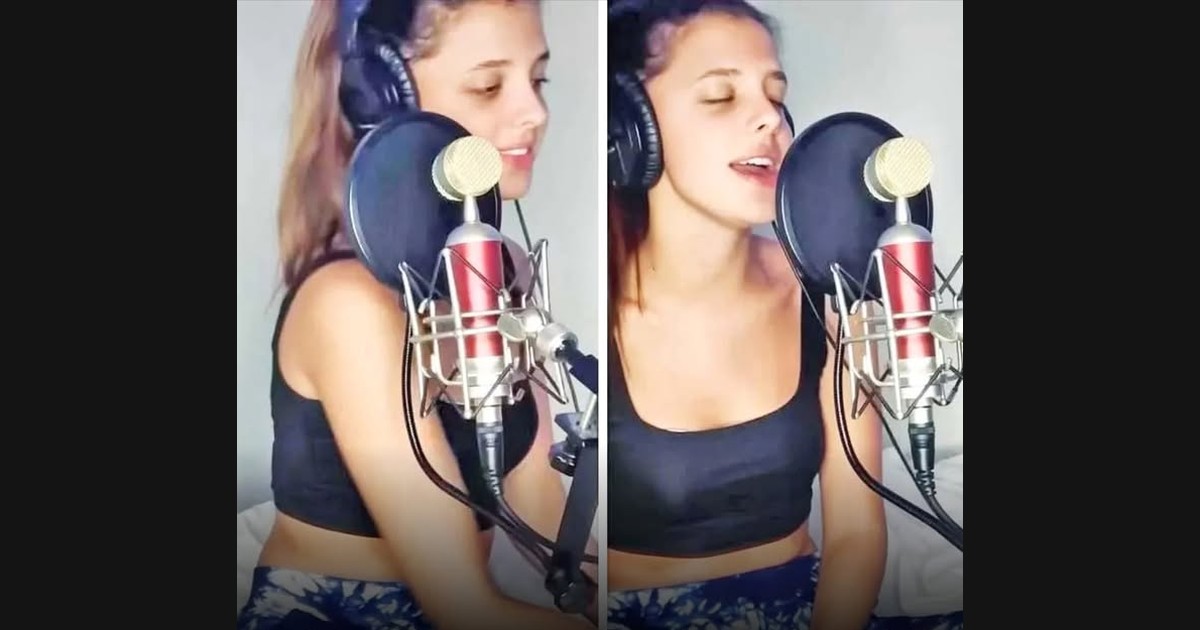
Calling Lanie Gardner’s “Dreams” a Fleetwood Mac cover identifies the repertoire, but it does not tell a listener which Fleetwood Mac performance should serve as the comparison. The official music video and the Paris live recording supplied here provide different reference points. Choosing between them changes the question being asked of the cover.
Fleetwood Mac’s official Rumours listing identifies “Dreams” as a Stevie Nicks composition on the 1977 album. That is the song’s catalog foundation. Gardner’s own channel identifies her video as a cover, while the final Topic-channel item is labeled as a live performance from Paris in 1980.
Begin with the version, not the resemblance
A claim that one singer sounds like another can conceal several comparisons at once. It may concern the melodic shape, vocal color, backing arrangement, or the recording’s overall atmosphere. Those are different kinds of resemblance, and they need not travel together.
Watch on YouTube ↗
The Gardner video places a singer’s interpretation in the foreground. That does not establish who created every element of the backing or whether the video reproduces an original master. Unless those production details are documented, keep the comparison at the level of the performance presented rather than assigning an undocumented recording process.
A useful first note is simply “this is the cover I am comparing.” Then identify the exact reference: the official Fleetwood Mac video or the separately labeled live recording. That small choice prevents an impression formed from one version being treated as a fact about every performance of the song.
The official video is one reference
The second selection comes from Fleetwood Mac’s official channel. It provides a recognizable band-associated presentation of “Dreams.” Its current digital video label is not a reason to date the underlying song to the era of its online publication or enhanced image format.
Watch on YouTube ↗
For this pairing, concentrate on what remains stable across interpretations: the broad melodic route, the recurring material, and the places where the vocal phrase comes to rest. Those shared features help identify the composition. Differences in the singer’s delivery then become choices within that common framework rather than departures from an imagined compulsory sound.
The live recording asks another question
The Paris item is explicitly labeled live and dated 1980. It therefore offers a band performance context rather than merely another visual wrapper for the cover. Do not assume that the pacing, balance, or arrangement must be identical to another Fleetwood Mac release.
Watch on YouTube ↗
| Comparison | Useful focus |
|---|---|
| Gardner and the official band video | How an individual cover relates to a familiar band-associated presentation. |
| Gardner and the Paris live recording | How the same composition operates in different performance contexts. |
| Both Fleetwood Mac selections | Variation within the originating band’s own presentations. |
Allow the reference to move
Hear the two Fleetwood Mac selections before returning to Gardner. That order makes it harder to confuse one familiar recording with the entire identity of “Dreams.” The originating band’s own live version is already part of the song’s interpretive history.
The result is a fairer comparison. Gardner’s cover need not duplicate every feature of one chosen reference to be recognizable, and a perceived similarity does not erase its status as another performance. Naming the actual versions makes the discussion more precise than a broad claim of perfect imitation.


