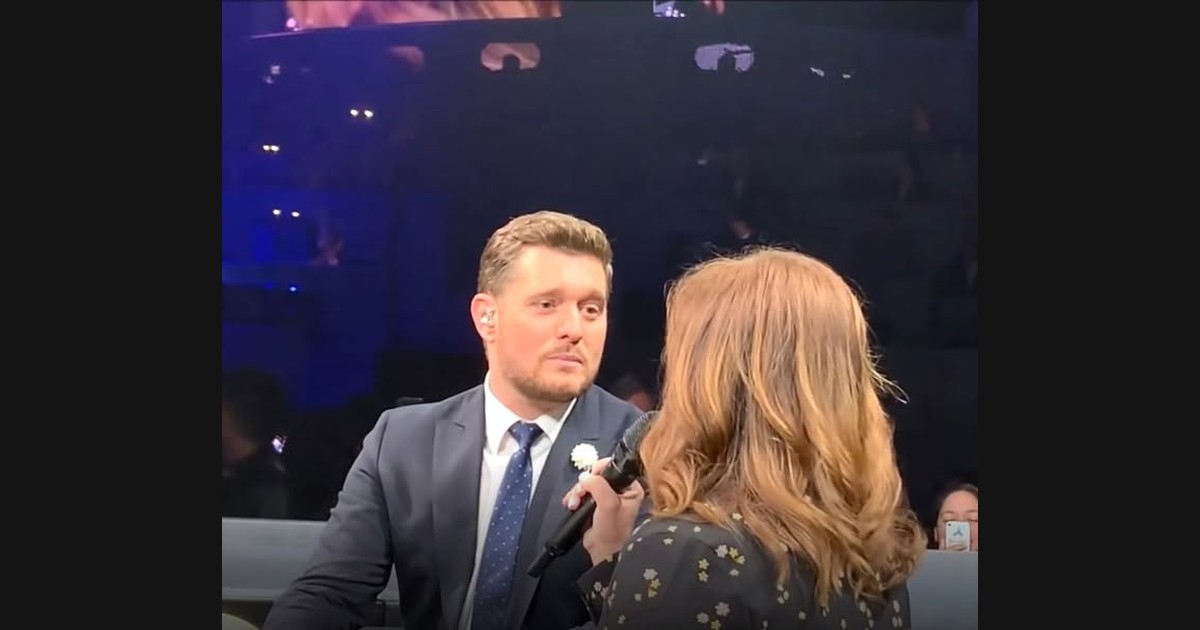
Diana Fairbanks’s “A Whole New World” encounter with Michael Bublé has a useful beginning before the first sung note: a classroom-made sign helped turn an audience request into a conversation. The sign linked the teacher’s presence at the concert with a specific musical idea rather than an unspecified wish to be noticed.
The contemporary Modesto Bee report, including the participants’ account, identifies the students’ contribution and the Oracle Arena concert in Oakland in April 2019. Fairbanks’s own channel publishes the duet footage. Those sources support a bounded story about a request and a performance, not a guaranteed route from audience membership to a singing career.
A specific song gives the request a shape
Asking to share a named duet is different from asking a performer to invent an entire musical encounter. “A Whole New World” supplies recognizable material and two vocal places. The request therefore points toward an activity the participants can understand.
Watch on YouTube ↗
That does not establish that the complete interaction was planned in advance, or that no preparation could have occurred elsewhere. The useful documented fact is simpler: the sign and conversation helped connect an audience member with a particular song.
The sign connects different communities
The classroom and concert are separate settings. A handmade object carries a message from one into the other, allowing the teacher’s pupils to have a part in the occasion without being the featured singers.
| Contribution | Role in the encounter |
|---|---|
| Students’ sign | A visible prompt connecting the audience member and a musical request. |
| Conversation | The point where a possible encounter becomes a specific shared activity. |
| Known duet | A common repertoire reference for the performance. |
| Published footage | A record through which others encounter the moment later. |
This is a map of the documented communication, not advice that a sign will reliably produce an invitation. A concert host has a program to maintain, and one recorded response cannot establish what will happen at another show.
The second view keeps the participant’s perspective
The next video is also published by Fairbanks and identifies the Bublé duet. It gives another presentation from the participant’s own channel rather than an unrelated account of a newly discovered singer.
Watch on YouTube ↗
A participant upload has a specific value: it keeps the public account close to someone involved. It remains a selected recording, however, rather than a complete biography or a description of everyone present.
The third upload returns to the same encounter
The final Fairbanks video again identifies the same song and partnership. Three uploads do not establish three separate invitations or a regular concert role. Keep the occurrence distinct from its several published documents.
Watch on YouTube ↗
For a useful comparison, notice where each recording begins its account. One may foreground the conversation or the singing more directly. That selection affects whether the viewer first understands the event as an audience request, a guest appearance, or a self-contained duet.
The performance remains a particular response
The song’s authorship belongs to Alan Menken and Tim Rice, while this encounter belongs to the named concert participants. The classroom sign adds another kind of contribution without changing either credit.
That wider view gives the clip a distinct interest. The duet is not only an exchange between two voices; it is the result of a small act of communication moving from a classroom into an audience and then into a shared musical moment.


