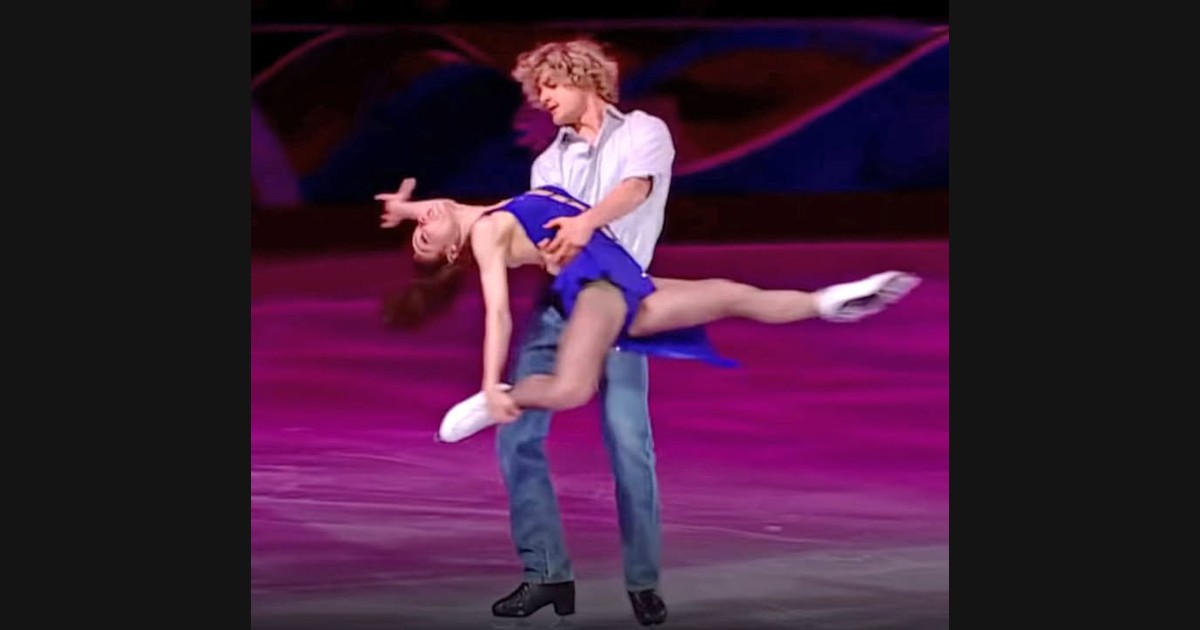
Meryl Davis and Charlie White’s “Billie Jean” recording pairs an ice-dance partnership with a song already transformed by another interpreter. The Olympic Games channel identifies the music as David Cook’s version of Michael Jackson’s composition. The skating therefore responds to a particular arrangement, not simply to a song title.
Two other official recordings place the same pair in Bollywood-inspired material and The Phantom of the Opera. Keeping the performers consistent makes repertoire choice the useful comparison: each selection gives movement another musical and dramatic frame.
Watch on YouTube ↗
A cover introduces another layer of interpretation
A choreographed performance can respond to a recording’s phrasing, pulse and changes of texture. When that recording is itself a cover, the skaters encounter decisions already made by another musician. The route from composition to movement has more than one interpretive stage.
This is why two programs using the same song title need not share the same timing or character. A different arrangement can change where a phrase seems to arrive and how much space surrounds a musical event. The movement has a specific soundtrack to work with.
A different cultural reference
The official Bollywood-themed recording identifies Davis and White at Vancouver 2010. It offers another kind of musical frame, associated with a film-song and dance tradition rather than one particular American pop recording.
Watch on YouTube ↗
The term should not be used to imply that one short program represents every part of Indian music or dance. It identifies the reference the presenting organization gives the performance. A specific interpretation can draw on a tradition without becoming a complete account of it.
For a focused viewing, notice how a musical change gives the pair an opportunity to shift the relationship between their movements. The important question is how the program remains coherent through those changes, not how many isolated technical moments can be counted.
A theatrical score creates another frame
The final official video explicitly identifies the pair’s free dance to The Phantom of the Opera at Vancouver 2010. The score supplies another set of associations through its musical-theater identity.
Watch on YouTube ↗
A program can evoke a theatrical world without literally retelling every scene of the source work. Recurring themes and changes of character can provide enough shared material for an audience to understand a developing musical atmosphere.
Keep the recording’s purpose clear
The three videos do not need to be treated as identical competitive assignments. The “Phantom” title specifies a free dance; the “Billie Jean” publication does not justify assigning a medal result to that particular routine. A familiar performance clip and a scored program can belong to different event contexts.
This distinction preserves the musical comparison. Davis and White bring a continuing partnership to different material, while each recording supplies another structure for movement. A pop cover, a cultural reference and a theatrical score are three resources rather than interchangeable soundtracks. Following what each one offers makes the relationship between music and skating more substantial than a collection of spectacular moments.


