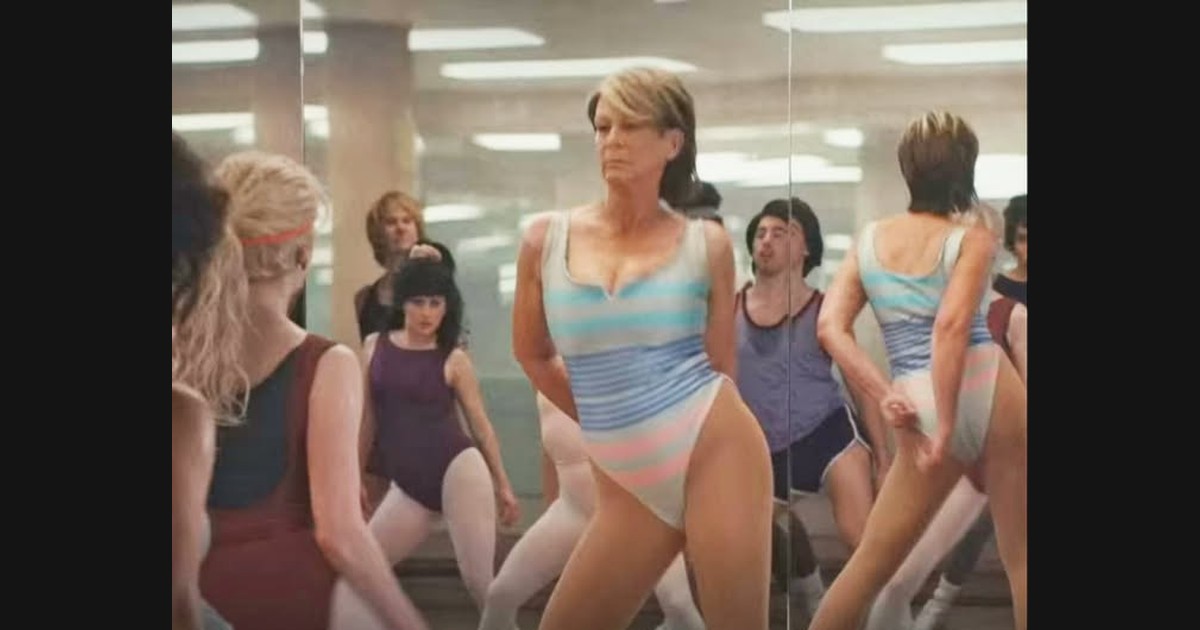
Physical comedy often begins with a pattern that looks easy to understand. Once the audience recognizes that pattern, a departure from it can become the joke. Jamie Lee Curtis and Jimmy Fallon’s Perfect dance recreation offers a way to think about that process: familiar movement supplies a reference, while a comedy segment gives it another set of expectations.
The important comparison is not whether a recreation could replace the film scene. It is how recognition allows the new version to do something different. A viewer who understands the premise can watch for repetition, variation, and the moment when a movement starts to function as a punch line.
Watch on YouTube ↗
Setup, pattern, departure
Consider three stages of a physical joke. First, the setup establishes what kind of activity is taking place. Next, repetition makes its rules legible. Finally, a change in timing, scale, or relationship to another performer can redirect the audience’s expectation. Not every routine uses those stages in a strict order, but they provide a useful vocabulary.
Apply that vocabulary only to what you can see. Identify a repeated action, then notice whether a later return preserves or changes it. A larger gesture is not automatically funnier; its effect depends on what the routine has already taught the viewer to expect.
Coordination matters for a similar reason. When two performers appear to share a pattern, a difference between them becomes noticeable. The difference might concern timing or emphasis rather than an outright mistake. Describing it as a comic relationship is more precise than assuming every apparent mishap was genuinely accidental.
The source scene changes the comparison
Watch on YouTube ↗
The film excerpt gives the recreation a concrete reference. Watch how a movement reads in its original screen setting, then consider what happens when a later entertainment segment invites the audience to recognize it. The same gesture can acquire another function because viewers are now aware of the act of revisiting it.
A useful comparison note has two parts: what remains recognizable, and what the new context asks us to notice. Costume, framing, and performance style can all contribute, but there is no need to invent a rehearsal account or claim that every detail was improvised on the day.
Also separate the original film image from the television segment’s comic framing. They are different productions with different purposes. A recreation can be affectionate, exaggerated, and deliberately artificial at once; it does not need to masquerade as a newly discovered piece of the original film.
Recognition in another Tonight Show format
Watch on YouTube ↗
The Ed Sheeran subway-busking feature provides a different kind of reveal. Here the comparison concerns public recognition of a performer rather than recognition of a movie routine. A familiar voice or face can change the meaning of an activity that initially resembles ordinary street performance.
That connection is structural, not a claim that the two segments share a location or production history. Both give recognition something to do. In the dance recreation, it lets viewers measure variation against a remembered scene. In busking entertainment, it can change how a public performance is understood.
After watching, describe one visible comic mechanism without using “hilarious” or “perfect.” Naming a setup, a repeated pattern, or a change of timing explains more than a reaction adjective. It gives another viewer something concrete to look for while leaving their response open.


