A familiar song can carry a history that is not fully explained by its most immediate image. Paul McCartney has described Blackbird as an attempt to communicate encouragement to people facing the civil rights struggle. That firsthand account gives the composition a particular context beyond a general song about a bird.
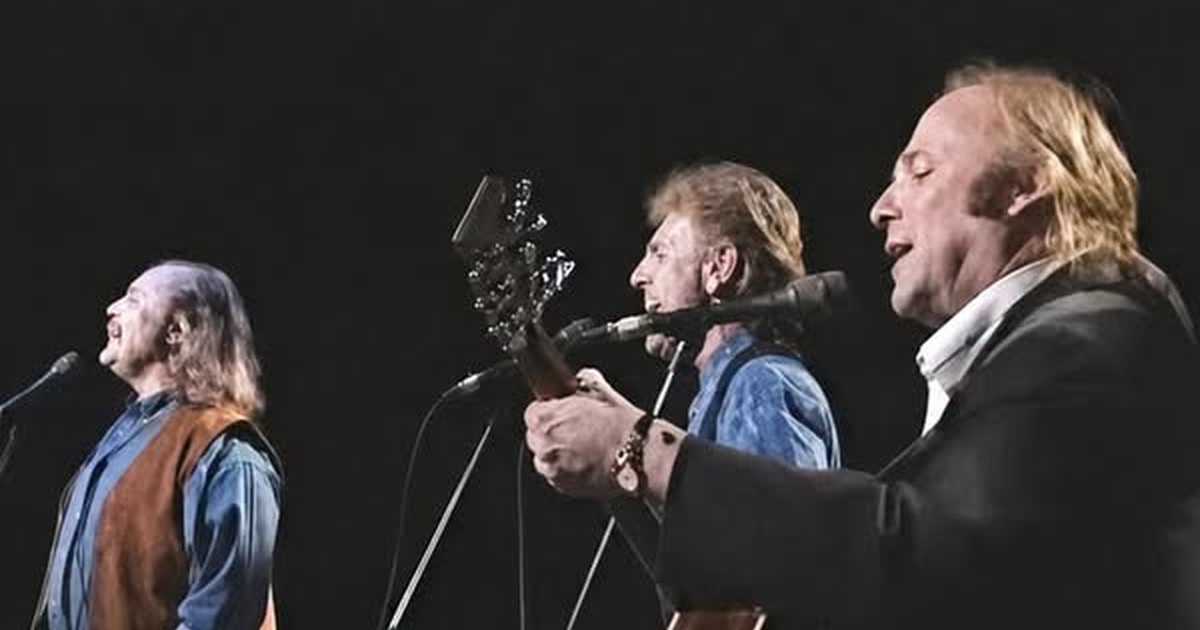
Crosby, Stills and Nash’s interpretation enters that history through another performing identity. The opening publisher identifies a live recording in Japan without a complete event chronology. The playlist also includes an officially catalogued 1982 concert version and the Beatles’ remastered recording.
The trio’s interpretation
Watch on YouTube ↗
An image can make a public subject approachable
A symbolic image allows a composition to address experience without becoming a documentary account of one event. A listener follows an imagined situation while the writer’s explanation supplies another relationship around it.
These levels do not cancel each other. Knowing McCartney’s account can sharpen attention without requiring everyone to abandon personal associations. A song can originate within a particular concern and continue to be used by people whose circumstances differ.
The useful distinction is between a writer’s stated connection and a claim about every later performance. McCartney’s explanation establishes something about the writing. It does not automatically disclose why each interpreter chose the piece or what every person in a later audience understood.
A vocal group changes the act of address
CSN brings a collective performing identity to material associated with an individual sung line. A group can distribute a statement among voices while retaining a recognizable composition. The repertoire connection remains; the immediate company changes.
This does not require a claim that every phrase has an identical distribution. The concrete musical question is how a shared presentation preserves direction. Individual contributions need relationships if the result is to remain one piece rather than a succession of unrelated statements.
The accompaniment matters within that task. A continuing instrumental reference can give several voices common orientation. A modest number of resources does not mean the arrangement has no internal work to do.
An official concert reference from 1982
The second catalogue recording identifies Blackbird at the New Universal Amphitheatre in Universal City, California, in 1982. It provides a dated reference distinct from the Japan-labelled video.
Watch on YouTube ↗
The shared group and composition make comparison possible, while the event identities remain separate. A viewer should not borrow the detailed label of one clip to fill an undocumented gap in another.
The Beatles recording
The final official catalogue item is the 2009 remaster of the Beatles’ Blackbird. The remaster year identifies a publication form rather than a newly written song or a 2009 band reunion.
Watch on YouTube ↗
These records connect writing history, interpretation and later publication. McCartney’s civil rights account gives the composition a public context; CSN undertakes it within another musical identity. The relationship between them is more interesting than either treating the cover as a replacement or assuming the original explanation permits only one response. A song can keep its history while remaining available for another group to sing.


