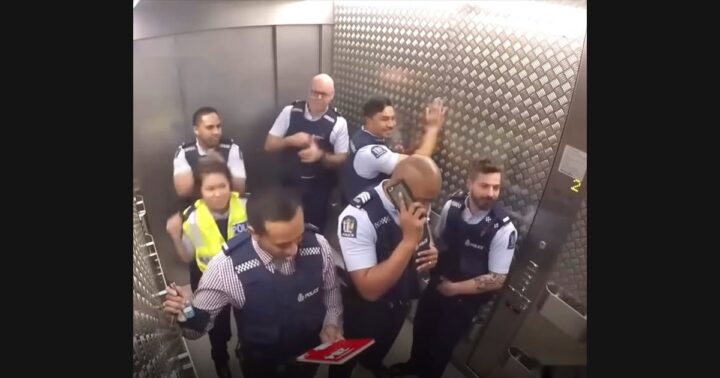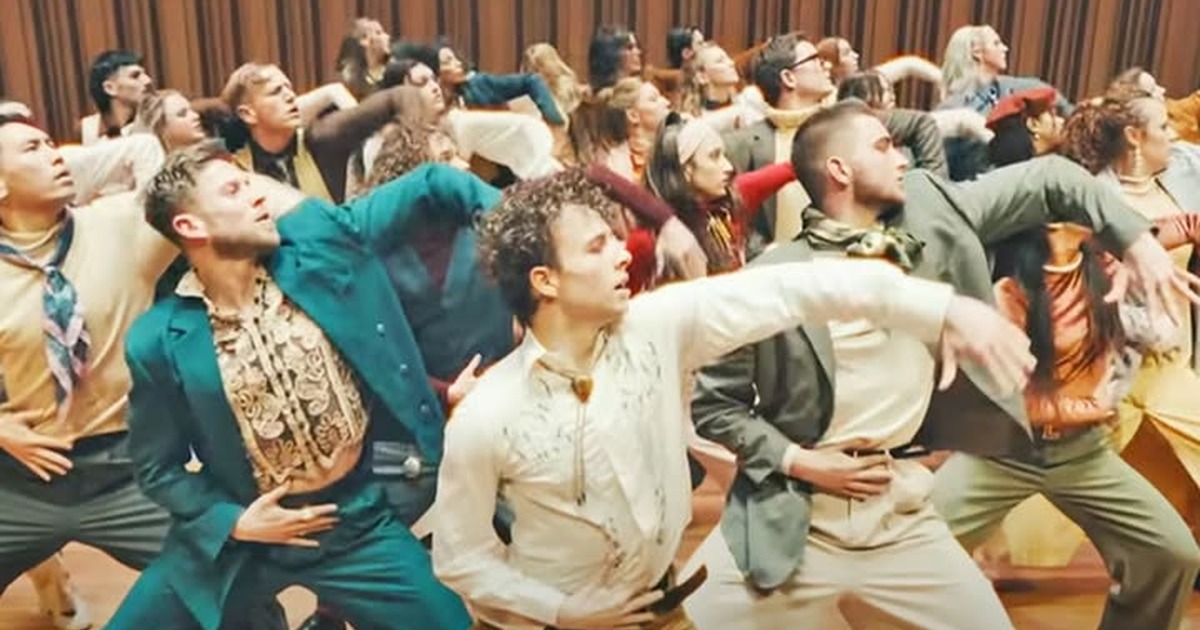
CDK Company’s “Somebody That I Used to Know” is best approached as a dance film, not simply as a camera pointed toward a stage routine. The San Francisco Dance Film Festival included it in its 2024 program and credited Sergio Santos Reis, Jowha van de Laak, and Mauro van de Kerkhof as choreographers. Those credits place the work within screendance: movement made to be encountered through a filmed frame.
The company identifies itself as a Netherlands-based collective. Naming the collective and the credited creators gives the performance a clearer identity than treating the dancers as an anonymous group who happened to appear beside a familiar recording.
Watch on YouTube ↗
The frame decides what counts as an entrance
In a theater, a viewer may be able to see a dancer waiting near the edge of a stage. On screen, the edge of the image can conceal that person entirely. An entrance can therefore depend as much on framing as on the distance a dancer travels.
This gives a practical viewing focus: follow how the image defines the performing space. A movement toward the camera, across its view, or out of frame can change the relation between a dancer and the viewer. The camera is not merely preserving choreography; it can help determine how that choreography is understood.
Individuals inside a group image
Ensemble choreography has more than one scale. A viewer can follow an individual gesture, a small partnership, or the changing shape of the group. A film can guide attention between these scales through its choice of view. What seems like one continuous musical phrase may support several visual points of focus.
Try one viewing in which you watch the group’s outline rather than individual faces. Then choose one dancer for another passage. The difference reveals how much information an ensemble offers simultaneously. There is no requirement to absorb every detail on the first pass.
Recognition is a starting point
Gotye’s song supplies a familiar musical reference, but choreography does not have to illustrate every word. Movement can respond to pulse, accents, changes in texture, or the overall duration of a section. It may also introduce visual ideas that remain independent of a literal reading of the song.
That is why it is useful to avoid assigning a fixed story to each dancer without evidence from the creators. A viewer can describe a change of grouping or focus without claiming to know a character’s private motivation.
Two stage comparisons
The 2024 World of Dance upload is labelled a showcase. A stage presentation gives a collective a different problem: the work must remain legible within the event’s performing space. The recording documents that presentation, even though its own camera choices still influence the online view.
Watch on YouTube ↗
The 2023 upload is labelled first place in the Upper Division. That result belongs to the event performance named in its title, not to the separate Gotye film. Keeping the labels distinct avoids turning every CDK video into an entry in the same competition.
Watch on YouTube ↗
The three clips provide a useful distinction between choreography designed for a film and choreography presented at an event. Both depend on bodies, timing, and space. Their different viewing conditions explain why the camera belongs in the discussion alongside the dancers.