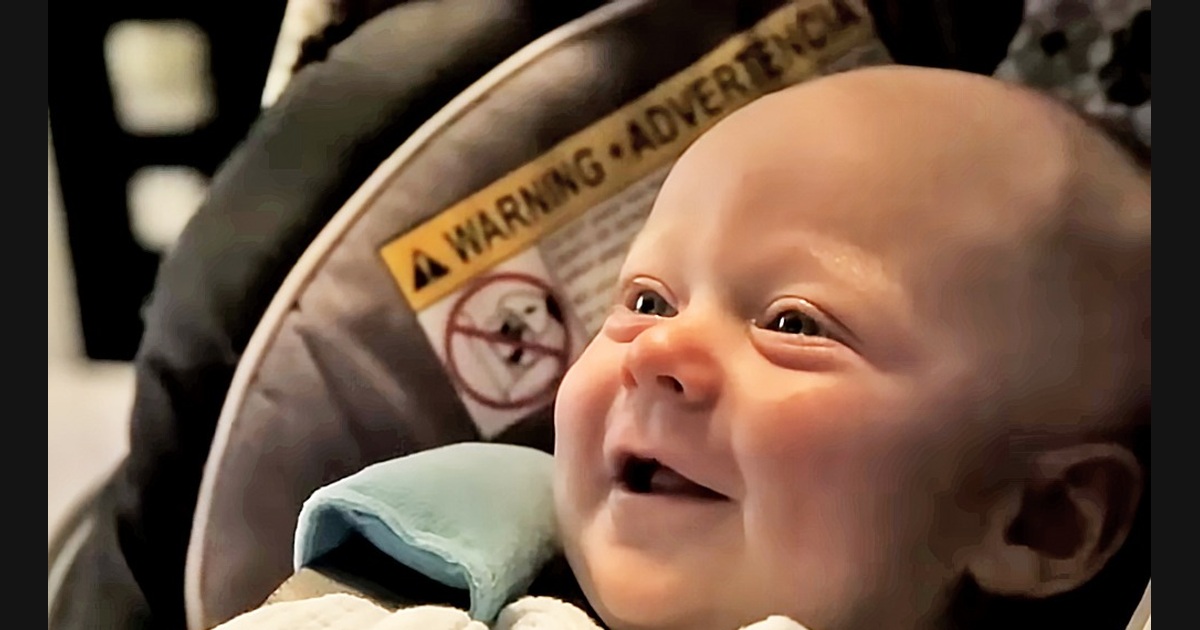
A song can be a finished recording, a performance for an audience, or something people do together in a room. The home video associated with “I Need to Be in Love” belongs to that last kind of encounter. Its interest comes partly from the relationship between the singing and the small interaction around it.
The upload’s title describes a baby trying to sing. That is the uploader’s framing, rather than a developmental assessment or proof that every sound deliberately matches the song. The encounter can be appreciated without making a larger claim about musical ability.
Watch on YouTube ↗
The song is doing a different job
In an official recording, attention is organized around a repeatable presentation. In an informal encounter, the music can also be an activity directed toward someone nearby. Another person’s sound or movement may become part of what the viewer follows, even though it is not part of the composition.
Listen for the relationship between the sung phrase and the surrounding sound. An interruption need not be treated as a defect in the performance; it may be central to the recording’s value as an encounter. At the same time, a viewer should not assume that every expression reveals a specific emotion or understanding.
That makes the camera’s subject important. When attention moves toward the person receiving the singing, a familiar melody can become the background to an exchange. The song remains audible, but the purpose of the video differs from a conventional presentation centered entirely on the singer.
Return to the named composition
“I Need to Be in Love” also has a documented recording history. Richard Carpenter’s own biography identifies it among the selections on the Carpenters’ 1976 album A Kind of Hush, with a writing credit shared by Carpenter, John Bettis, and Albert Hammond.
The credit separates the composition from this later use of it. A song associated with Karen Carpenter’s recorded voice can remain recognizable when someone else sings it in a different setting. Association is important to the listener’s memory, but it does not make every subsequent rendition an attempt to reproduce the original record.
A released recording changes the focus
The second selection is an official Carpenters audio upload. It offers a reference centered on the recorded song, giving the listener space to follow its musical direction without the home video’s surrounding interaction.
Watch on YouTube ↗
Choose a complete thought and follow how it moves toward an ending. Then return to the informal version and consider which parts of the composition remain clear despite the change of setting. This is a comparison of function and presentation, rather than a test of whether a home singer sounds exactly like a recording artist.
Two uploads do not automatically mean two versions
The final selection is another official Carpenters audio upload of the same named song. The embedded titles alone do not establish that it is an alternate take, a remaster, or a different arrangement.
Watch on YouTube ↗
Keeping that limit clear prevents the set from acquiring an invented recording story. A second upload may provide another route to the song without documenting another performance.
The home clip has its own reason to remain alongside those recordings: it shows how a piece can leave its original release context and become part of an everyday activity. That change of purpose is enough to discuss, without assigning hidden thoughts to a baby or making claims about what everyone in the room must have felt.


