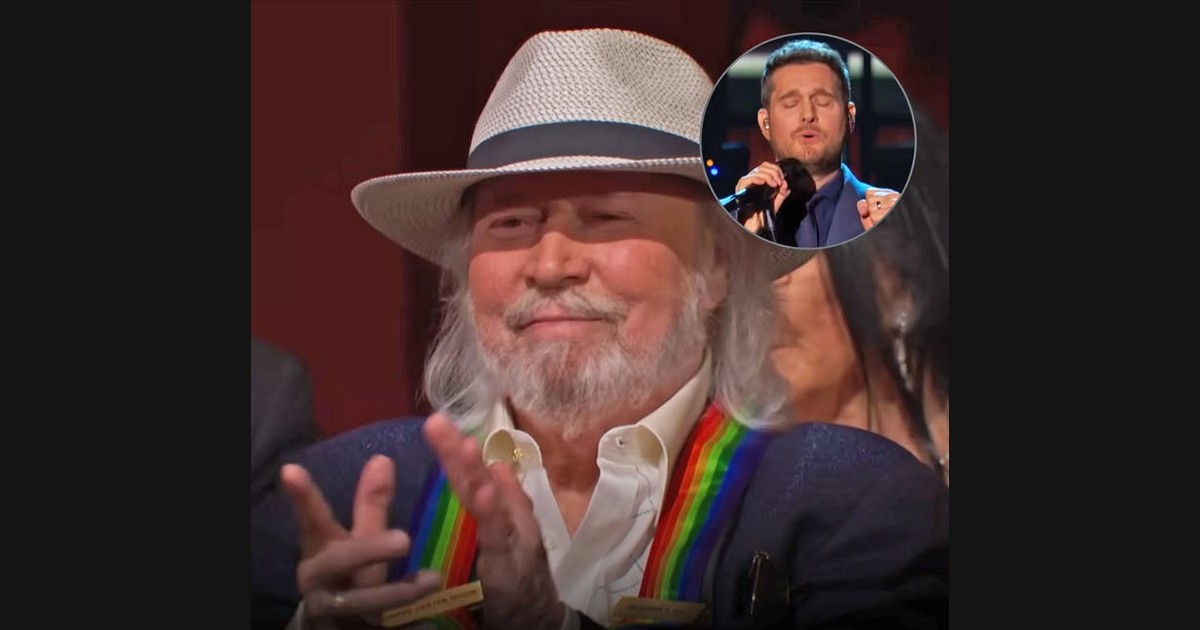
Michael Bublé’s “How Can You Mend a Broken Heart” at the Kennedy Center Honors has a recording connection behind the tribute. His 2003 album track already included Barry Gibb. The label’s credits identify Bublé as lead vocalist and Gibb on background vocals.
That makes the later performance more specific than a singer choosing a familiar Bee Gees ballad for one ceremonial night. The song had already been part of Bublé’s released repertoire, with a contribution from the artist being honored.
Watch on YouTube ↗
The 2023 occasion gives the roles another arrangement
The Kennedy Center identifies Bublé’s performance with its 46 th Honors celebration for Gibb. The ceremony took place on December 3, 2023, and was televised later that month. Gibb is the honoree; Bublé presents the song from the stage.
A tribute can therefore reverse an earlier relationship. In the recording, the established songwriter contributes to another singer’s album. At the honors event, that singer returns to the work as an acknowledgment of the songwriter’s career.
The studio credits are more precise than a duet label
The official artist audio lists Barry and Robin Gibb as writers. It names Bublé on lead vocals and Barry Gibb on background vocals, along with a larger instrumental and production team.
Watch on YouTube ↗
Those labels matter because collaboration does not always mean two equal lead parts. A background contribution can be meaningful without becoming a conventional alternating duet. The recorded roles provide a clearer account than a later shorthand title.
The credits also identify David Foster and Humberto Gatica among the producers and William Ross among the arrangers. The album track is a produced ensemble recording, rather than a document that should be described only through the two best-known names associated with it.
A song can connect different career stages
Hearing the 2003 recording beside the 2023 tribute creates a comparison across twenty years. The composition supplies continuity while the occasion and participating roles change.
For a focused listen, choose one complete musical statement in each presentation. Consider how the lead voice relates to its supporting material. That approach does not require claiming that the arrangements are identical or that every nuance was intended as a reference to the earlier release.
It also avoids turning a public tribute into an invented account of private friendship. The documented recording connection is already substantial. The song is a piece of shared professional history.
Another upload of the collaboration
The final video identifies Bublé and Gibb together on the same song. Its title is a useful route to the material, but the official label credits remain the firmer reference for the studio participants’ precise roles.
Watch on YouTube ↗
The distinction leaves room to appreciate the partnership without overstating it. A lead singer, background vocalist, writers and production team contribute differently to a release.
The Kennedy Center performance consequently carries a specific connection back into the celebration. Bublé is not only interpreting a song from Gibb’s catalog; he is returning to material on which Gibb had already helped shape one of his own records. That earlier credit gives the later tribute a documented musical history.


