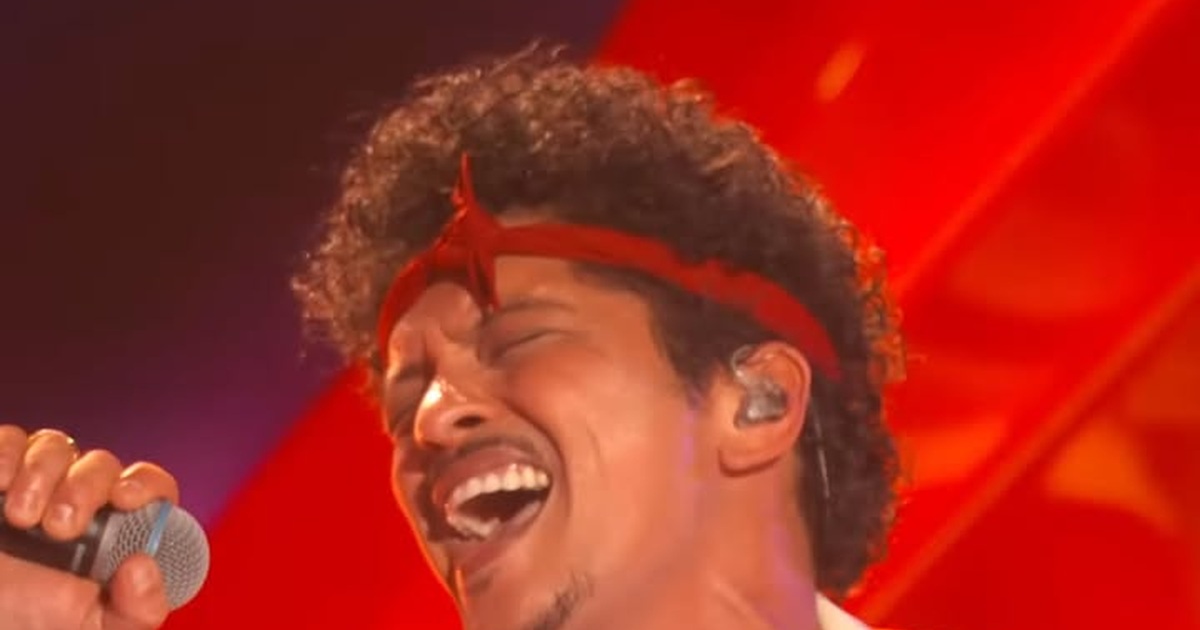
An awards-show performance can introduce current repertoire even when an artist’s nominations concern another recording. Bruno Mars’ I Just Might selection at the 2026 GRAMMYs is a clear example. The Recording Academy identifies the song as the lead single from his 2026 album The Romantic, while its account separately lists his nominations associated with APT.
Keeping those roles apart avoids a common shortcut: appearing with a song during a ceremony does not automatically mean that the song is a nominee or winner at that event. A television program can celebrate an artist’s wider public presence and introduce another part of the catalogue.
The Academy’s own performance description also identifies a red visual presentation and a heart-shaped stage, connecting the title’s romantic theme with the event’s image.
The current-repertoire feature
Watch on YouTube ↗
A newly introduced song has to establish a clear musical identity for listeners who may not yet know it. Repeated musical material, a clear featured line and the relationship with a band can provide points of orientation. Familiarity with the performer supplies one reference, but the composition still needs to become recognizable in its own right.
This creates a different task from performing a long-established hit. A familiar refrain can rely on audience memory; newer material has to make that memory possible. The arrangement’s clarity therefore matters alongside the public occasion.
Three identities in the same program
- The artist: a recognizable performer whose career creates expectations.
- The featured song: the material selected for this particular appearance.
- The awards record: nominations and results attached to specific eligible recordings.
The three can overlap without matching exactly. The distinction is useful whenever a performance clip circulates separately from the ceremony: a viewer needs the song credit and event context, not an assumed award outcome based on the stage alone.
Musically, follow the part that establishes continuity underneath the featured line. A repeated pattern can make a new song easier to follow while the voice introduces successive phrases. The parts have complementary jobs rather than competing to be equally conspicuous.
A collaboration changes the credit relationship
Watch on YouTube ↗
The official Uptown Funk video is credited to Mark Ronson featuring Bruno Mars. Mars’ recognizable voice does not make the release a solely credited Bruno Mars track. The recording’s identity includes the named collaboration.
That credit supplies a useful contrast with a feature introducing Mars’ current solo repertoire. A performer can be central to a recording’s sound while occupying a different place in the release’s credited partnership.
A separate solo recording supplies another reference
Watch on YouTube ↗
Just the Way You Are changes the composition again and offers an earlier solo-catalogue reference. Compare the relationship between a featured voice and the musical framework rather than demanding that every song use the same scale or kind of emphasis.
The sequence makes the awards appearance easier to place. I Just Might introduces current material; Uptown Funk presents a named collaboration; the third selection supplies another solo recording. Each adds to the public picture of the performer, while the particular song, credit and occasion remain distinct.


