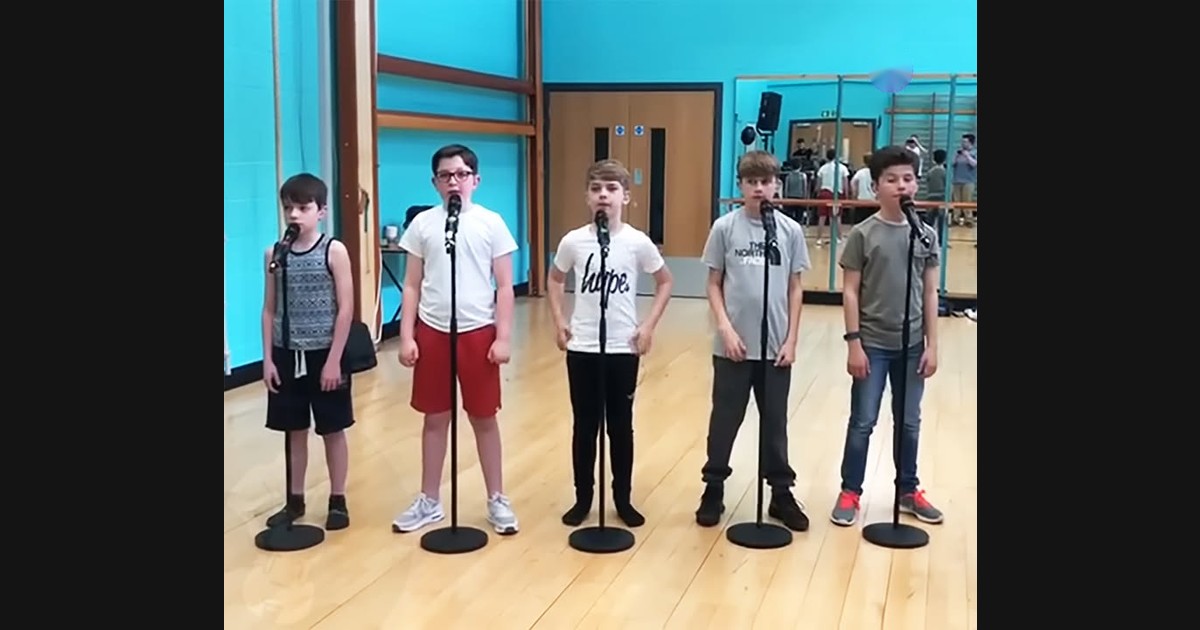
Bring It North’s upload calls “A Million Dreams” “our original version.” The group’s own description explains the phrase: this was a version prepared for a Britain’s Got Talent semi-final that they did not perform on television.
That is a useful distinction. The upload gives an arrangement a public life after preparation for another occasion. It does not claim that the group wrote the underlying song, which comes from The Greatest Showman and is credited to Benj Pasek and Justin Paul.
Watch on YouTube ↗
A prepared version can exist outside a broadcast
A performance project can produce material that is not ultimately used in the intended public program. Publishing that material later lets an audience encounter another option without turning it into a secret broadcast that supposedly occurred.
Here the group makes the status explicit. “Prepared for” and “performed on television” describe different stages. The first establishes work undertaken toward an occasion; the second would establish what viewers actually received during the program.
For a practical catalog note, record both facts rather than compressing them into “the semi-final performance.” The distinction is especially helpful when several pages share the same song and performers.
Original has more than one everyday meaning
In a version title, the word can identify an earlier or independently developed arrangement. In a songwriting discussion, it can refer to newly created composition. Those uses should not be allowed to substitute for one another.
A group can make creative choices about vocal distribution, accompaniment, entrances, and the extent of a section while interpreting a song written by other people. Recognizing arranging work does not require moving the composition’s writing credit.
For example, a passage can be distributed between a featured voice and supporting singers instead of being assigned throughout to one lead. That is a meaningful performance design even when the melody and verbal material remain connected with the source song.
Compare the other group-published selection
Watch on YouTube ↗
The second Bring It North upload identifies “A Million Dreams” through The Greatest Showman. Keep its own presentation attached to it. A shared title does not establish that it is identical to the first recording or that both were broadcast.
Choose a matching passage and compare what the voices are asked to do. Follow an entrance, a joined line, or a change in support. If a difference is unclear, do not invent a new arrangement merely because the video page has a different title.
The official semi-final clip supplies the television frame
Watch on YouTube ↗
Britain’s Got Talent’s official upload identifies a 2018 semi-final appearance by the group. It provides the relevant program context, while the artist’s statement about the first version remains specific to that version.
Compare the releases as documents with different statuses: prepared material published by the performers, another performer-published selection, and a television-program release. Establishing that map prevents the title of one item from becoming the history of all three.
The useful result is recognition of actual creative work: Bring It North developed a version of an existing composition and chose to share it. That contribution remains interesting without misidentifying the song’s writers or inventing a broadcast for an arrangement the group says television viewers did not see.


