A street-piano recording can become known because of who stops to listen. A composition can tell a different story: whom the musician wanted to acknowledge. Brad Kella’s “Eve and Frank” provides that second perspective, with a dedication he has explained publicly in his own words.
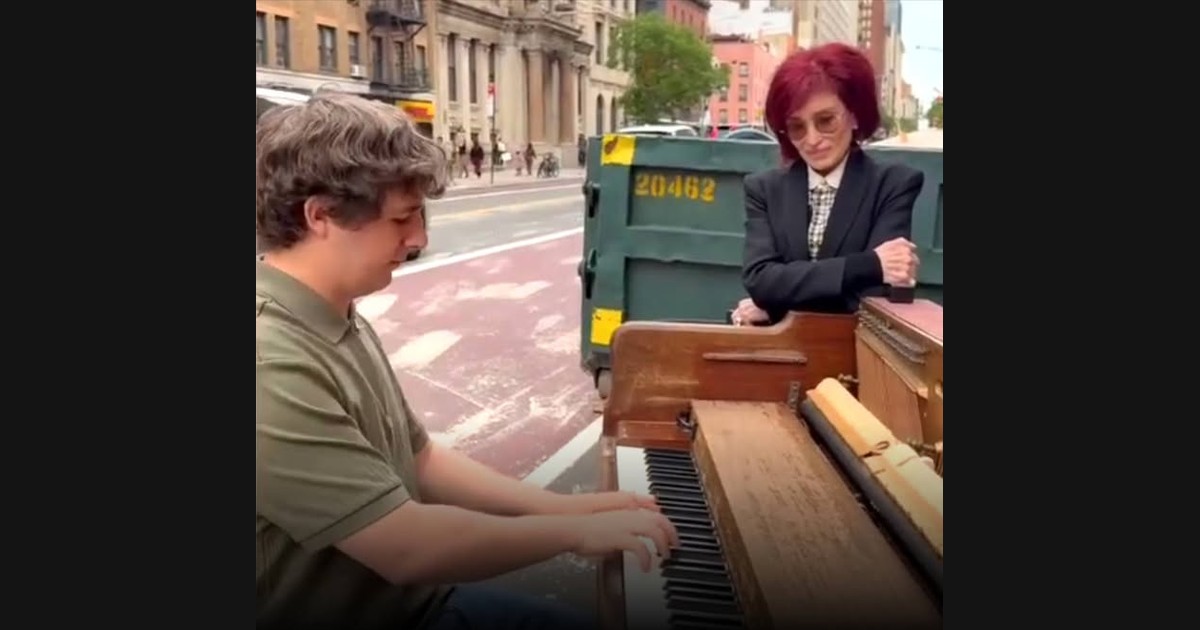
The opening clip circulates as Kella playing near Sharon Osbourne in New York. Its brief documentation leaves little basis for a detailed account of the encounter. Kella’s original work, preserved by The Piano, offers a clearer way to understand a musical decision that belongs directly to him.
Watch on YouTube ↗
The people behind the title
In a 2024 firsthand interview, Kella described “Eve and Frank” as a thank-you to the foster parents who supported him and bought him a piano while he was growing up. That account gives the title a specific personal reference without requiring listeners to invent a literal narrative for every passage.
The distinction matters in instrumental music. A dedication can explain why a work was made or whom it honors. It does not necessarily tell a listener exactly which notes represent a person or an event. The composition remains something heard over time, rather than a coded biography that must be decoded correctly.
A public performance keeps the dedication open
The program’s official final-concert recording identifies “Eve and Frank” as Kella’s original composition and names it the performance of the night in series two. Channel 4 also confirms him as that series’ winner.
Watch on YouTube ↗
The occasion moves a personal act of thanks into a public setting. Someone who does not know the dedicatees can still follow the musical form. Context supplies one route into the work, while recurring ideas, contrast and a sense of arrival provide another.
For a focused listen, choose a phrase you notice returning. Ask whether its new surroundings change your experience of it. This avoids inventing a one-to-one connection between a musical event and a private memory, while still taking the dedication seriously.
What the interview adds to the portrait
Kella also used the interview to speak about opportunities for young people in care and the value of having supportive people around them. That is his stated perspective, rather than a promise that music will produce the same outcome for everyone.
It broadens the story beyond a competition result. The instrument in his account was part of an ongoing relationship of support. The composition acknowledges that relationship, and the public performance lets him share the acknowledgment through his own work.
A familiar cover returns the focus to interpretation
The “Imagine” recording below presents Kella with established repertoire in a report connected with The Piano. It offers a different relationship between the musician and the material.
Watch on YouTube ↗
A cover begins with a work listeners may already recognize; a personal composition introduces both its musical identity and its context. The two activities can belong to the same pianist without doing the same job. “Eve and Frank” is distinctive because its dedication connects a public achievement with the people Kella himself chose to thank, giving his musical story a center beyond the most famous person in the room.