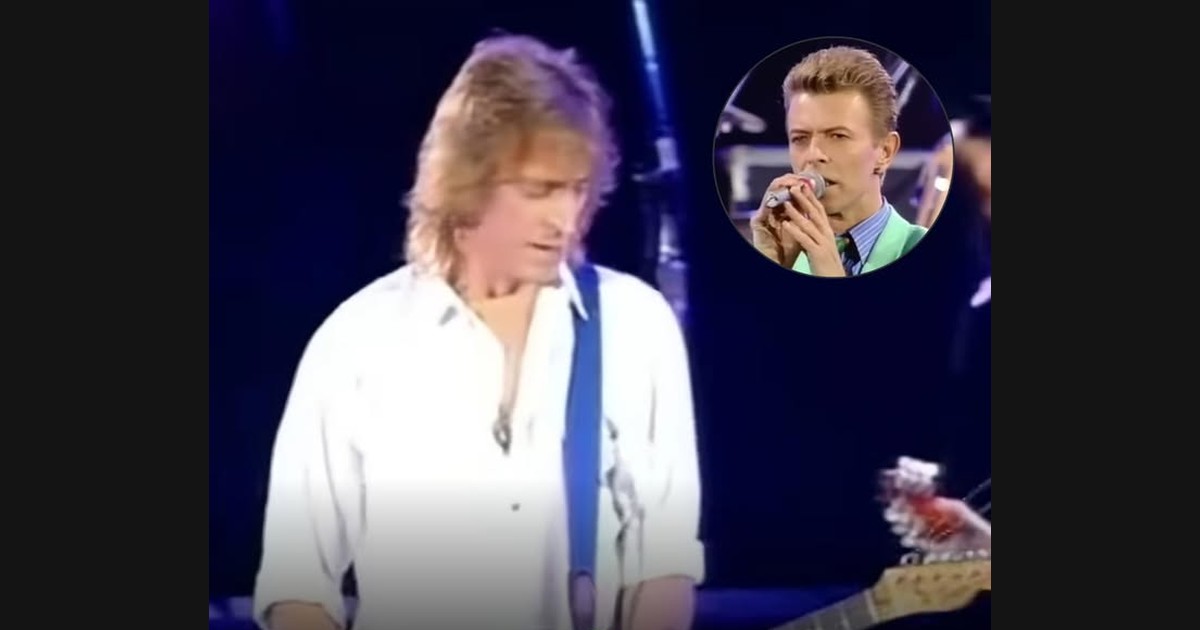
A song performed at a tribute concert does not automatically come from the honoree’s own catalog. “Heroes” at the Freddie Mercury Tribute Concert makes that distinction useful: Bowie’s repertoire becomes part of a program centered on Mercury.
Queen’s official archive dates the event to April 20, 1992, at Wembley Stadium. Its official home-video release list identifies “Heroes” with David Bowie, Mick Ronson, and Queen, alongside “All the Young Dudes” with Ian Hunter, Bowie, Ronson, and Queen. The program contains connected participants and different repertoire relationships.
Watch on YouTube ↗
The occasion and the composition answer different questions
The tribute’s name tells us why the gathering took place. The song title and artist credits identify what is performed and who participates. One field should not silently replace the other.
For example, a guest can contribute material associated with their own career to a celebration of another artist. That choice makes the guest’s presence musically legible without making the song an undiscovered composition by the person being honored.
This is particularly important in an all-star program. Shared stage credits can connect musicians who have different histories with the material. A headline listing several names is not a complete songwriting credit or a precise account of every instrumental responsibility.
The performance is a temporary configuration
Follow the ensemble relationship rather than treating the occasion as a newly formed permanent band. The players need a shared route through this selection, even though they arrive with distinct recording identities.
Choose a complete passage and identify what supplies its continuity while another contribution receives attention. That lets the collaboration be described as musical work rather than only a collection of famous names.
Keep the question tied to what can be heard. A camera shot or a prominent name does not necessarily identify the sole source of the musical material at that moment.
A rehearsal upload supplies another kind of document
Watch on YouTube ↗
The related recording is labeled as rehearsals for the 1992 tribute. Treat that label as the uploader’s identification, then compare the function of the material with the public concert release.
A rehearsal document can show another presentation of the same selection, but it does not establish that every released concert decision was made at the moment pictured. It also should not inherit an exact recording day merely from the concert’s date.
“All the Young Dudes” changes the selection
Watch on YouTube ↗
The final upload identifies “All the Young Dudes” and advertises a different camera angle. It changes the song while keeping several participants and the tribute context in view.
Use the official program listing to distinguish featured credits rather than transferring every name from one headline into a definitive list of all audible parts. A release’s selected credits can identify a collaboration without documenting every contribution made on stage.
The result is a clearer concert map: one named occasion contains a range of selections, each with its own repertoire and participation history. “Heroes” belongs to the Mercury tribute as a particular contribution from Bowie and the collaborating ensemble. The connection honors the occasion without flattening all the music into one artist’s catalog.


