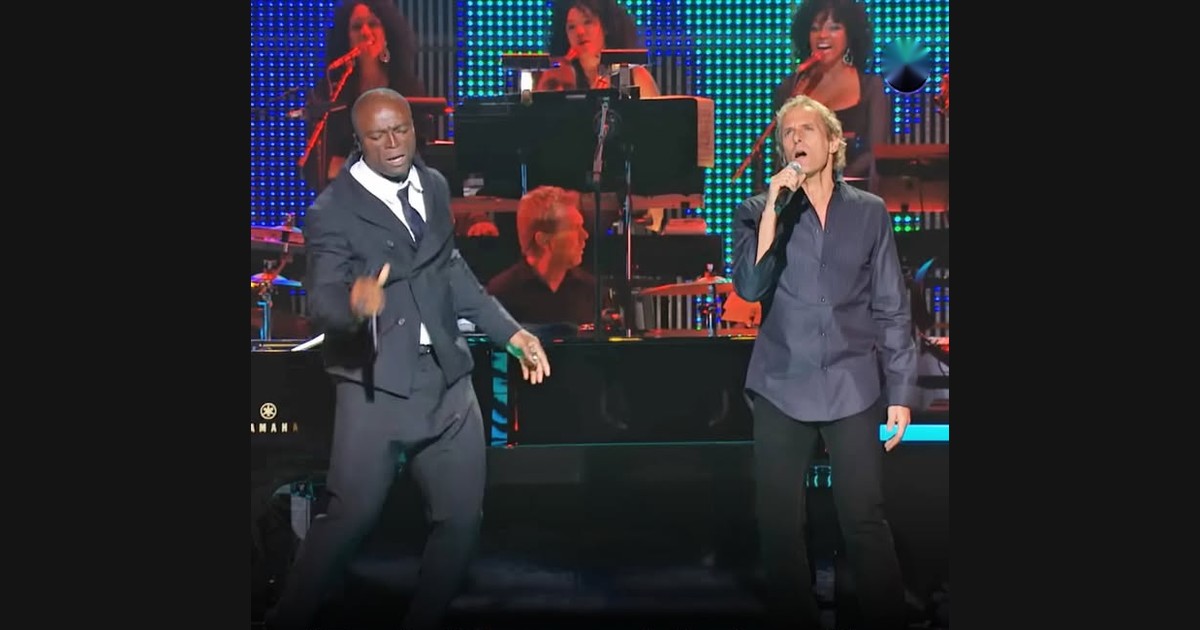
David Foster’s medley with Michael Bolton and Seal connects two established songs: “When a Man Loves a Woman” and “It’s a Man’s Man’s Man’s World.” The shared performance creates a new program relationship, while the compositions retain separate histories.
Foster’s official Hitman Returns track list names the combined selection. The credits should therefore be read at more than one level: the concert presentation, the current singers, and the songs they interpret.
Watch on YouTube ↗
A performer association is not the whole writing credit
“When a Man Loves a Woman” is strongly associated with Percy Sledge. The Rock & Roll Hall of Fame identifies it as a signature part of his recorded legacy. The published score credits Calvin Lewis and Andrew Wright as the song’s writers.
That distinction leaves room for both kinds of contribution. A recording artist can make a composition widely recognizable without becoming its sole credited author. A later Bolton interpretation adds another performance identity rather than replacing the earlier credit chain.
For a practical note, separate “writer,” “recording artist,” and “current performance.” Those fields can have different answers even when a title is habitually introduced through one famous singer’s name.
The second song brings another recorded reference
The Recording Academy’s Hall of Fame catalog identifies James Brown’s “It’s a Man’s Man’s Man’s World” as a 1966 single. Seal’s presence in the Foster program therefore introduces another interpretation of an established recording reference, not proof that both songs originated in this medley.
The similar wording of the titles can make the pairing seem inevitable, but verbal resemblance is not shared composition. The songs have their own melodic material and their own routes into the program.
This is why the slash in a medley title matters. It connects selections within a performance; it does not erase the boundary between their authorship and recorded lives.
Bolton’s standalone video isolates one selection
Watch on YouTube ↗
The official “When a Man Loves a Woman” video keeps Bolton as interpreter while giving one song its own presentation. Compare it with the relevant portion of the medley, rather than judging it against the whole two-song sequence.
A standalone recording can establish its own beginning and ending. A medley section also has to fit what comes before or afterward. Those different tasks can explain a changed presentation without requiring a story that one version is more emotionally true.
Seal’s video supplies the parallel reference
Watch on YouTube ↗
Seal’s official “It’s a Man’s Man’s Man’s World” video gives the other song the same kind of separate treatment. The comparison is now balanced: each current interpreter has a standalone reference as well as a place in the shared program.
Choose one matching phrase from each song and identify how its role changes inside the medley. Do not transfer a musical observation about one composition to the other simply because the titles are placed together.
The complete credit map makes the program more informative. Foster supplies a particular concert frame, Bolton and Seal contribute current interpretations, and the two songs retain distinct recording histories. The medley’s achievement is a connection among those elements, rather than an invented claim that they began together.


