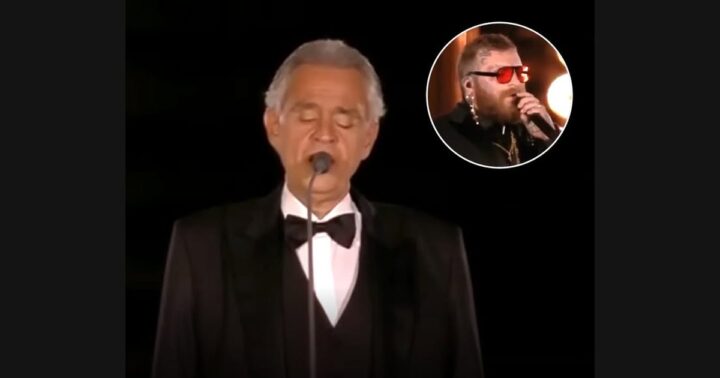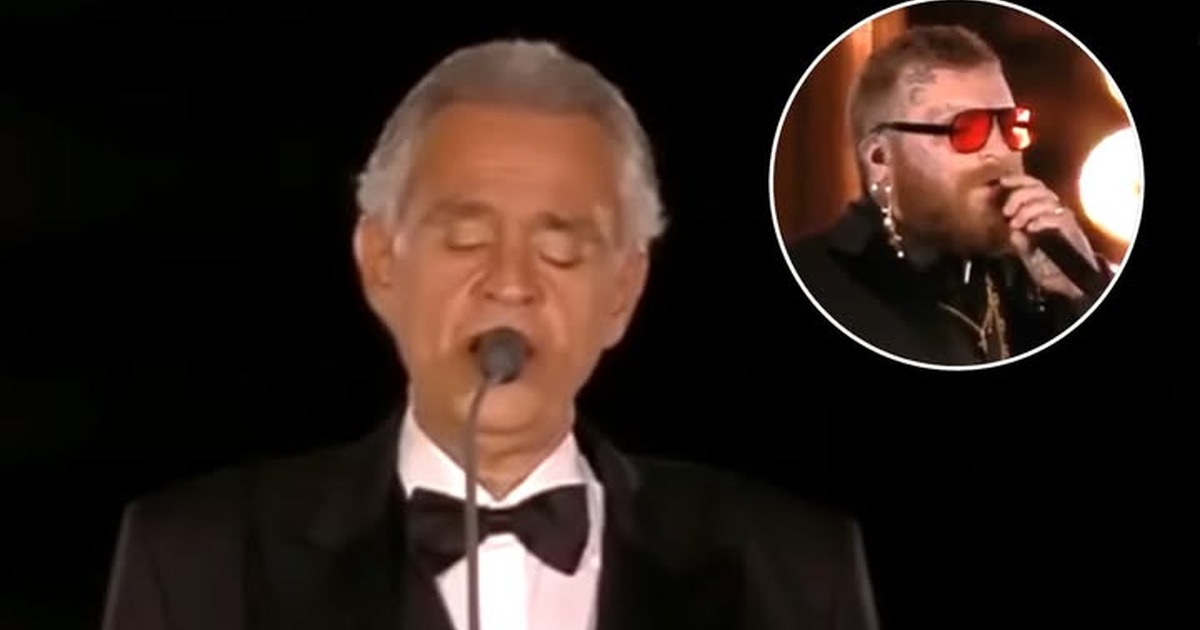
Andrea Bocelli and Teddy Swims’ “Amazing Grace” duet has a precise setting: the Grace for the World concert in St. Peter’s Square on September 13, 2025. Bocelli’s record company confirms both the occasion and the pairing. That context tells us considerably more than a claim that the performance made an entire crowd cry.
The concert closed the third World Meeting on Human Fraternity and formed part of the 2025 Jubilee context. Its program brought together artists from different musical fields. The duet therefore belongs to a larger act of programming, rather than an unexplained meeting of two singers in a famous location.
Watch on YouTube ↗
Why the event name matters
A location alone can encourage the wrong kind of shorthand. “At the Vatican” does not specify whether a performance is part of a concert, a service, an audience, or a private recording. Naming Grace for the World identifies this as a particular musical event and gives the collaboration a place in its program.
It also prevents assumptions about who must have attended or what every person present believed. A performance in a religiously significant setting can reach audiences with different relationships to that setting. The event’s stated theme is context; a recording cannot supply a complete account of each listener’s response.
A familiar selection within a mixed program
“Amazing Grace” provides recognizable shared material for a duet. A familiar melody can help listeners follow the relationship between singers without needing specialist knowledge of either artist’s catalog. The musical interest then concerns how a joint performance creates continuity between different voices.
There are several ways to listen without turning the pairing into a competition. Follow a complete phrase and consider how it is handed on or supported. Attend to the space between vocal entries as well as to prominent notes. A duet depends on those relationships, not simply on two individual demonstrations of range.
St. Peter’s Square is not Milan’s Duomo
The related Bocelli recording is “Amazing Grace” from Music for Hope, identified with the Duomo di Milano. It is a different occasion in a different city. Keeping those identities separate matters when clips are shared under a broad label such as an Italian cathedral performance.
Watch on YouTube ↗
The comparison holds the composition and one singer steady while changing the occasion and performance relationship. That allows attention to how a song can inhabit different public settings. It does not require deciding that the meaning of one event replaces the meaning of the other.
A duet comparison with different material
The final video brings Celine Dion and Josh Groban together for “The Prayer.” Neither the song nor the featured pair is the same. Its purpose here is to extend the listening question from one familiar hymn to another kind of shared vocal performance.
Watch on YouTube ↗
A duet can distribute phrases, bring voices together, or use contrast between them. Those are arrangement choices. The singers’ different professional backgrounds may help explain why a program includes them, but their backgrounds alone do not describe every detail of what happens in a particular recording.
Seen through its actual occasion, the Bocelli–Swims performance becomes part of a carefully assembled public program. Its appeal can remain personal. The useful shared facts are the date, place, event, and participating musicians; those facts give the listener a secure frame in which to form an individual response.