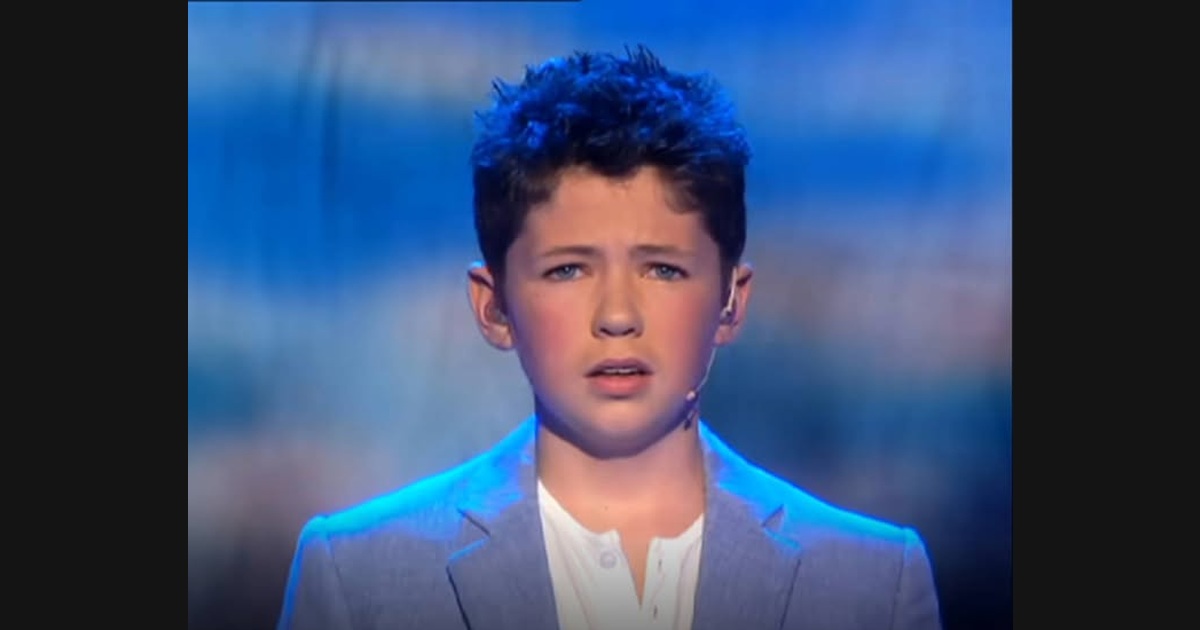
Two singers can share a performance without carrying the same musical responsibility. In “A Bird Without Wings,” Damian McGinty’s own video description specifically identifies George Donaldson’s harmony contribution. That small credit is a useful guide: listen for a melodic center and the relationship another voice creates around it.
The recording belongs to the Celtic Thunder repertoire. Its appeal need not depend on a story about the singers’ private bond or an invented account of what an audience felt. The credited partnership already supplies something concrete to explore: how a supporting vocal line can change a song without displacing its lead.
Watch on YouTube ↗
Harmony is a relationship, not an extra melody to ignore
A lead part gives listeners an immediate path through the tune and words. A harmony part adds another pitch relationship around that path. The two may share a rhythm, or move differently, but the supporting contribution changes the character of the phrase even when the principal melody remains recognizable.
This is different from two singers merely taking turns. Alternating solo lines changes who occupies the foreground; singing in harmony changes the texture while a phrase is happening. Both approaches are available in a duet, and identifying the difference makes the word “shared” more precise.
The song’s images describe dependence
The title imagines something deprived of the feature that allows it to fulfill its purpose. The composition develops a broader expression of dependence and guidance. That subject gives a harmony arrangement an interesting expressive possibility: the musical presence of another voice can support an address about not wanting to be without someone.
This is an interpretation of the relationship between writing and arrangement, not proof that the lyric describes the performers themselves. A singer can give a first-person statement clarity without turning it into a literal autobiography. Preserving that distinction keeps attention on the work.
Try following the supporting line
On one pass, concentrate on the main tune so that its direction is clear. On another, attend to the additional voice where it joins the musical texture. Ask whether it moves with the lead, remains relatively stable or gives a phrase another sense of arrival.
There is no need to assign a named interval to every moment. Even noticing that two parts have a coordinated relationship makes the arrangement less mysterious. The supporting line becomes an active musical contribution rather than an indistinct fullness behind the melody.
A wider Celtic Thunder frame
The official “Heartland” video is identified as a live performance from Dublin in 2007. It broadens the comparison from the focused partnership to another part of the ensemble’s repertoire.
Watch on YouTube ↗
Consider how an ensemble establishes a foreground when more than one voice is available. A group does not need every member to perform the same job continuously. Changing responsibility is one way to give a presentation variety while retaining a coherent musical direction.
Another pairing, another shared statement
Josh Groban and Andrea Bocelli’s official live “We Will Meet Once Again” provides a second vocal partnership. Here the title itself introduces the idea of reunion, creating another relationship between an address in the song and two people presenting it.
Watch on YouTube ↗
Returning to McGinty and Donaldson afterward makes the harmony credit more meaningful. A supporting voice can be essential without becoming the main tune. The partnership is defined by the relationship between its contributions, rather than by a requirement that both singers remain equally prominent at every moment.


