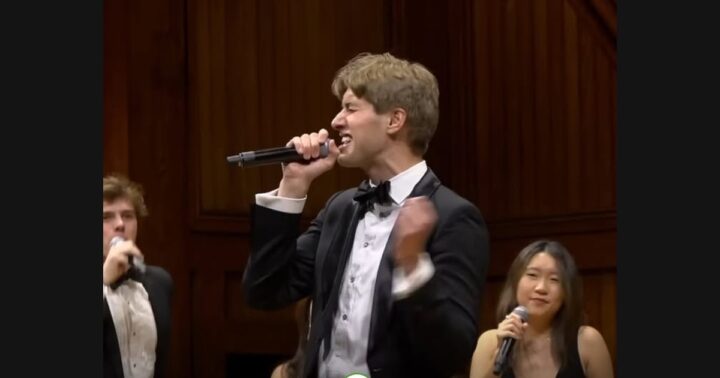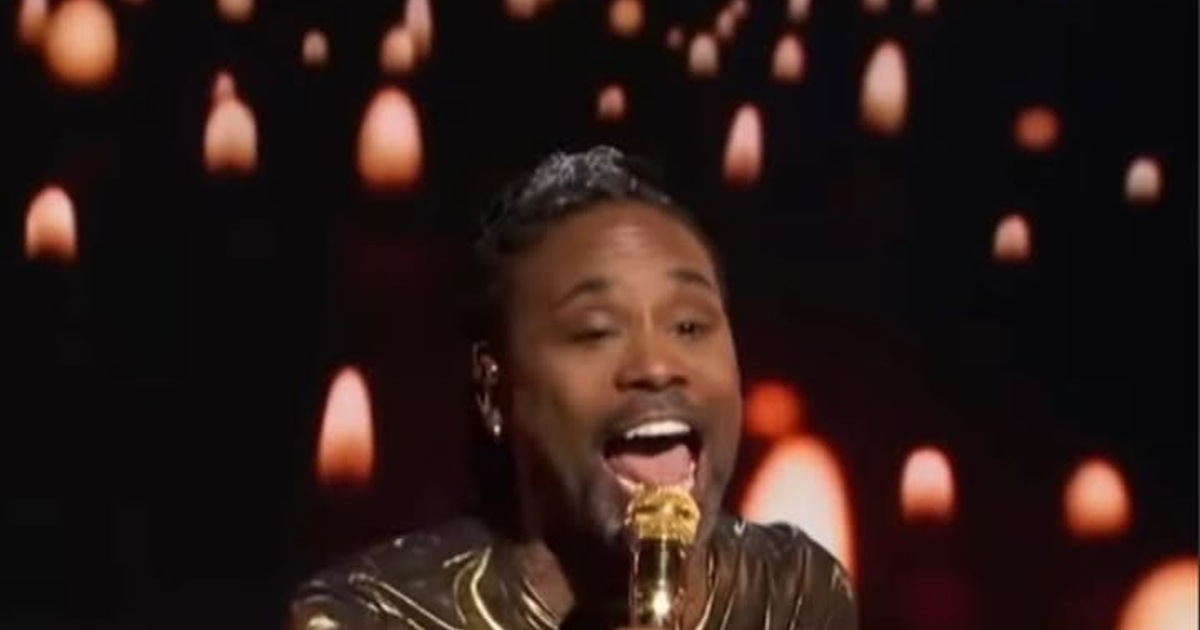
A musical genre challenge asks a performer to keep a song recognizable while changing the language around it. Billy Porter’s gospel-styled Stronger makes that distinction easy to explore. The short clip is associated with That’s My Jam; NBC’s official version identifies the game as Musical Genre Challenge and the source song as Kelly Clarkson’s.
The format is playful, but the arranging problem is real. Melody, rhythm, harmony, accompaniment and delivery do not have to change together. A performance can retain one part of a composition while altering several other relationships around it.
The challenge excerpt
Watch on YouTube ↗
Start by separating recognition from styling. Recognition tells the listener which song is being used. Styling concerns the musical choices that place it in another performance language. A familiar melodic shape can act as an anchor while the phrasing or accompaniment suggests a different approach.
The term gospel here identifies the show’s stated assignment, not one exhaustive description of a varied musical tradition. A short entertainment segment cannot stand in for every practice associated with that tradition. It can nevertheless offer a focused example of how a performer approaches the given prompt.
What can change while the song remains identifiable?
| Musical element | Possible arranging decision |
|---|---|
| Melody | Keep the central contour while varying its decoration. |
| Rhythm | Reposition emphasis within a familiar line. |
| Harmony | Place a tune against a different supporting color. |
| Delivery | Change how a phrase begins, grows or resolves. |
These are possibilities to distinguish, not a claim that every one occurs in this excerpt. The table helps prevent a common simplification: a genre transformation is not only a singer making a familiar song louder or adding more notes.
For a concrete comparison, imagine a line that originally moves straight through a phrase. A performer might create a pause and response within it while retaining the essential melodic direction. The structure has acquired a new relationship even though the tune remains recognizable.
A fuller performance changes the available space
Watch on YouTube ↗
Porter’s You Are My Friend selection from GRAMMY Sounds of Change provides a different frame. A complete featured performance can develop an interpretation over a longer span, while a challenge has to make its central idea legible quickly.
Compare the scale of development rather than asking whether one clip proves the performer’s true style. A singer can work in several formats, each with its own constraints. The short assignment and the fuller selection are different uses of the same performer’s resources.
Return to ‘Stronger’ with another partnership
Watch on YouTube ↗
The related Clarkson and Porter selection offers another presentation of the familiar song. Listen for how a shared lead changes the distribution of attention. A duet can turn a line into an exchange, while the genre challenge concentrates attention on transformation.
That is the lasting interest of the short clip. It makes the distinction between a song and a particular version of that song visible. Familiar material is not a sealed object: performers can change its surroundings, proportions and delivery while leaving enough of its identity intact for a listener to follow the experiment.