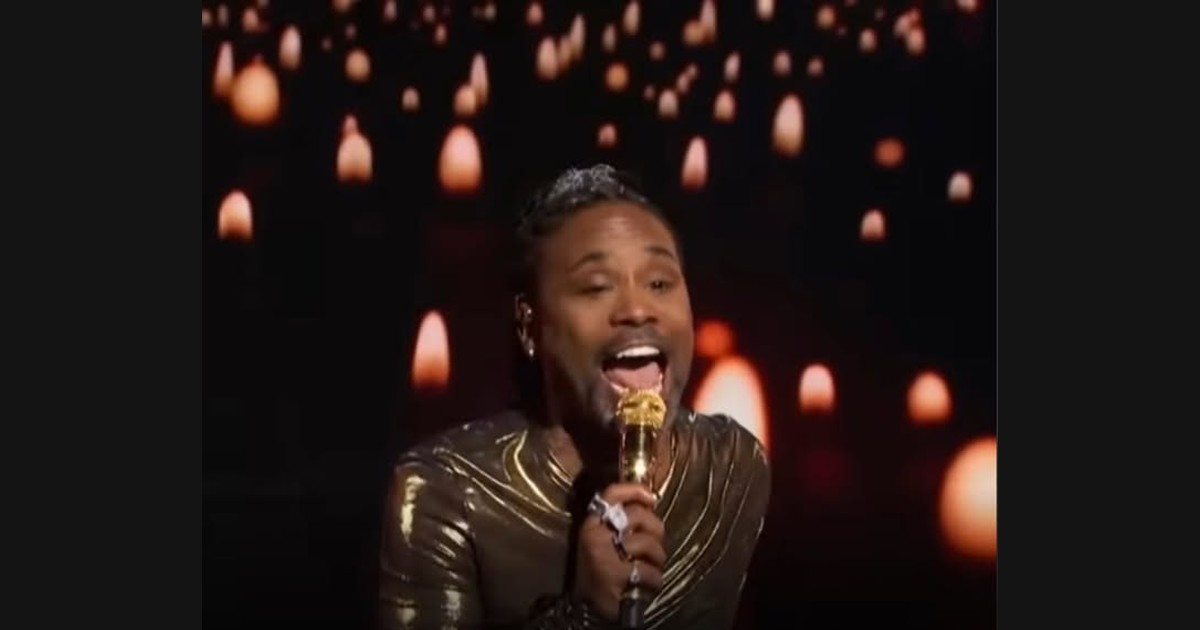
A cover can eventually change how a song’s original performer approaches it. Billy Porter’s gospel treatment of Stronger led to a shared rendition with Kelly Clarkson on her own programme. That later duet is the opening recording here, distinct from Porter’s earlier appearance on That’s My Jam.
The difference is musically useful. A genre challenge asks one performer to rethink a familiar song within a new stylistic frame. A subsequent duet asks the original recording artist and that interpreter to make the new frame their common ground.
Watch on YouTube ↗
A reinterpretation becomes a meeting place
Porter’s earlier challenge supplied the gospel premise, with Patti LaBelle contributing to that separate television moment. The Clarkson duet gives the approach another relationship: the voice associated with the hit becomes a participant in its transformation.
That is more interesting than treating the new arrangement as a contest with the original. A song can support more than one rhythmic and vocal emphasis. Its recognizable core provides the reference that makes those differences meaningful.
For a useful comparison, separate three things: the melody that identifies the song, the rhythmic setting that carries it, and the expressive space allowed around each phrase. A familiar tune can retain its shape while a different setting changes where a singer lingers or how an answer can enter.
The writing already has a dramatic turn
Co-writer Ali Tamposi has described the song’s development in a firsthand interview, connecting its central idea of resilience with a difficult personal moment and a session with her collaborators. The credited writers are Jörgen Elofsson, Ali Tamposi, David Gamson and Greg Kurstin.
That background helps explain the interpretive opportunity without making the song a biography of every performer. Its narrator turns an apparent defeat into an assertion of independence. A gospel-inflected treatment can make the assertion feel available for shared response, while the dramatic reversal remains part of the composition.
The important shift is from experiencing a setback to deciding what it will mean. A performer has to carry both sides of that movement for the declaration to have weight. Volume alone cannot provide the preceding argument.
Watch on YouTube ↗
A theatre song gives Porter another task
The Everything’s Coming Up Roses companion comes from the 2019 Tony Awards, presented by James Corden’s programme as a commercial-break karaoke moment. It is a separate number and occasion, rather than another segment of the Stronger duet.
The comparison points toward theatrical address: a singer can make a phrase feel directed toward people in the room, rather than merely delivered accurately into a microphone. The degree of freedom available will differ between a theatre song, a television game and a planned duet.
Watch on YouTube ↗
Clarkson returns to her own repertoire
The final video is Clarkson’s Stronger by request, giving the song another occasion beyond the Porter collaboration. It allows the familiar performer and the familiar work to be heard without assuming that one arrangement must become the definitive version.
The duet’s particular pleasure is reciprocity. Porter reimagines Clarkson’s hit; Clarkson joins the reimagining. A cover becomes a place where both singers can participate, rather than a replacement for the recording that made the exchange possible.


