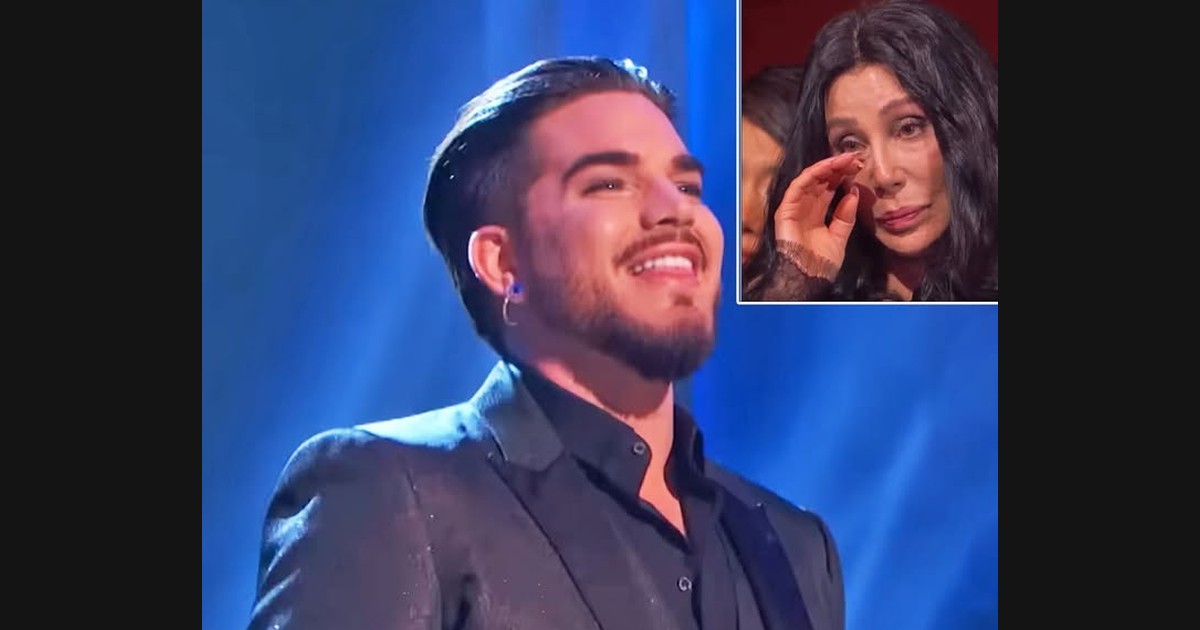
Adam Lambert’s Kennedy Center “Believe” pays tribute to Cher through a song strongly associated with her recording career. Behind that association sits another creative history: the composition was developed by several writers and then shaped into a particular record. A later interpretation inherits the song without inheriting every production decision of the earlier release.
The published credits name Brian Higgins, Matt Gray, Stuart McLennan, Tim Powell, Steve Torch, and Paul Barry as writers. Cher is the featured recording artist; Brian Rawling and Mark Taylor are credited with production. Those responsibilities are connected, but they are not interchangeable.
The producer’s account explains a collaborative process
In a direct Sound on Sound interview, Taylor describes an earlier demo associated with Higgins, Gray, McLennan, and Powell, followed by Torch and Barry’s work developing the song around its existing chorus. His account identifies writing as a process of revision and completion, rather than one performer inventing every element at a microphone.
Watch on YouTube ↗
That history helps explain what a cover can retain. A recognizable chorus, the relationship between sections, and a melody can travel into another arrangement even when the recorded sound changes. The composition’s continuity does not require the new performance to reproduce the complete earlier production.
Four roles around a familiar title
| Role | Contribution |
|---|---|
| Songwriting | Develops the composition’s musical and verbal material. |
| Recording artist | Presents a particular performed interpretation. |
| Production | Shapes the recorded realization through documented studio decisions. |
| Tribute performer | Interprets established repertoire within a later occasion. |
One person can occupy more than one role on some projects. That possibility is a reason to read actual credits, not a reason to assume all roles belong to the most visible person. The credit list for this recording identifies a collaborative work.
Cher’s video is the record’s public reference
The official Cher video supplies the familiar recording context. It is the appropriate companion for recognizing what Lambert’s selection points back toward. Its sonic identity is a production result as well as a performance.
Watch on YouTube ↗
A distinctive recorded effect should not become a shortcut for judging an unrelated performance as either untouched or technically assisted. Those are production claims requiring their own evidence. The comparison can remain useful without them: the same composition is presented through different artists and settings.
Taylor’s account also makes room for the importance of material that survives revision. A chorus can act as the stable center around which other sections are developed. For the listener, returning material provides recognition even after a new interpreter changes the surrounding musical scale.
The audition changes the repertoire
The final Lambert clip is his “Bohemian Rhapsody” audition. It does not extend the writing history of “Believe.” It offers another example of a performer entering existing repertoire, this time within an audition format rather than a tribute.
Watch on YouTube ↗
Keep the composition credit attached to the song being performed and the performer credit attached to that occasion. The distinction allows interpretation to be recognized as creative work without erasing the earlier writers.
Lambert’s tribute can therefore be heard as a meeting of several histories: collaborative songwriting, Cher’s signature recording, and a later performer’s interpretation. The public association with one artist remains meaningful while the less visible creative contributions retain their proper place.


